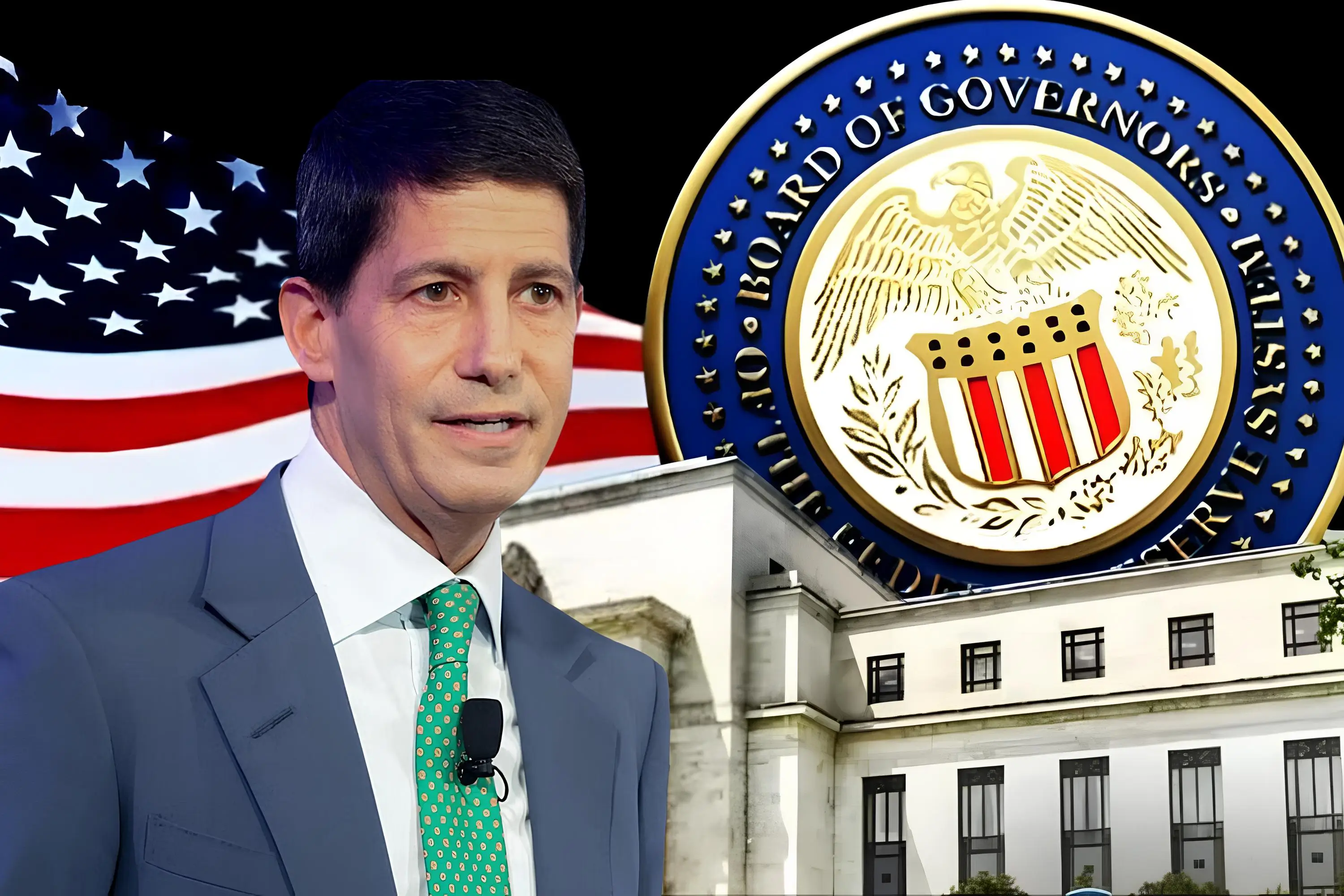
The nomination of Kevin Warsh as Chair of the Federal Reserve has drawn significant attention across global financial markets. Although Warsh is widely regarded as leaning toward tighter monetary policy, Bank of America (BofA) believes his leadership is unlikely to result in swift or comprehensive changes. Instead, any adjustments are expected to be gradual and measured, reflecting the institutional constraints within the Fed’s policy-making framework.
Bank of America cited comments from Mark Cabana, its head of US rates strategy, who argued that Warsh could introduce a more hawkish stance on the Fed’s balance-sheet policy while still supporting near-term interest-rate cuts.
According to Cabana:
Warsh is “likely to bring a more restrictive view on balance-sheet policy but would support rate cuts in the short term.”
This suggests that Warsh may prioritize a smaller and shorter-duration balance sheet focused solely on US Treasuries, without reversing the reserve-management purchases the Fed has conducted in recent years.
BofA expects Warsh to push for a streamlined balance sheet, reducing the Fed’s exposure to assets beyond traditional government securities. This aligns with Warsh’s long-standing criticism of the Fed’s large-scale asset purchases and involvement in non-traditional markets.
However, the bank does not anticipate a dramatic reversal of existing programs. Instead, the focus would be on restructuring and gradual reduction, aimed at restoring the Fed’s pre-crisis operating framework rather than launching a radical overhaul.
Kevin Warsh has been vocal about what he sees as the over-expansion of the Fed’s mandate. He has argued that the central bank should step back from areas such as climate policy and broad employment objectives that extend beyond its traditional focus.
In an April 2025 speech, Warsh stated:
“I see little real value in the Fed’s current ‘data-dependent’ policy approach,”
warning that policymakers risk becoming “prisoners of their own words” when they rely too heavily on short-term economic forecasts.
His comments reflect a desire to return the Fed to core objectives: price stability, inflation control, and institutional independence from political or social agendas.
BofA suggested that Warsh may attempt to narrow the scope or reduce the frequency of the Fed’s Summary of Economic Projections (SEP)—a key document that shapes market expectations for rates, inflation, and growth.
Scaling back the SEP could reduce the market’s fixation on short-term forecasts and give policymakers greater flexibility, though such a move would likely face resistance from colleagues who favor transparency.
Bank of America emphasized that any major reform under Warsh would confront significant pushback inside the Federal Open Market Committee (FOMC).
“We think it will be difficult for Warsh to get the FOMC to agree to his policy agenda,” BofA wrote,
noting that there has been little dissent regarding recent balance-sheet decisions. The diverse views within the committee mean that changes are more likely to be incremental rather than transformational.
BofA believes Warsh could be effective in limiting the Fed’s expansion into non-traditional areas, but remains skeptical that policymakers would accept less transparency or reduced reliance on economic data.
While he may steer the institution back toward its classical mandate, eliminating data dependence altogether is seen as unlikely given modern expectations of central-bank communication.
Bank of America concludes that the Warsh era would bring evolution rather than revolution to US monetary policy. Key expectations include:
A smaller, Treasury-focused balance sheet
Gradual adjustments instead of abrupt shifts
Greater emphasis on traditional Fed responsibilities
Limited appetite for reducing transparency
Investors should therefore prepare for measured policy refinement rather than dramatic course changes.
Kevin Warsh’s potential leadership of the Federal Reserve has sparked debate about the future direction of US monetary policy. Yet Bank of America stresses that sweeping reforms are unlikely. Institutional checks within the FOMC and the complexity of the Fed’s mandate point to a cautious, step-by-step approach.
Under Warsh, the Fed may slowly move toward a leaner balance sheet and a more focused mission, but the transformation is expected to be gradual, pragmatic, and market-sensitive rather than abrupt.

.png)
 Tiếng Việt
 English