.png)
 Tiếng Việt
 English


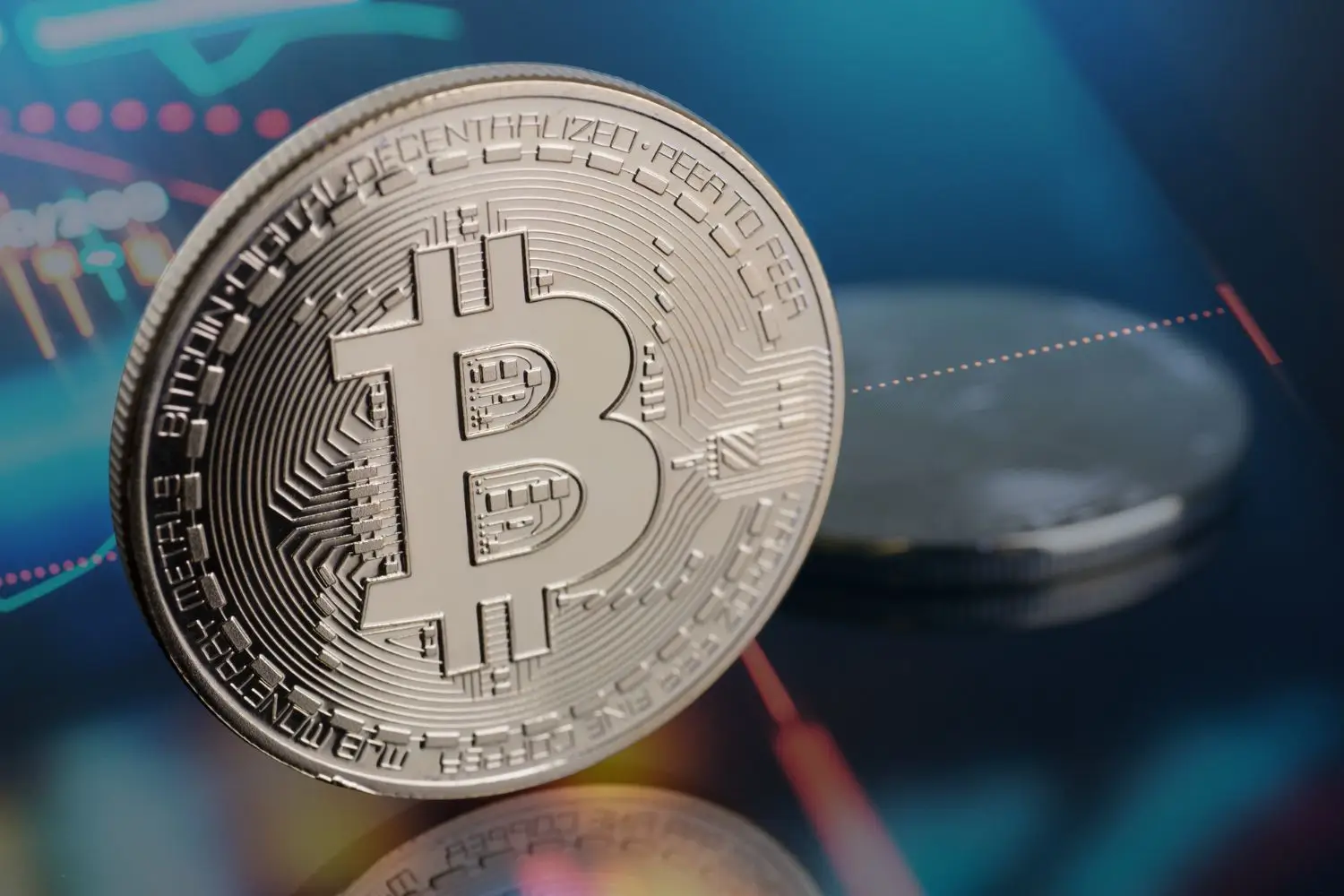 The cryptocurrency market remains cautious as Bitcoin continues to trade around the $74,000 level, with investors closely monitoring oil price movements and awaiting key central bank decisions.
As of Tuesday midday in Asia, Bitcoin was up slightly by 0.2%, trading at $74,291. Earlier, the world’s largest cryptocurrency briefly surged close to $76,000, marking a strong rebound from its early-February pullback.
However, upward momentum has started to ease as the market enters a consolidation phase, awaiting clearer macroeconomic signals.
One of the main drivers behind Bitcoin’s recent gains has been short covering activity.
Following a sharp sell-off earlier in February, many traders had positioned for further downside. As prices rebounded, these bearish positions were forced to close, creating additional buying pressure in the market.
At the same time, institutional demand has shown signs of recovery. Spot Bitcoin exchange-traded funds (ETFs) have continued to see steady inflows, supporting market confidence.
According to Axel Rudolph, the market is currently forming a pattern of growth followed by consolidation:
Rapid price rallies are often met with profit-taking near established resistance levels.
After each upward move, the market enters a consolidation phase to establish a clearer trend.
This cycle reflects cautious but not bearish investor sentiment.
This suggests that while Bitcoin has not yet entered a sustained bullish breakout, its medium-term structure remains constructive.
Geopolitical risks continue to play a major role in shaping global financial markets, including cryptocurrencies.
The ongoing tensions involving Iran, Israel, and United States have now entered their third week, increasing uncertainty across markets.
Meanwhile, oil prices have remained above $100 per barrel, driven by concerns over potential supply disruptions at the Strait of Hormuz.
This has led to several key implications:
Rising inflationary pressure due to higher energy costs.
Increased fragility in investor risk sentiment.
Capital rotation across different asset classes.
Rudolph noted that cryptocurrencies are showing an evolving behavior pattern:
Initially, geopolitical tensions tend to trigger risk-off selloffs.
However, in some cases, Bitcoin begins to trade more like a defensive asset.
This indicates a gradual shift in Bitcoin’s role within the broader financial system.
Beyond geopolitical concerns, market attention is firmly fixed on the upcoming policy decision from the Federal Reserve.
Analysts widely expect the Fed to keep interest rates unchanged. However, investors are more focused on:
The Fed’s outlook on inflation.
Signals regarding the timing of potential rate cuts.
Its assessment of the overall health of the U.S. economy.
A prolonged high-interest-rate environment could continue to pressure risk assets, including cryptocurrencies.
On the other hand, any dovish signals from the Fed could act as a strong catalyst for further gains.
While Bitcoin trades near neutral levels, altcoins are showing mixed performance.
Specifically:
Ethereum rose 1.5% to $2,314.
XRP gained 3%, indicating continued demand.
Solana slipped 0.3%.
Cardano and Polygon both declined around 1%.
Dogecoin also edged down 1% among meme tokens.
This divergence reflects a more selective capital flow, rather than the broad-based rallies seen in previous bullish phases.
In the near term, Bitcoin may continue to trade within a narrow range as the market awaits clearer catalysts.
Key factors to watch include:
Developments in oil prices and Middle East geopolitical tensions.
The Fed’s policy decision and forward guidance.
Capital flows into Bitcoin ETFs.
Profit-taking behavior following recent gains.
Analysts suggest the market is currently undergoing a “healthy consolidation” phase rather than showing signs of weakness.
The ability of Bitcoin to hold above $74,000 highlights its relative resilience amid global uncertainty.
However, the market still faces multiple headwinds, ranging from monetary policy to geopolitical risks.
In this environment, investors should remain cautious while closely monitoring macroeconomic signals to guide their decisions.
If supportive factors such as ETF inflows and favorable monetary policy persist, Bitcoin could still aim for higher levels in the coming period.