.png)
 Tiếng Việt
 English


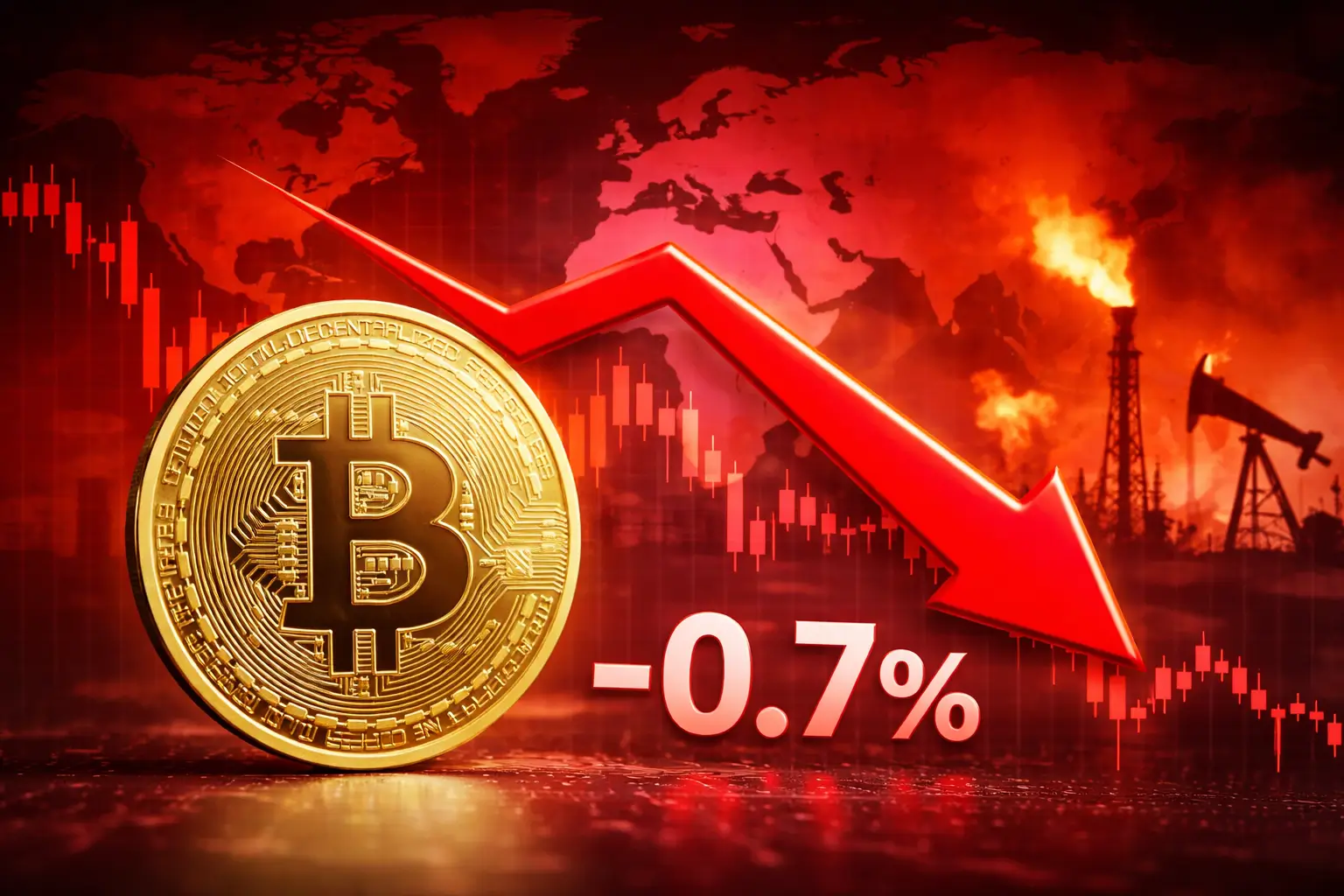 The cryptocurrency market started the week on a negative note, with Bitcoin extending its losses in Monday trading. Selling pressure intensified as escalating geopolitical tensions in the Middle East—particularly between the United States and Iran—prompted investors to pull back from risk assets globally.
Bitcoin, the world’s largest cryptocurrency, fell 0.7% to $68,652 at 01:34 ET (12:34 PM Vietnam time). The decline continues a downward trend that began over the weekend, reversing gains seen earlier this month.
The latest drop in Bitcoin is largely driven by rising tensions in the Middle East. Over the weekend, former U.S. President Donald Trump issued a 48-hour ultimatum demanding Iran reopen the Strait of Hormuz—a critical global oil shipping route—or face potential U.S. strikes on key energy infrastructure.
In response, Tehran rejected the demand and threatened to fully close the strait, warning of retaliatory attacks on critical infrastructure across Gulf nations.
This escalation has heightened fears of global energy supply disruptions, potentially fueling inflation and forcing central banks to maintain higher interest rates for longer.
Bitcoin was not alone in its decline. A wide range of risk assets—including equities, currencies, and even gold—came under pressure at the start of the week.
Notably, gold—traditionally considered a safe-haven asset—failed to rally despite rising geopolitical risks. Instead, it continued to weaken due to profit-taking after reaching record highs in late January.
Investors are now facing a complex dilemma: seek safety or preserve liquidity in a high-interest-rate environment.
Despite recent losses, Bitcoin has shown relatively stronger performance compared to gold over the past month:
This divergence reflects renewed speculative interest in crypto markets following a sharp correction phase. Previously, Bitcoin had lost up to 50% from its October peak, attracting bargain hunters.
Additionally, improving regulatory developments in the United States have provided some support to crypto market sentiment.
Looking at a broader timeframe, Bitcoin continues to underperform gold:
This suggests that while Bitcoin may experience short-term recoveries, it has yet to re-establish itself as a stable long-term investment amid global uncertainty.
Bitcoin’s decline quickly spread across the broader crypto market, with most major altcoins posting losses:
Memecoins also followed the downward trend:
These movements highlight a cautious market sentiment, with investors refraining from opening new positions amid rising uncertainty.
One of the main factors weighing on Bitcoin and other risk assets is concern over global inflation.
If tensions around the Strait of Hormuz escalate further, oil prices could surge, increasing transportation and production costs worldwide. This could reignite inflationary pressures and force central banks—especially the Federal Reserve—to maintain or even raise interest rates.
A high-interest-rate environment typically weighs on speculative assets like cryptocurrencies, as capital shifts toward safer, yield-generating investments.
In the near term, Bitcoin’s trajectory will likely remain closely tied to geopolitical developments in the Middle East. Any further escalation could trigger additional selloffs.
Conversely, signs of de-escalation may support a market rebound, driven by dip-buying and expectations of future monetary easing.
For now, analysts recommend a cautious approach, advising investors to limit leverage and closely monitor macroeconomic signals.
Bitcoin’s early-week decline reflects not only crypto market dynamics but also broader global economic uncertainty. Rising U.S.-Iran tensions, potential energy disruptions, and inflation risks are creating a challenging environment for risk assets.
While Bitcoin has shown some short-term resilience, it still faces significant hurdles in establishing itself as a reliable long-term investment amid ongoing global volatility.