.png)
 Tiếng Việt
 English


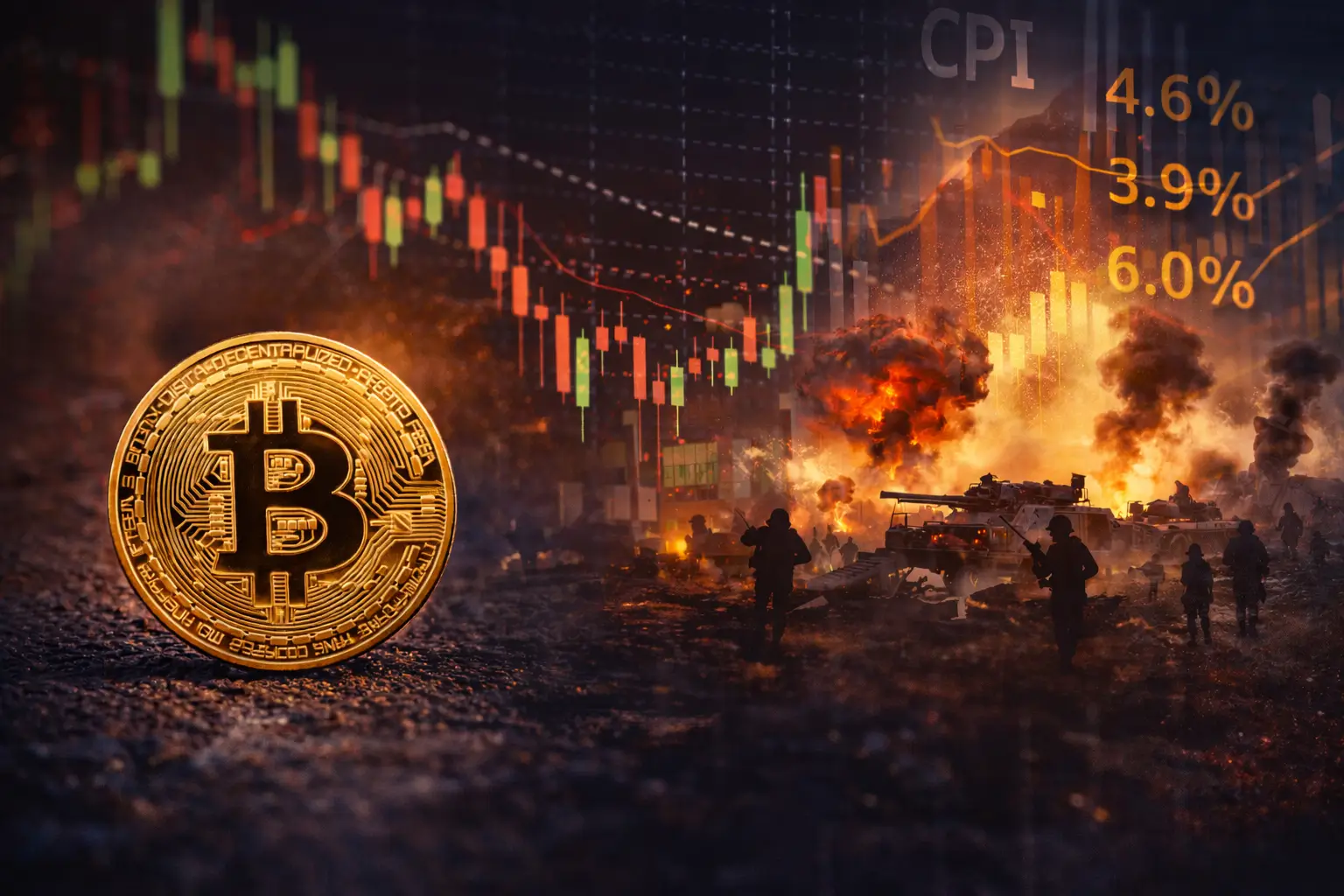 The cryptocurrency market entered Wednesday’s Asian trading session on a cautious note as Bitcoin slipped below the $70,000 mark, with global investors closely watching geopolitical developments in the Middle East and awaiting key inflation data from the United States.
According to market data, Bitcoin — the world’s largest cryptocurrency — declined about 0.5% to $69,583.5 at 12:55 p.m. Vietnam time. The move suggests the market is entering a short-term consolidation phase after recovering from a sharp drop earlier in the week.
Bitcoin’s latest movement reflects broader investor sentiment as geopolitical risks and macroeconomic factors continue to influence global financial markets.
Earlier this week, Bitcoin briefly dropped into the mid-$60,000 range as military tensions between the United States, Israel, and Iran escalated.
Although the cryptocurrency later regained some ground, the market has yet to establish a clear trend as traders continue assessing the economic impact of the conflict.
In recent years, Bitcoin has increasingly been treated as a risk-sensitive asset. As a result, when global financial markets face uncertainty, investors often reduce exposure to volatile assets such as cryptocurrencies.
Market participants say conflicting signals from geopolitical developments have contributed to heightened volatility across financial markets in recent days.
One of the major factors shaping investor sentiment is the ongoing conflict in the Middle East, particularly the clashes involving the United States, Israel, and Iran around the Persian Gulf.
The tensions have raised concerns about potential disruptions to global energy supply. In particular, the Strait of Hormuz — one of the world’s most critical oil shipping routes — has become a focal point for the energy market.
Fears that the strategic waterway could face disruptions pushed oil prices sharply higher earlier this week, briefly approaching $120 per barrel.
Rising oil prices typically fuel inflation concerns, which can impact a wide range of assets including equities, commodities, and cryptocurrencies.
However, crude prices later retreated after U.S. President Donald Trump stated on Monday that the conflict could end soon, easing some market concerns. Still, clear signs of de-escalation remain limited.
Fighting continues around the Gulf region, keeping investors cautious about the outlook for global economic growth and inflation.
Beyond geopolitical developments, U.S. inflation data — particularly the Consumer Price Index (CPI) — is also drawing strong attention from financial markets.
The CPI report, scheduled for release later on Wednesday, is considered one of the most important indicators guiding the Federal Reserve’s monetary policy decisions.
If inflation comes in higher than expected, the Federal Reserve may keep interest rates elevated for a longer period. Higher rates generally place pressure on risk assets such as stocks and cryptocurrencies.
On the other hand, signs that inflation is cooling could strengthen expectations for future rate cuts, potentially boosting investor risk appetite.
Given the uncertainty, many crypto investors are choosing to remain on the sidelines until the inflation data provides clearer direction.
Aside from macroeconomic factors, the cryptocurrency market is also paying close attention to regulatory developments in Washington.
U.S. lawmakers are reportedly working to revive the stalled CLARITY Act, a legislative proposal aimed at establishing clearer regulatory oversight for digital assets.
One of the key sticking points in the debate involves rules governing stablecoin yield, which has long been a major area of disagreement between traditional banks and crypto companies.
Supporters of the bill argue that creating a clear regulatory framework for digital assets could help unlock greater participation from institutional investors in the cryptocurrency market.
If passed, the legislation could represent a significant step forward in shaping the future of the crypto industry in the United States.
While Bitcoin posted modest losses, most major altcoins traded within a narrow range during Wednesday’s session.
The world’s second-largest cryptocurrency Ethereum declined about 1% to $2,018.44.
Meanwhile, XRP — the third-largest digital asset by market capitalization — fell 0.6% to $1.37.
Several other major altcoins also posted minor declines:
Solana slipped around 0.7%
Cardano fell 0.5%
Polygon dropped 0.5%
In the meme coin segment, Dogecoin traded largely unchanged during the session.
The relatively muted movement across altcoins suggests that the broader cryptocurrency market is currently in a wait-and-see phase, with investors looking for clearer signals from macroeconomic and geopolitical developments.
In the near term, analysts believe the cryptocurrency market will remain highly sensitive to external factors, including:
Geopolitical tensions in the Middle East continue to be a major factor influencing investor sentiment and capital flows across global financial markets.
Volatility in the energy market, particularly crude oil prices, could increase inflationary pressures and impact risk assets such as cryptocurrencies.
The monetary policy of the U.S. Federal Reserve (Fed) plays a key role in shaping global capital flows and investors’ risk appetite.
Regulatory actions by the U.S. government toward the cryptocurrency market could shape the legal framework and directly affect the future development of the crypto industry.
If U.S. inflation data shows signs of cooling and tensions in the Middle East stabilize, Bitcoin could continue to consolidate around the $70,000 level or potentially move higher.
However, renewed geopolitical escalation or persistent inflation could trigger a shift away from risk assets, potentially leading to another round of corrections in the crypto market.
Despite short-term volatility, many analysts maintain a bullish long-term outlook for Bitcoin, as institutional adoption continues to expand and the broader cryptocurrency ecosystem matures in terms of infrastructure and regulation.