.png)
 Tiếng Việt
 English


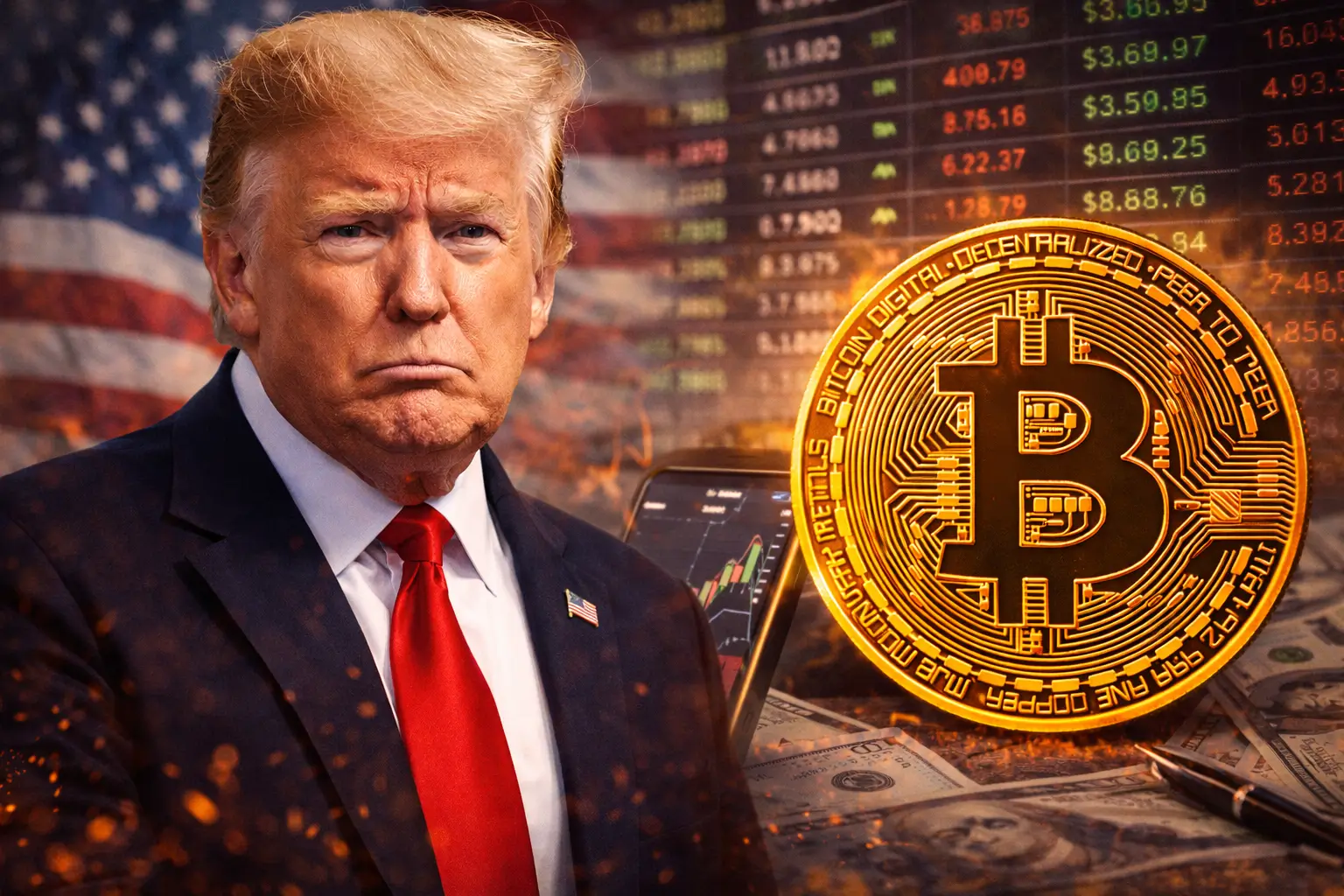 The cryptocurrency market entered Wednesday’s session with a cautious tone. Bitcoin traded largely sideways near the $68,000 level, drawing modest support from remarks by U.S. President Donald Trump advocating for clearer regulatory frameworks for the crypto industry.
Still, broader market momentum remained constrained by escalating geopolitical tensions between the United States and Iran, alongside renewed inflation concerns that could emerge if global oil supplies are disrupted.
As of 06:30 GMT, Bitcoin was trading at $68,147.8, little changed from the previous session. The world’s largest cryptocurrency briefly climbed toward the $69,000 mark earlier in the week before surrendering part of those gains to profit-taking pressure.
Bitcoin’s inability to sustain upward momentum underscores persistent investor caution. Amid rising macroeconomic risks, crypto assets are once again behaving more like high-risk instruments rather than the inflation hedge some investors once envisioned.
This dynamic highlights a growing paradox: although Bitcoin was created to operate outside traditional financial systems, it has become increasingly sensitive to monetary policy signals and geopolitical developments.
In a social media post Tuesday evening, President Donald Trump sharply criticized major U.S. banks for attempting to weaken the GENIUS Act — legislation designed to regulate stablecoins — by delaying another key crypto bill, the CLARITY Act, in the Senate.
Trump argued that while banks are reporting record profits, they are simultaneously attempting to obstruct progress in the digital asset sector. He warned that failure to establish a clear regulatory framework could allow competitive advantages to shift toward China and other nations.
According to a report by Politico, Trump met privately with Coinbase Global Inc CEO Brian Armstrong shortly before issuing his public remarks.
The meeting signals active engagement between the White House and leading figures in the cryptocurrency industry.
The GENIUS Act was passed by Congress in June 2025 to establish regulatory oversight for stablecoins — digital tokens pegged to stable assets such as the U.S. dollar.
The law prohibits stablecoin issuers like Tether from directly paying yield to holders. However, third-party platforms such as cryptocurrency exchanges remain permitted to offer yield products — a feature that traditional banks argue represents a regulatory loophole.
Meanwhile, the CLARITY Act — a broader bill aimed at defining the overall crypto market structure — passed the House in July but remains stalled in the Senate.
The primary dispute centers on whether stablecoin yield payments should be regulated in the same manner as bank interest payments. Large banking institutions argue that allowing yield-bearing stablecoins without equivalent oversight creates an uneven competitive landscape.
At its core, this debate extends beyond legal technicalities. It reflects a broader power struggle between traditional finance and decentralized financial ecosystems.
Despite regulatory optimism, the crypto market continues to face pressure from geopolitical developments.
The conflict involving the United States, Israel, and Iran entered its fifth consecutive day on Wednesday, with military actions targeting Tehran continuing to escalate. Markets are increasingly concerned that disruptions to global oil supply could trigger another wave of energy-driven inflation.
Inflation has already proven persistent across several major economies. A renewed spike in oil prices could compel central banks to maintain hawkish policy stances for longer than anticipated.
Higher interest rates translate into elevated capital costs and tighter liquidity conditions — typically unfavorable for risk-sensitive assets such as cryptocurrencies.
The market is not reacting with panic, but neither is it confident enough to stage a sustained rally.
Altcoin performance reflects the broader cautious sentiment.
Ether, the second-largest cryptocurrency, fell 1% to $1,979.99. XRP slipped 0.2%, while Solana and BNB remained largely unchanged.
Cardano underperformed with a decline of approximately 3%.
Among meme tokens, Dogecoin dropped 2.6%, while the $TRUMP token — branded around President Trump — lost 3.4%.
The across-the-board softness suggests that capital remains sidelined rather than aggressively rotating back into the market.
The cryptocurrency market stands at an interesting crossroads. On one hand, regulatory clarity in the United States — long viewed as a significant overhang — appears to be gradually improving. On the other, the global macroeconomic environment is becoming more uncertain.
Historically, Bitcoin has thrived during periods of abundant liquidity and low interest rates. Today’s backdrop, however, leans toward tighter financial conditions and defensive positioning.
This raises a longer-term question: Will Bitcoin continue to behave as a cyclical risk asset, or will it evolve into a truly independent digital reserve asset?
The answer may depend less on blockchain innovation and more on global monetary policy trajectories and regulatory frameworks over the next decade.
Bitcoin remains stable near the $68,000 mark, supported modestly by positive regulatory signals from Washington. However, escalating U.S.–Iran tensions and inflation risks continue to cap upside momentum.
At present, the cryptocurrency market resembles a compressed spring, caught between policy optimism and macroeconomic uncertainty.
When one of these forces shifts decisively, volatility is likely to return. As in previous crypto cycles, patience may once again prove to be the ultimate test for investors.