
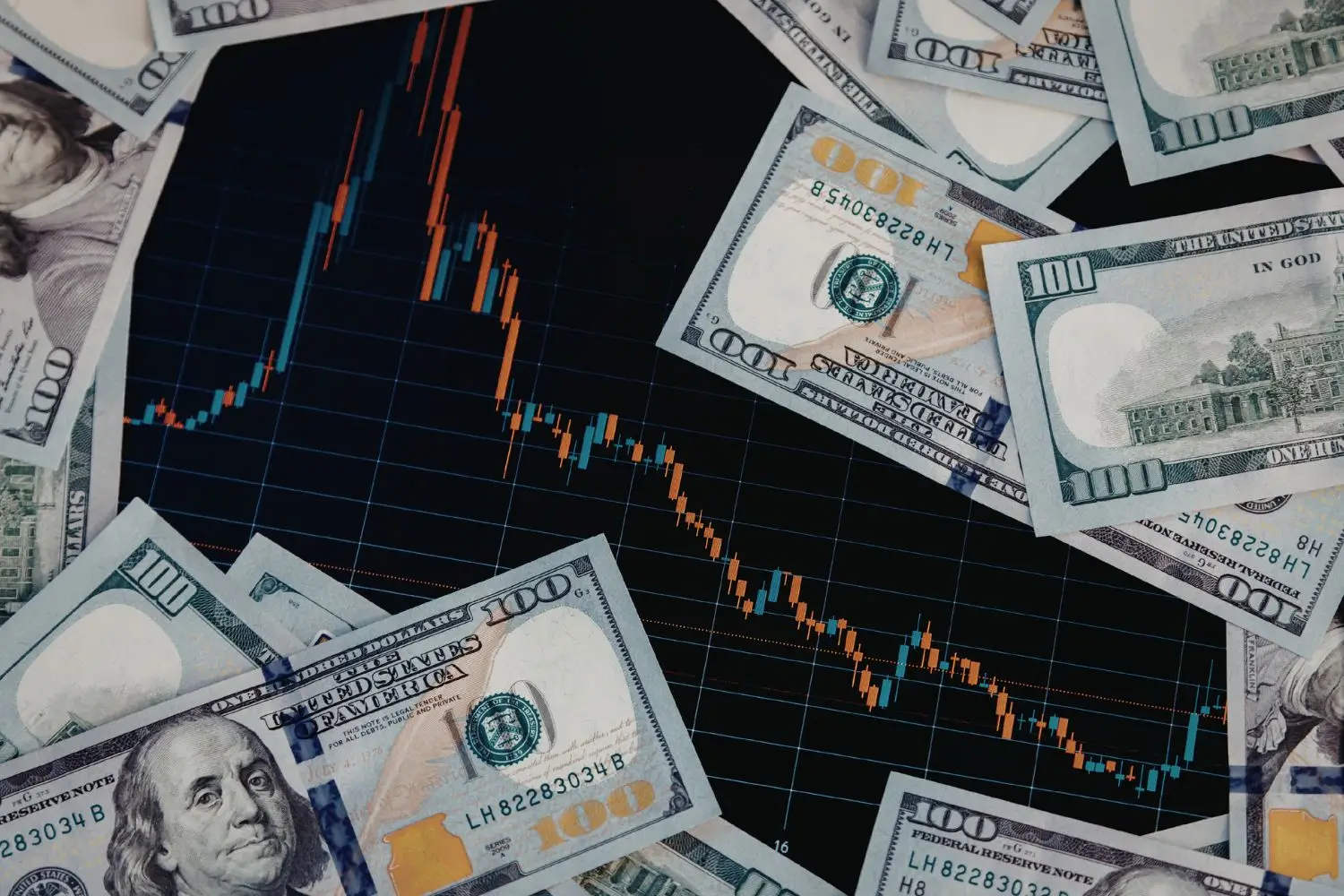
U.S. stock markets closed mixed on January 23, reflecting a tug-of-war between easing geopolitical concerns and renewed worries over corporate earnings and sector-specific headwinds. While technology stocks helped lift the Nasdaq Composite, the Dow Jones Industrial Average retreated sharply, weighed down by losses in financial shares.
The divergent performance underscores a market increasingly driven by selective risk-taking, as investors reassess valuations, policy risks, and earnings outlooks heading into the final stretch of January.
By the close of trading, the Nasdaq Composite rose 0.28% to 23,501.24, extending its recovery on the back of gains in large-cap technology stocks. The S&P 500 finished nearly flat, inching up 0.03% to 6,915.61.
In contrast, the Dow Jones Industrial Average fell 285.30 points, or 0.58%, ending the session at 49,098.71. The 30-stock index was dragged lower primarily by Goldman Sachs, whose shares plunged nearly 4%, exerting outsized downward pressure on the benchmark.
The split performance highlights a cautious market environment where investors are increasingly rotating capital rather than broadly re-entering risk assets.
Semiconductor stocks emerged as key market leaders. Nvidia gained 1.5%, while Advanced Micro Devices (AMD) surged more than 2%, providing substantial support to both the Nasdaq and the S&P 500.
The rally followed reports from sources familiar with the matter, cited by CNBC, indicating that Nvidia CEO Jensen Huang is planning a visit to China in the coming days. The news fueled optimism that Nvidia could strengthen or preserve its presence in one of its most critical international markets, despite ongoing U.S. export controls on advanced chip technology.
Other major technology names, including Microsoft, also posted gains, reflecting investors’ preference for companies with strong balance sheets and durable growth prospects.
On the downside, Intel suffered a steep selloff, with shares tumbling roughly 17% after the chipmaker issued a disappointing first-quarter outlook. The guidance reignited concerns over Intel’s ability to compete effectively in the fast-evolving semiconductor industry.
The sharp decline illustrates how unforgiving the market has become toward companies that fail to meet expectations, particularly in the technology sector, which remains central to Wall Street’s long-term growth narrative.
The mixed close followed a strong two-day rally on January 21 and 22, during which all three major U.S. indices posted solid gains. That rebound was driven by signs of easing trade and geopolitical tensions, which had previously unsettled investors.
Momentum turned higher after President Donald Trump unexpectedly rolled back plans to impose tariffs on imports from eight European countries. He also announced that the U.S. and NATO had reached a “framework for a future agreement” related to Greenland, helping calm fears of escalating geopolitical conflict.
Earlier tariff threats had triggered a wave of capital outflows from U.S. assets, a phenomenon some market participants dubbed “Sell America.”
Commenting on recent market behavior, Scott Ellis, Managing Director of Corporate Credit at Penn Mutual Asset Management, noted that investors are increasingly embracing what has become known as the “TACO trade”—short for “Trump Always Chickens Out.”
“Investors this week have started to lean into the idea that tough rhetoric may ultimately give way to negotiation,” Ellis said. “That expectation could continue to underpin risk assets if the administration maintains a softer tone in pursuit of deals.”
Still, this optimism remains tentative, as concrete policy details have yet to emerge.
Despite the market’s initial positive reaction, uncertainty persists. On January 22, Greenland’s Prime Minister Jens-Frederik Nielsen said he was unaware of the specifics of the agreement framework announced by President Trump. He emphasized that any deal must respect Greenland’s sovereignty and territorial integrity.
His remarks underscored lingering doubts over the feasibility and substance of the proposed arrangement, reminding investors that geopolitical risks have not fully dissipated.
Although gains earlier in the week erased the Dow’s early losses, Thursday’s pullback pushed the index back into negative territory.
For the week as a whole:
Dow Jones declined approximately 0.5%
S&P 500 slipped around 0.4%
Nasdaq Composite fell by less than 0.1%
Notably, both the S&P 500 and Nasdaq recorded their second consecutive weekly decline, signaling growing investor caution.
Looking ahead, Wall Street is expected to remain volatile as investors closely monitor:
Developments in U.S.–Europe and Arctic geopolitics
Signals from the U.S. administration on trade and foreign policy
Upcoming corporate earnings and forward guidance
In this environment, sector divergence and stock-specific moves are likely to dominate, rather than broad-based rallies across the market.

.jpg)

.png)
 Tiếng Việt
 English