Leaders of the European Union (EU) have jointly issued a strong warning about a “dangerous downward spiral” in relations with the United States, after U.S. President Donald Trump announced plans to impose increasingly steep tariffs on European allies in an effort to pressure Washington’s acquisition of Greenland.
In posts on the social media platform X, European Commission President Ursula von der Leyen and European Council President Antonio Costa stressed that using tariffs as a tool of political pressure risks seriously undermining transatlantic relations, which have served as a cornerstone of the global economic and security order for decades.
“Tariffs will weaken transatlantic relations and risk pushing the situation into a dangerous downward spiral. Europe will remain united, closely coordinated, and steadfast in defending its sovereignty,” the two EU leaders stated.
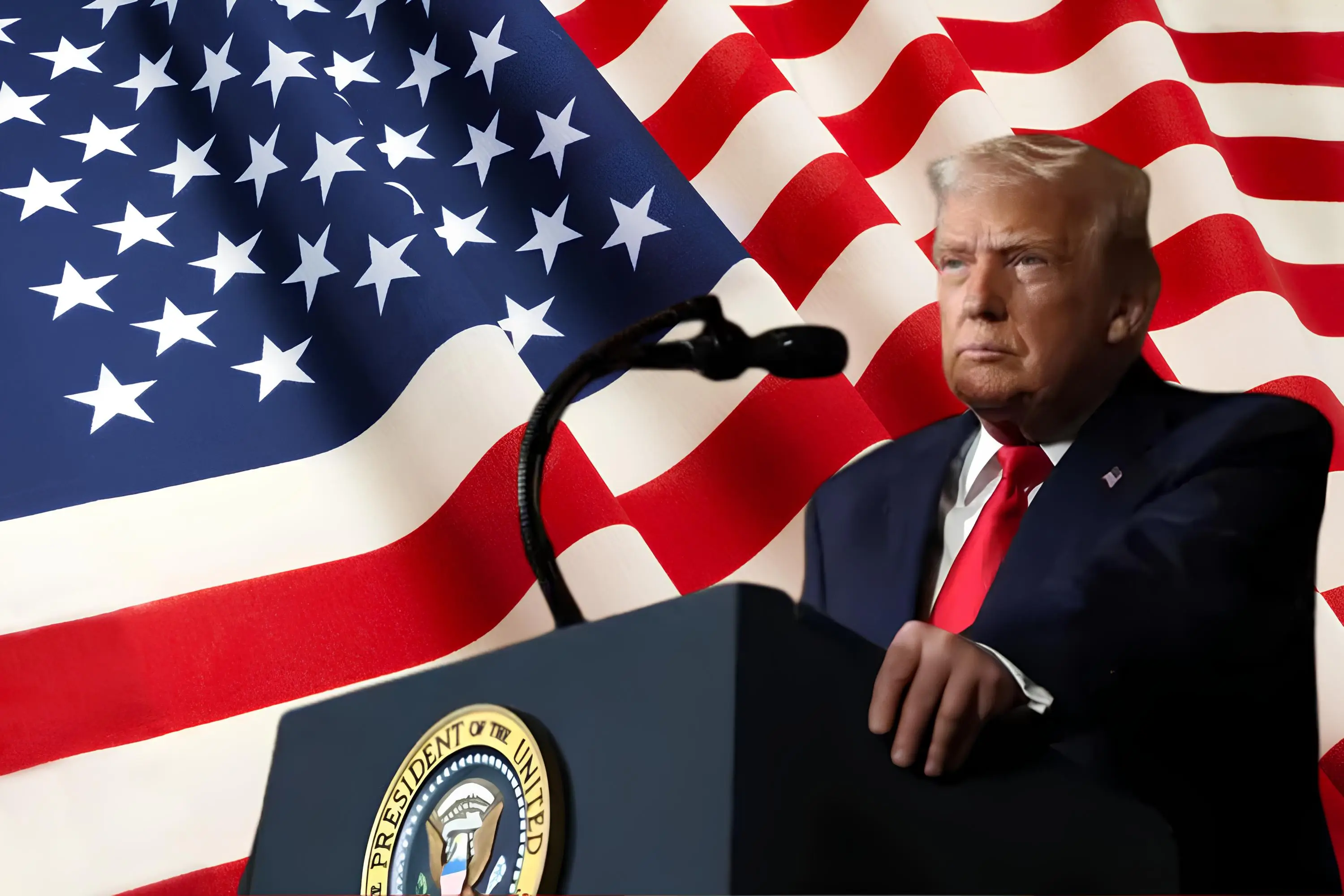
Tensions escalated after President Trump declared that the United States would roll out a new series of tariffs on European countries opposing Washington’s plan to acquire Greenland. Greenland is a vast Arctic island under Danish sovereignty, holding significant strategic importance in terms of military positioning and natural resources.
In a post on the Truth Social platform, Trump said an additional 10% tariff on imported goods from Denmark, Norway, Sweden, France, Germany, the Netherlands, Finland, and the United Kingdom would take effect on February 1. These tariffs are expected to rise to 25% from June 1 and remain in place until the United States reaches an agreement to purchase Greenland.
These countries were already subject to baseline tariffs under temporary trade arrangements reached last year between the U.S., the EU, and the UK, heightening the risk of a broader trade confrontation.
EU High Representative for Foreign Affairs Kaja Kallas warned that tariff measures would not only harm Europe’s economy but also weaken the U.S. economy itself.
“Tariffs risk making both Europe and the United States poorer and eroding our shared prosperity,” Kallas wrote on X.
She also emphasized that if the United States has security concerns regarding Greenland, the issue can and should be addressed within the NATO framework, rather than through economic coercion against allies.
According to analysts, the firm language from Brussels signals that the EU is shifting from a defensive posture to a more proactive stance, prepared to push back if Washington continues to use tariffs as a tool of political pressure.
Amid the threat of escalating tariffs, ambassadors from all 27 EU member states convened for an emergency meeting on January 18 to discuss a coordinated response. The meeting aimed to demonstrate internal unity and strong support for Denmark over the Greenland issue.
Beyond the EU, several European countries — including Norway, Sweden, Finland, and the United Kingdom — have also publicly expressed support for Copenhagen, warning that any attempt by the U.S. military to take control of territory belonging to a NATO member could threaten the very foundations of the alliance.
Danish Foreign Minister Lars Løkke Rasmussen said his government was “completely surprised” by the U.S. president’s announcement, reiterating Denmark’s long-standing position that Greenland is not for sale.
UK Prime Minister Keir Starmer also responded forcefully, stressing that imposing tariffs on allies simply because they support NATO’s collective security is “completely wrong.” He said London would raise the issue directly with Washington in upcoming diplomatic engagements.
Meanwhile, thousands of people took to the streets in Denmark and Greenland to protest Trump’s demands, calling on the United States to respect Greenlanders’ right to self-determination and international law.
President Trump has repeatedly argued that Greenland is vital to U.S. national security due to its strategic Arctic location and vast mineral resources. He has even refused to rule out the use of force to gain control of the island, a stance that has sparked deep concern across Europe.
However, a Reuters/Ipsos poll conducted this week found that fewer than one in five Americans support the idea of purchasing Greenland, highlighting significant domestic division within the United States over the policy.
Since returning to the White House in January 2025, tariffs have become one of President Trump’s preferred policy tools to pressure both adversaries and allies into meeting U.S. strategic demands.
This week, Trump also announced plans to impose a 25% tariff on any country trading with Iran, although the White House has yet to release an official legal framework or clarify the legal basis for such a policy. This uncertainty has fueled concerns that U.S. trade policy is becoming increasingly unpredictable and destabilizing for global commerce.
The confrontation over Greenland and the accompanying tariff threats has become a major test of transatlantic relations. What began as a dispute over an Arctic territory has rapidly evolved into a broader diplomatic and economic crisis, threatening to weaken the EU–U.S. partnership and NATO.
At a time when the global economy faces mounting risks, the EU has reaffirmed its commitment to unity and the defense of member-state sovereignty. How Washington and Brussels manage this escalating tension in the coming weeks will have far-reaching implications not only for Europe and the United States, but also for the global economic and security order.

.jpg)
.png)
 Tiếng Việt
 English