.png)
 Tiếng Việt
 English


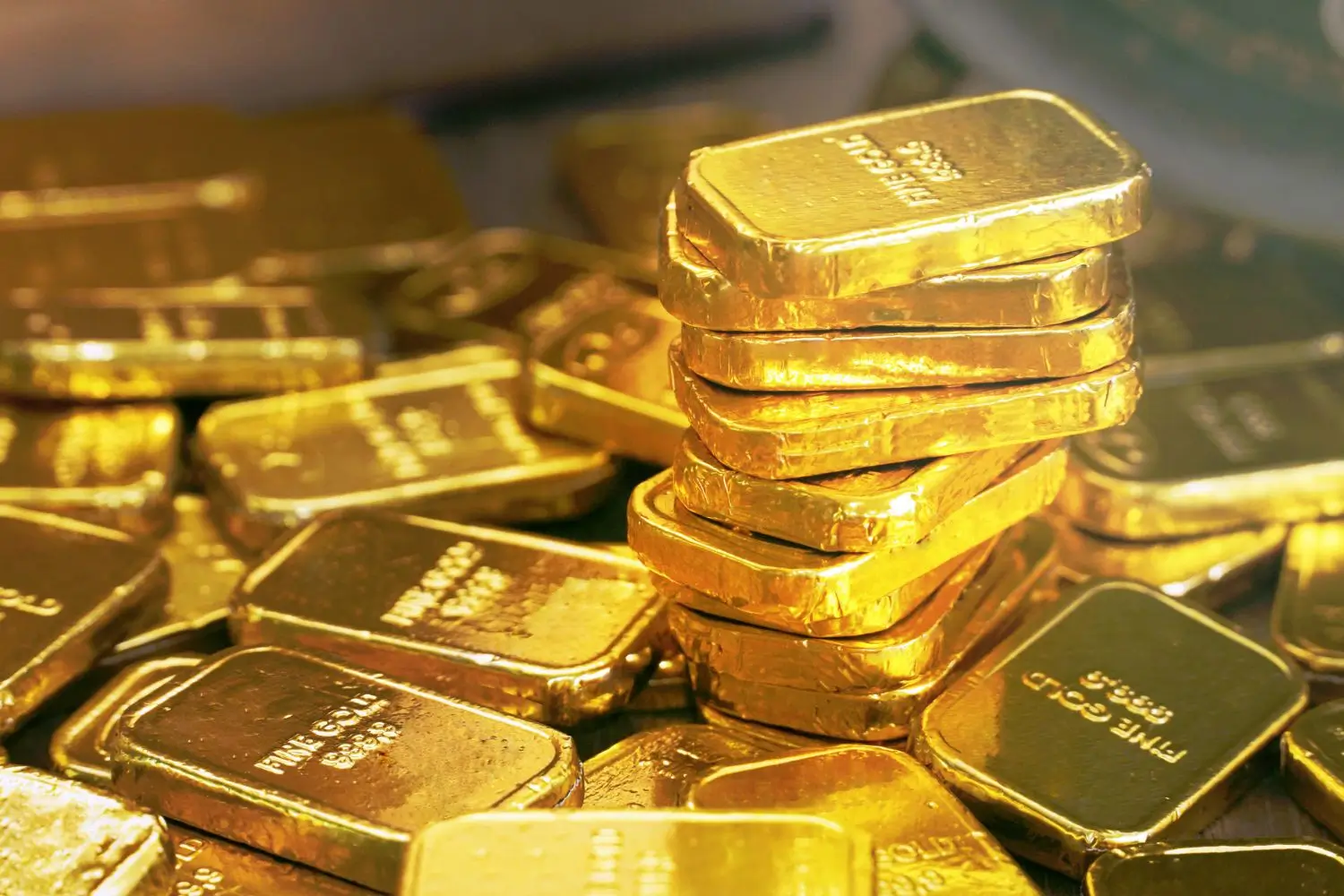 The global gold market is entering a sensitive phase as prices continue to fluctuate around the key psychological level of $5,000 per ounce. Despite escalating geopolitical tensions in the Middle East and rising oil prices, gold has yet to deliver the strong breakout many investors expected.
This development reflects a tug-of-war between two dominant forces: increasing safe-haven demand and pressure from global monetary policy.
During the March 17 trading session, global gold prices moved within a range of $5,000 to $5,034 per ounce, signaling a largely sideways trend.
While there has been no sharp rally, intraday volatility remains relatively high, indicating that investor sentiment is still cautious.
Key factors influencing gold prices include:
Geopolitical developments in the Middle East
Movements of the U.S. dollar
Expectations surrounding Federal Reserve policy
Notably, gold is no longer reacting in a one-directional manner to global risks, but instead showing alternating cycles of gains and corrections.
In Vietnam, SJC gold prices remain elevated, trading around 180–183 million VND per tael.
The gap between domestic and global gold prices continues to stay wide, ranging from 20 to 24 million VND per tael. This reflects:
Limited domestic supply
Strong demand for investment and wealth preservation
Unique regulatory mechanisms in the gold market
Intraday movements show that prices dipped slightly early in the session before recovering, indicating stable underlying demand.
Despite supportive conditions, gold has not experienced a strong breakout due to several macroeconomic constraints.
A stronger U.S. dollar makes gold more expensive for international investors.
At the same time, elevated U.S. Treasury yields increase the opportunity cost of holding gold, a non-yielding asset.
This remains the most significant factor limiting gold’s upside.
Markets expect the Fed to maintain a cautious approach and delay monetary easing despite rising economic risks.
This results in:
Prolonged high interest rates
Reduced short-term appeal of gold
Investors are waiting for clearer signals regarding rate cuts before increasing their exposure to gold.
At times, global equity markets have rebounded, drawing capital away from safe-haven assets like gold.
This has created short-term downward pressure, preventing gold from sustaining continuous upward momentum.
Despite headwinds, gold has demonstrated strong resilience around the $5,000 level, supported by several key drivers.
Geopolitical tensions involving Iran, Israel, and United States are driving demand for safe-haven assets.
In times of uncertainty, gold remains a preferred choice for global investors.
Central banks worldwide continue to increase gold reserves as part of their strategy to diversify foreign exchange holdings.
This trend has become a long-term support pillar for the gold market.
Gold ETFs are seeing renewed inflows, reflecting institutional confidence in the long-term outlook for precious metals.
This is a key factor helping gold maintain its elevated price range.
In the short term, gold is likely to continue trading within a wide range around $5,000 per ounce.
Key factors shaping the outlook include:
Geopolitical developments in the Middle East
U.S. dollar strength and bond yields
Monetary policy direction of the Federal Reserve
Capital flows into ETFs
Some financial institutions suggest that if inflation resurges due to rising energy prices, gold could enter a new bullish cycle.
Conversely, prolonged monetary tightening could limit its upside in the medium term.
For investors, the current gold market presents both opportunities and risks.
Opportunities:
Gold remains an effective defensive asset
Positive long-term outlook
Strong support from geopolitical factors
Risks:
High short-term volatility
Dependence on monetary policy
Pressure from a strong U.S. dollar
This environment requires a flexible investment strategy rather than reactive decision-making.
Gold’s ability to hold near $5,000 per ounce reflects a market in a delicate balance between risk and opportunity.
While it has yet to break out decisively, its resilience highlights the metal’s underlying strength amid global uncertainty.
In the coming period, gold’s trajectory will largely depend on two key factors:
Geopolitical tensions and global monetary policy.