Gold prices climb in Asian trading as weak U.S. economic data boosts expectations of a Federal Reserve rate cut in December, while a softer dollar provides support.

Gold prices advanced during Wednesday’s Asian session, supported by a weaker U.S. dollar and renewed optimism that the Federal Reserve may cut interest rates in December. The rally came after a batch of softer-than-expected U.S. economic indicators reinforced views that the economy is cooling and that the Fed’s tightening cycle is nearing an end.
Safe-haven demand also remained firm despite a broader rise in risk assets this week. Persistent geopolitical tensions—particularly the prolonged standoff between Japan and China, uncertainty surrounding the Russia–Ukraine ceasefire, and concerns over stretched fiscal spending—added additional support to bullion.
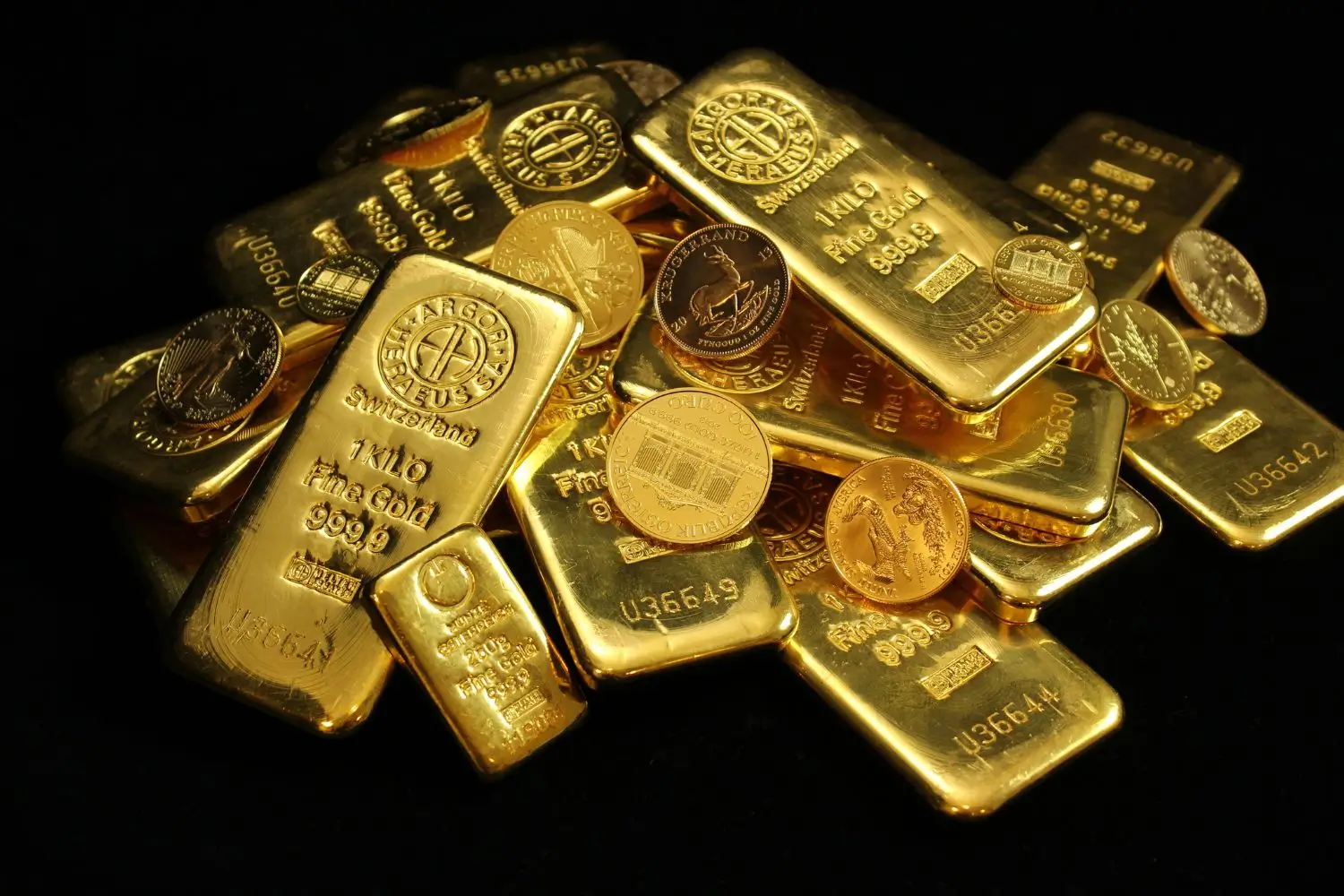
Spot gold rose 0.9% to $4,166.13 per ounce, while February gold futures climbed 0.9% to $4,201.15 per ounce as of 00:24 ET (05:24 GMT).
Gold surged on Tuesday and Wednesday after several key U.S. economic reports for September pointed to slowing momentum across the world’s largest economy.
Retail sales showed little to no growth for the month.
Core producer inflation (PPI) cooled more than anticipated.
The combination signaled a continued softening in underlying economic activity, strengthening the case for the Federal Reserve to pivot toward more accommodative policy.
Moreover, the September figures may be one of the last major data points the Fed receives before its December meeting. The prolonged U.S. government shutdown is expected to delay October’s inflation and labor reports indefinitely, further complicating the central bank's decision-making process.
Adding to the uncertainty, the Personal Consumption Expenditures (PCE) Price Index—the Fed’s preferred inflation gauge—was rescheduled by the Bureau of Economic Analysis with no new release date set.
Market confidence in a December rate cut has risen sharply:
The probability of a 25-basis-point cut at the December 9–10 meeting surged to 80.7%,
up from just 42.4% last week, according to the CME FedWatch Tool.
Remarks from two Fed officials earlier this week—both expressing openness to further easing—further boosted bullish sentiment for gold.
Other precious metals also tracked gold’s upward momentum:
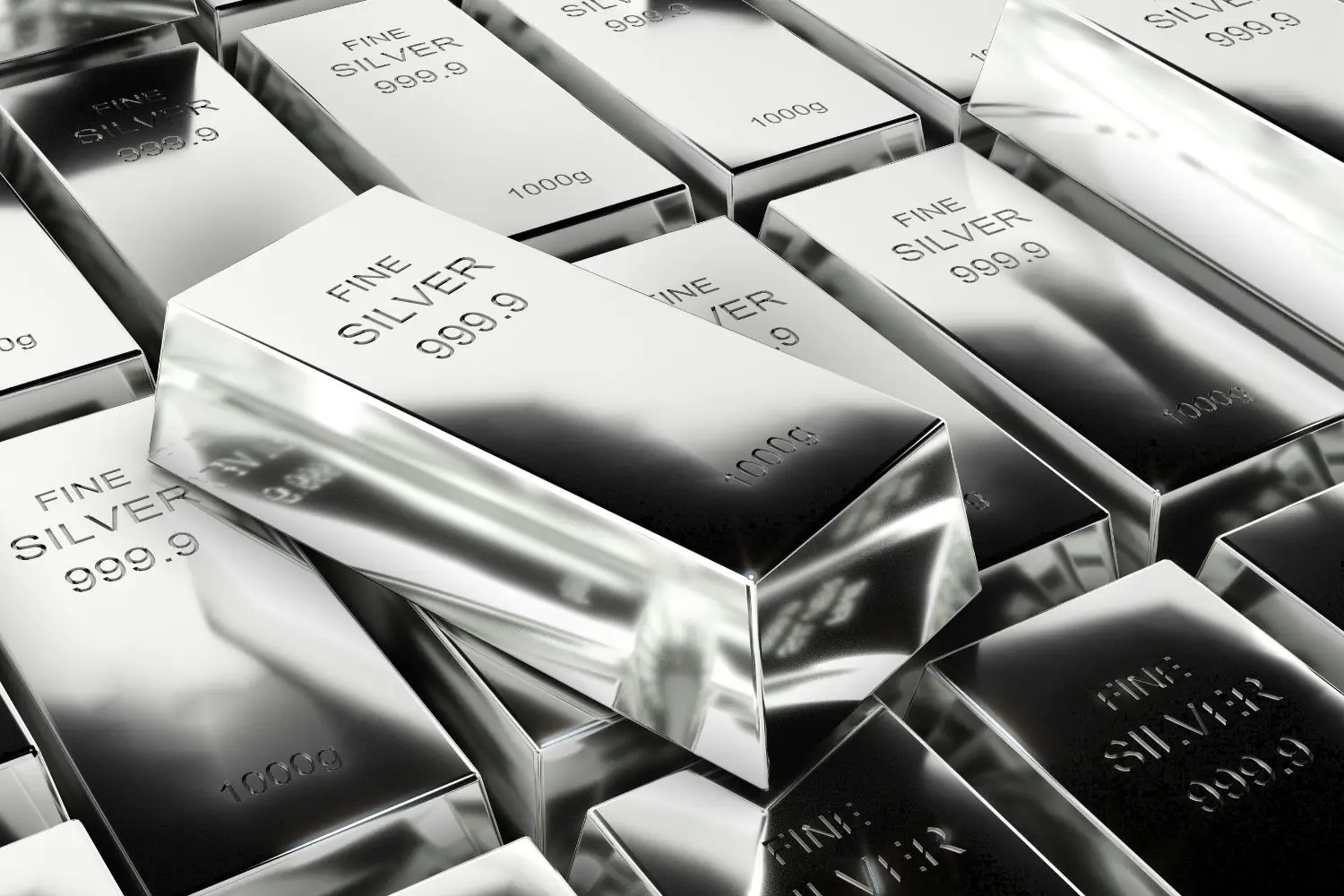
Spot silver climbed 1% to $52.0215 per ounce, approaching record highs.
Platinum advanced 0.2% to $1,559.90 per ounce.
Industrial metals joined the rally, with benchmark London Metal Exchange (LME) copper futures ticking up 0.3% to $10,992.90 per tonne. The red metal was supported by signals from Codelco—Chile’s state-owned mining giant—that it intends to impose steep premium hikes for Chinese customers next year.
Lower global interest rates typically boost industrial commodities by weakening the dollar and improving market liquidity, both of which enhance demand across manufacturing sectors.
Gold and the broader metals complex also benefited from a decline in the U.S. dollar, which retreated from six-month highs amid shifting interest rate expectations.
A weaker dollar typically lifts dollar-priced commodities in two ways:
Increased affordability for overseas buyers, and
Improved investment appeal for non-yielding assets such as gold.
The U.S. Dollar Index (DXY) eased 0.5% from last week’s peak, reinforcing support for gold’s upward move.
Gold tends to perform well in lower-rate environments because it is a non-yielding asset. When interest rates fall:
The opportunity cost of holding gold decreases.
Treasury yields become less attractive relative to bullion.
Investors shift toward safe havens during economic uncertainty.
This dynamic—combined with a weaker dollar—forms the backbone of gold’s strong rally this week.
With expectations for a December rate cut gaining momentum, analysts believe gold could extend its rally in the near term. However, the sustainability of this trend will depend on several key factors:
Any hawkish signaling in upcoming speeches could dampen expectations for easing.
If incoming data (whenever available) shows resilience, traders may reassess rate-cut probability.
A sharp rebound in the dollar could limit gold’s upside.
Persistent risks—including tensions in Asia and Europe—could continue to fuel safe-haven demand.
Overall, sentiment remains broadly supportive for bullion heading into December.
Because weak U.S. economic data and a softer dollar boosted expectations that the Fed will cut interest rates in December, increasing demand for gold.
Retail sales stagnated and core PPI inflation cooled more than forecast, suggesting continued economic softening.
A softer dollar makes gold cheaper for international buyers and enhances the appeal of non-yielding metals relative to U.S. assets.
Yes. Silver and platinum gained alongside gold, while copper rose on expectations of higher supply premiums from major producer Codelco.

.jpg)

.png)
 Tiếng Việt
 English