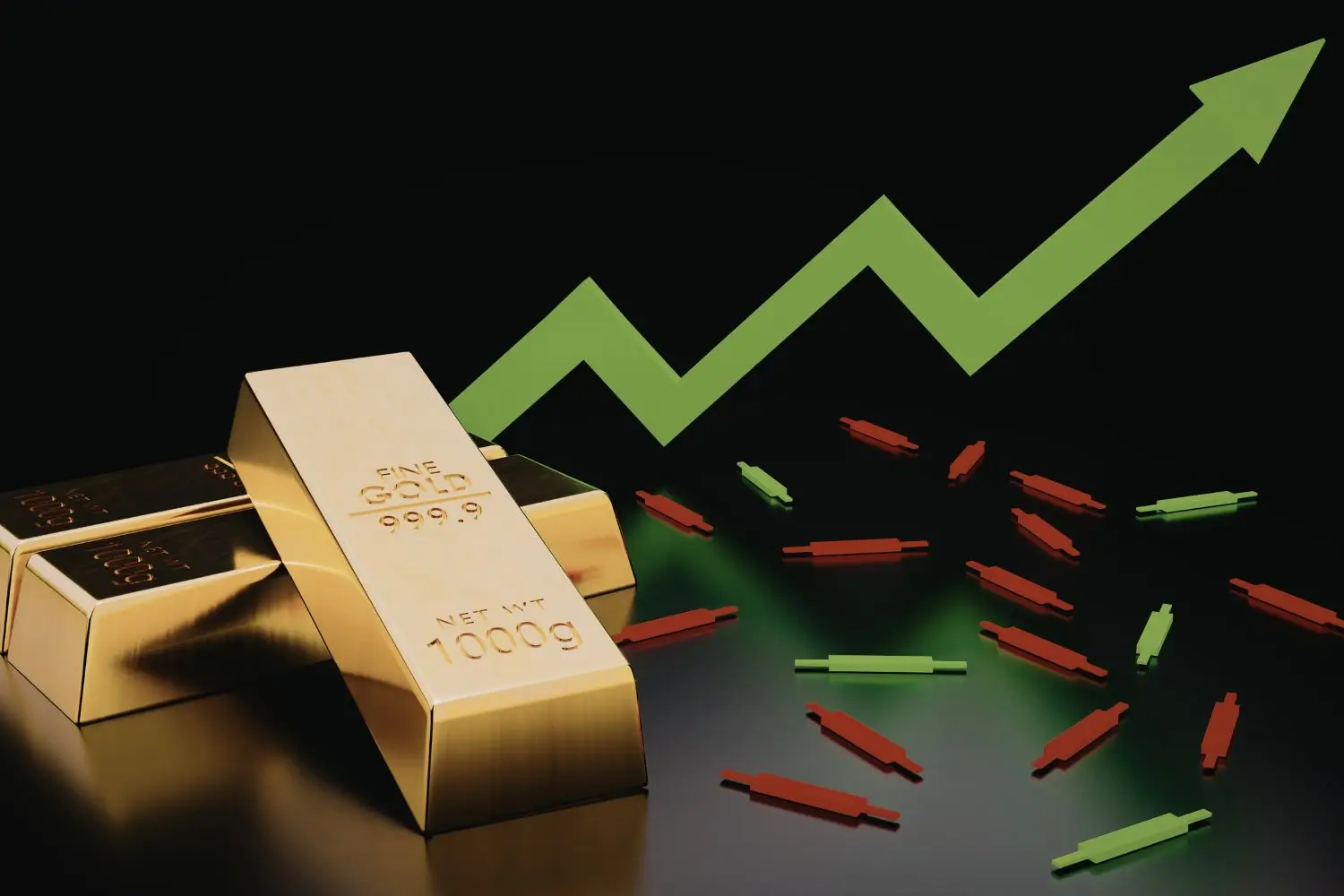
 Global gold prices advanced for a fourth consecutive session on Monday, building on last week’s gains as newly announced U.S. global tariffs and recent economic data reinforced demand for safe-haven assets.
Spot gold was last up 0.8% at $5,143.55 per ounce as of 00:53 GMT (7:53 a.m. Hanoi time). U.S. gold futures rose even more sharply, gaining 1.7% to $5,165.86.
The rally follows a more than 1% gain last week, when escalating geopolitical tensions between the United States and Iran intensified risk aversion across global financial markets.
The precious metal’s steady upward momentum reflects mounting uncertainty in global trade and macroeconomic conditions. Monday’s gains extended a broader recovery trend, with investors increasingly turning to gold as a defensive allocation.
The move higher underscores gold’s enduring appeal during periods of political tension, trade disruption, and economic fragility.
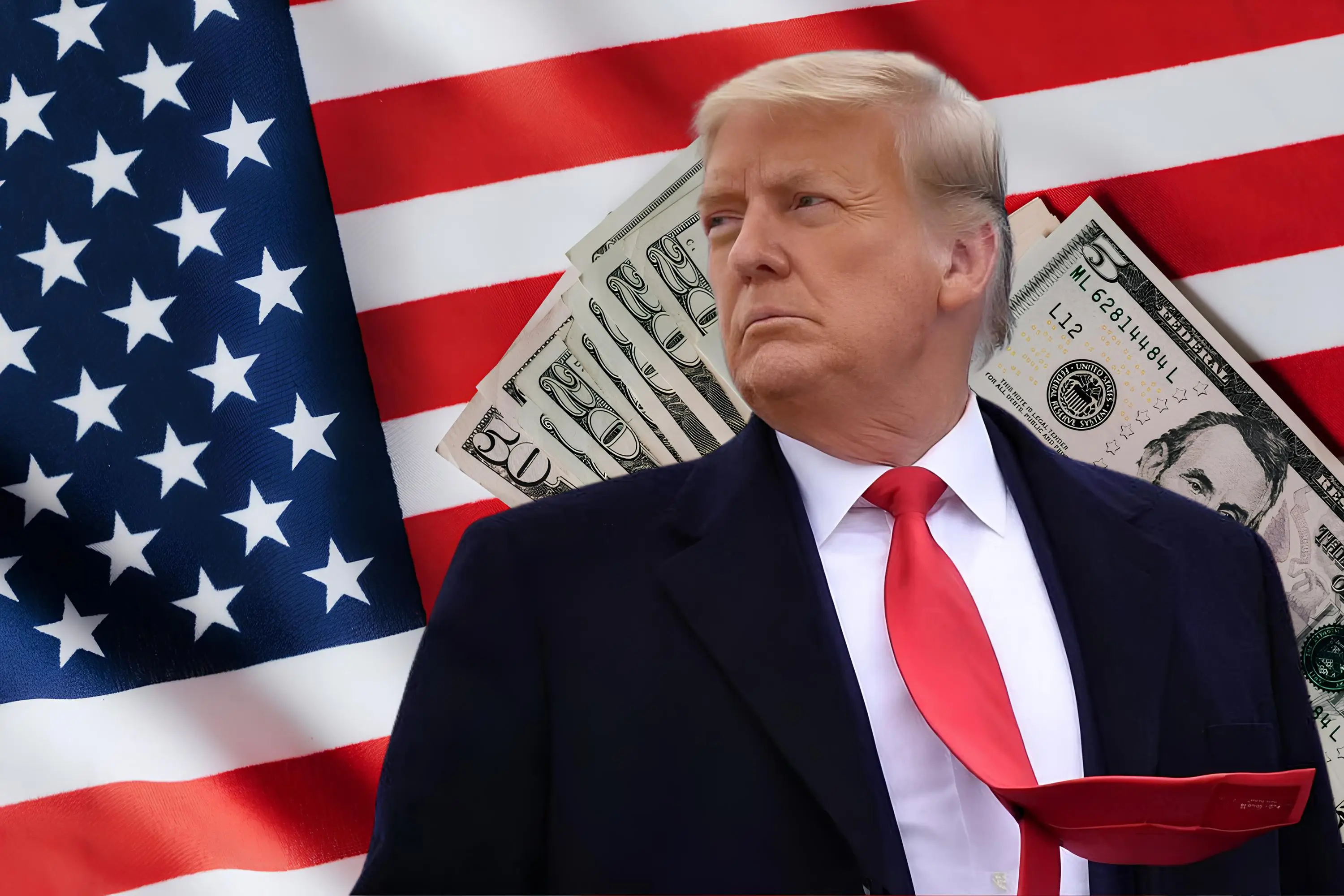
Over the weekend, President Donald Trump announced a 10% universal tariff on global imports for 150 days under Section 122 of U.S. trade law. The measure followed a ruling by the U.S. Supreme Court that struck down a broader tariff regime previously imposed under emergency powers.
Shortly afterward, the administration raised the tariff rate to 15%—the maximum permitted under the statute—heightening concerns over potential retaliation and disruptions to global supply chains.
The tariff announcement negatively impacted risk sentiment, pressuring equity markets while channeling capital flows into traditional safe-haven assets such as bullion and U.S. Treasury bonds.
Uncertainty surrounding the duration, scope, and potential legal or congressional challenges to the new tariffs has further amplified market volatility.
Beyond trade tensions, gold has drawn additional support from softer U.S. economic data released last week.
The U.S. economy expanded at an annualized rate of 1.4% in the fourth quarter, marking a notable slowdown compared to the previous quarter. The deceleration suggests moderating consumer spending and business investment amid tighter financial conditions.
At the same time, the Personal Consumption Expenditures (PCE) price index—the Federal Reserve’s preferred inflation gauge—rose 2.9% year-over-year in December. Core PCE stood near 3.0%, remaining above the central bank’s 2% target.
The combination of slowing growth and persistent inflation—often described as a mild stagflationary environment—has strengthened gold’s role as both an economic hedge and a store of value.
Gold typically outperforms during periods characterized by:
Geopolitical instability
Financial market volatility
Elevated inflation
Slowing economic growth
Currently, all four conditions are present simultaneously.
New tariffs increase the risk of global trade disruptions and slower growth. Meanwhile, sticky inflation complicates the Federal Reserve’s path toward interest rate adjustments.
If policymakers maintain higher interest rates for longer to combat inflation, recession risks could rise—further enhancing gold’s attractiveness as a defensive asset.
Alongside gold, U.S. Treasury bonds have also seen rising demand as investors rotate out of risk-sensitive assets.
However, unlike bonds—which generate fixed yields—gold does not provide interest income. In an environment of sustained inflation and heightened uncertainty, investors may favor gold as a hedge against the erosion of real purchasing power.
With four consecutive sessions of gains and prices holding above $5,140 per ounce, near-term momentum remains supportive.
Analysts suggest that gold’s next direction will depend on:
The implementation timeline and international response to new U.S. tariffs
Upcoming U.S. economic indicators, particularly inflation and labor market data
Policy signals from the Federal Reserve
Should trade tensions intensify further or economic data point to deeper weakness, gold may continue to attract safe-haven inflows.
Gold’s four-day rally reflects growing defensive positioning across global markets. Newly imposed U.S. tariffs under President Donald Trump, combined with softer economic growth and persistent inflation, have created a supportive backdrop for the precious metal.
In an environment marked by trade uncertainty and ambiguous monetary policy signals, gold continues to reaffirm its status as a traditional financial refuge. While future price movements will hinge on macroeconomic developments, the current balance of risks appears to favor sustained demand for safe-haven assets.

.png)
 Tiếng Việt
 English