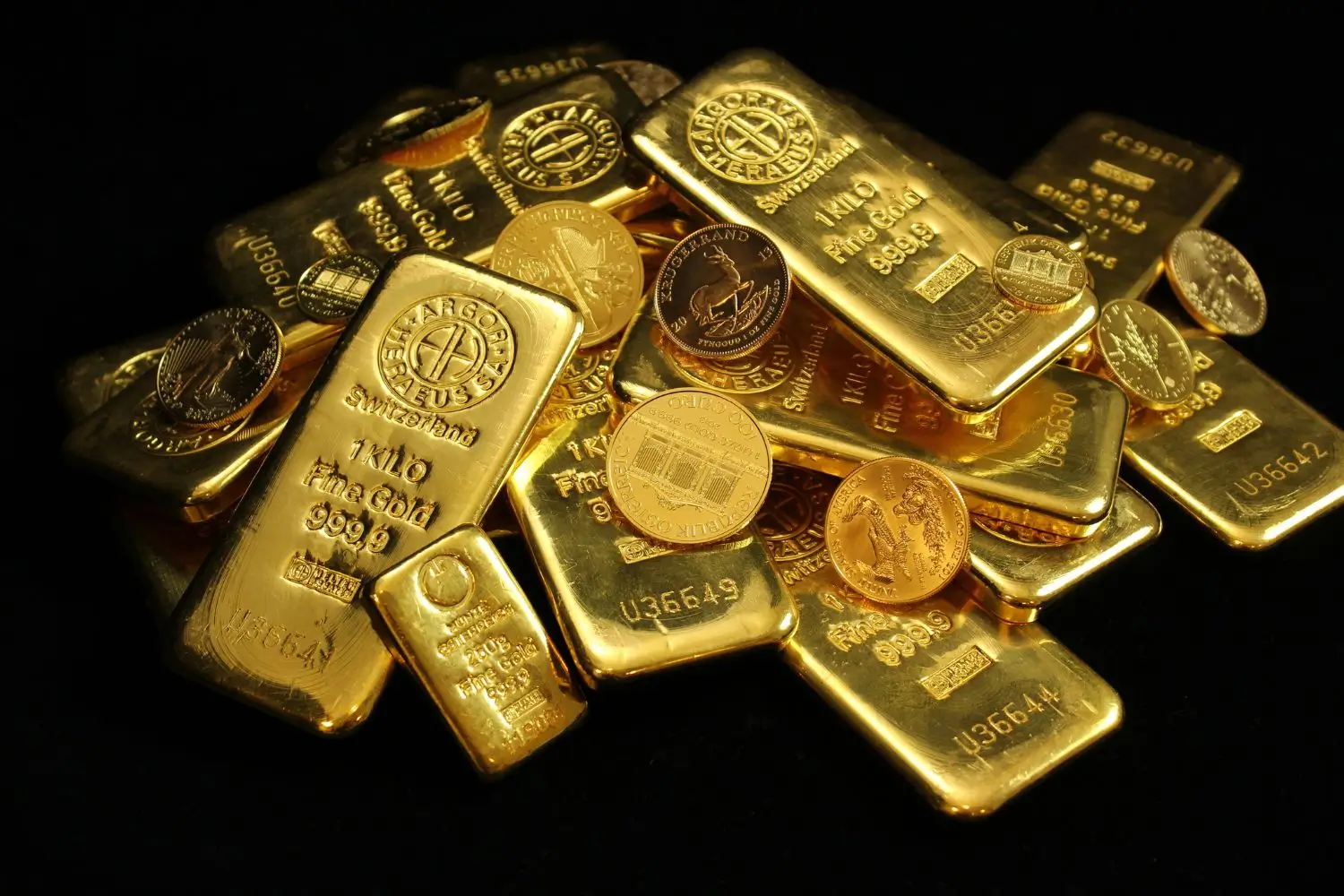
Spot gold surged above $4,000 per ounce in Asian trading as a weakening U.S. dollar and rising expectations of a Federal Reserve rate cut in December fueled demand for safe-haven assets. Ongoing developments in the U.S. government shutdown also influenced investor sentiment.
Gold is entering a remarkable growth phase, driven by a confluence of macroeconomic and political factors. During Monday’s Asian session, the precious metal broke through the $4,000/oz mark — a clear signal of shifting sentiment in global markets amid expectations of monetary easing from the Federal Reserve and persistent uncertainty surrounding the U.S. economy.
According to the latest data, spot gold rose about 1.8% to reach $4,070.99/oz, its highest level in more than two weeks. Meanwhile, December gold futures climbed to around $4,079.70/oz.
Key drivers behind this surge include:
The U.S. dollar’s continued weakness, as investors increasingly bet that the Fed will cut rates in December.
Signs of an economic slowdown in the U.S. — rising layoffs in the private sector and declining consumer confidence — have boosted gold’s appeal as a safe-haven asset.
Prolonged uncertainty due to the U.S. government shutdown, which has added further volatility to financial markets.
A weaker dollar typically makes gold cheaper for buyers using other currencies, thereby stimulating demand. In addition, when interest rates fall or the likelihood of a rate cut increases, gold — a non-yielding asset — becomes relatively more attractive.
Recent data pointing to weaker job creation and lower consumer sentiment has heightened investor concerns about the durability of the U.S. recovery. As a result, demand for gold as a hedge against economic risks continues to rise.
Beyond monetary dynamics, U.S. political and fiscal developments are also influencing the gold market. The U.S. Senate recently voted to advance a funding bill that could end what has become the longest government shutdown in American history — a move expected to reduce current levels of uncertainty.
Reopening the government would restore the publication of key economic data, resume pay for federal employees, and ease some of the fiscal anxiety in markets. In the short term, this news is paradoxically supporting gold prices, as traders position themselves ahead of expected market shifts once stability returns.
Markets are increasingly pricing in a 25-basis-point rate cut by the Fed in December. The CME FedWatch tool now places the probability of such a move at roughly 67%.
If rates do fall, the opportunity cost of holding gold (which yields no interest) diminishes, making it more attractive to investors. This also explains why other precious metals like silver and platinum have seen parallel gains.
However, potential risks remain:
If the U.S. economy rebounds strongly or inflation accelerates, the Fed may decide not to cut — or even to raise rates, putting downward pressure on gold.
A sudden rebound in the U.S. dollar or rapid improvement in fiscal stability could similarly cap gold’s upside.
Some analysts believe gold could test the $4,300–$4,400/oz range if supportive conditions persist — though this scenario is far from risk-free.
For investors in Vietnam, global gold dynamics present both opportunities and challenges:
Opportunity: Gold serves as an effective hedge when the USD weakens or global economic growth stalls. If timed correctly, investors could benefit from favorable price movements.
Challenge: Exchange rate fluctuations (USD/VND), import costs, and domestic liquidity constraints can impact actual returns when converting profits back into local currency.
Advice: Treat gold as one component of a diversified portfolio — not a standalone investment. Diversification remains key to mitigating market risks.
Strategy: Consider gradual accumulation when bullish momentum is confirmed, but maintain a clear exit plan. Closely monitor Fed policy announcements, USD movements, and U.S. government developments.
Gold’s surge past $4,000/oz is more than just a technical milestone — it reflects multiple converging catalysts: a weaker U.S. dollar, growing bets on Fed rate cuts, and lingering uncertainty from the U.S. government shutdown. In this environment, gold is reaffirming its role as the preferred safe haven for global investors.
However, as history shows, the precious metal’s ascent can reverse quickly if risks subside or if monetary policy deviates from expectations. For Vietnamese investors and others worldwide, the current rally represents a valuable opportunity — but one that calls for prudence, timing, and strategic diversification.
Q1: Why does gold rise when the U.S. dollar weakens?
A: A weaker dollar makes gold cheaper for buyers using other currencies. Additionally, when interest rates fall or are expected to fall, the opportunity cost of holding non-yielding assets like gold decreases, boosting demand.
Q2: How does the U.S. government shutdown affect gold prices?
A: A government shutdown increases uncertainty by delaying economic data and disrupting public-sector operations. This uncertainty drives investors toward gold as a safe-haven asset.
Q3: Is a Fed rate cut in December guaranteed?
A: Not entirely. While markets currently assign a 67% probability, the Fed’s decision will depend on incoming data. A strong rebound in growth or inflation could delay or cancel a rate cut.
Q4: What should Vietnamese investors do now?
A: Use gold as part of a diversified strategy. Monitor the USD/VND exchange rate, import costs, and market liquidity. Avoid going all-in and have a clear plan for both entry and exit as market conditions evolve.

.jpg)
.png)
 Tiếng Việt
 English