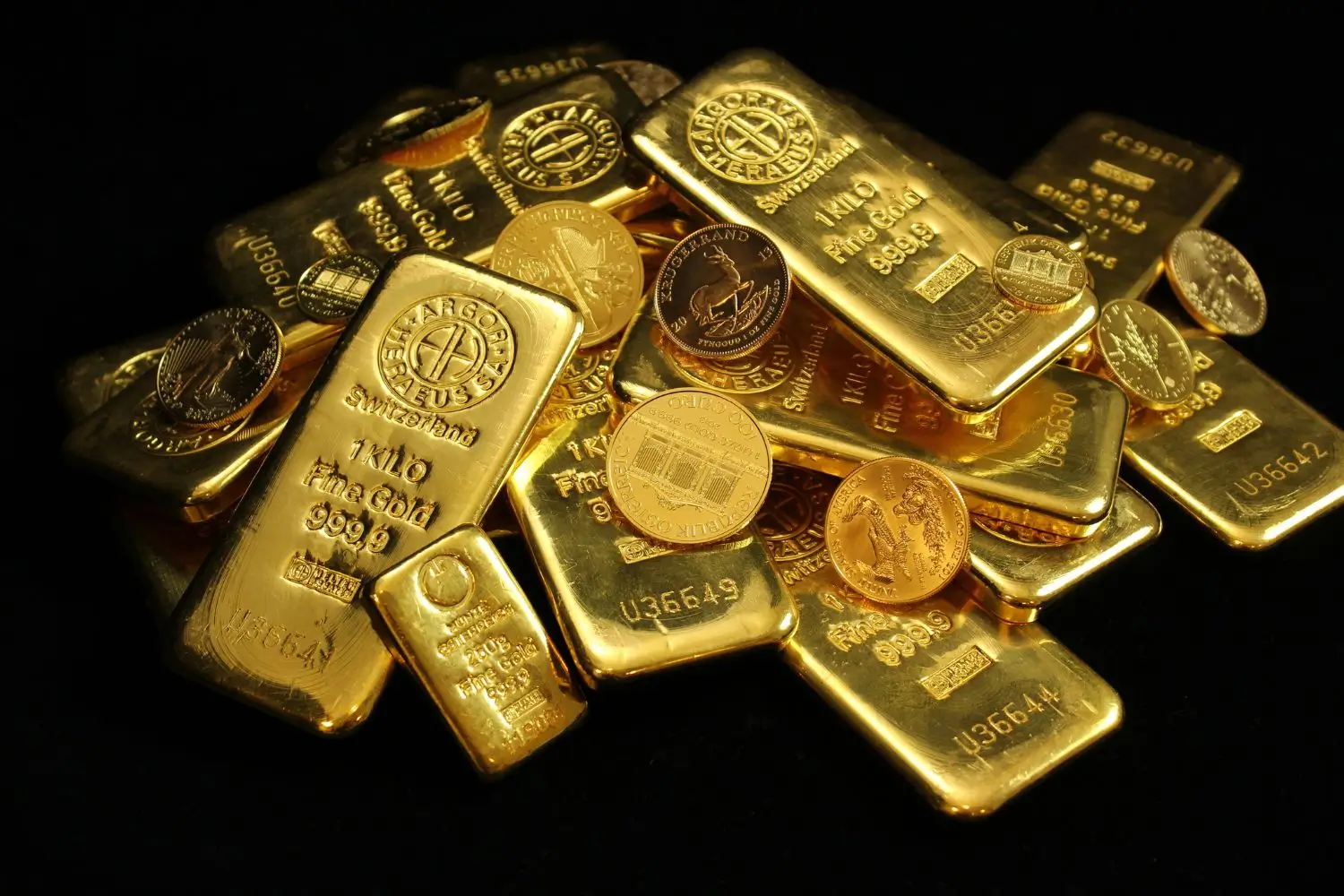
The gold market witnessed a sharp rally in the latest session, with Comex futures climbing $16.60 to a record close of $3,680 per ounce. The surge reflects growing investor confidence that the U.S. Federal Reserve (Fed) could soon ease monetary policy, as inflation shows signs of cooling and geopolitical tensions intensify.
Recent inflation data has significantly reshaped market expectations regarding the Fed’s policy direction. According to the CME FedWatch tool, traders are now pricing in an 8% chance of a 50-basis-point rate cut at next week’s FOMC meeting—a scenario previously considered highly unlikely.
The shift stems from the August Producer Price Index (PPI) report, which showed inflation moderating faster than expected. Headline PPI dropped from 3.1% to 2.6% year-over-year, while core PPI fell to 2.8% from a revised 3.4% in July. This disinflationary trend has reinforced expectations for a more dovish Fed stance.
Meanwhile, the U.S. Dollar Index remained stable around 97.75, suggesting currency markets have yet to fully price in the implications of a potential policy shift.
Markets are now awaiting the August Consumer Price Index (CPI) report, due Thursday. Analysts forecast headline CPI to rise from 2.7% to 2.9% year-over-year, while core CPI is expected to remain steady at 3.1%. These figures will be pivotal in shaping the Fed’s decision and could further influence gold’s near-term trajectory.
Adding to economic uncertainty, the U.S. Bureau of Labor Statistics recently revised down March 2025 payrolls by 911,000—well above economists’ estimates of a 682,000 downward revision. This highlights potential weakness in the labor market, strengthening the case for monetary easing.
Beyond economic factors, escalating geopolitical risks are providing additional support for gold. Poland accused Russian drones of violating its airspace during Moscow’s intensified strikes on Ukraine, describing the incident as an “act of aggression” and “deliberate provocation.”
At the same time, Israel launched airstrikes targeting Hamas leaders in Qatar, undermining U.S. diplomatic efforts to stabilize the Middle East. Such developments have heightened global risk aversion, driving investors toward safe-haven assets like gold.
Fundamental demand is also supported by sustained central bank purchases. The People’s Bank of China (PBoC) extended its gold-buying streak to 10 consecutive months through August, reflecting a broader push by global monetary authorities to diversify reserves away from the U.S. dollar. This trend provides a structural foundation for long-term demand, regardless of short-term price fluctuations.
With a combination of factors—rate cut expectations, falling real yields, persistent geopolitical risks, and steady central bank accumulation—gold appears well-positioned for continued strength. Investors now look to Thursday’s CPI report and next week’s Fed decision as the next key catalysts for the precious metal.

.jpg)

.png)
 Tiếng Việt
 English