.png)
 Tiếng Việt
 English


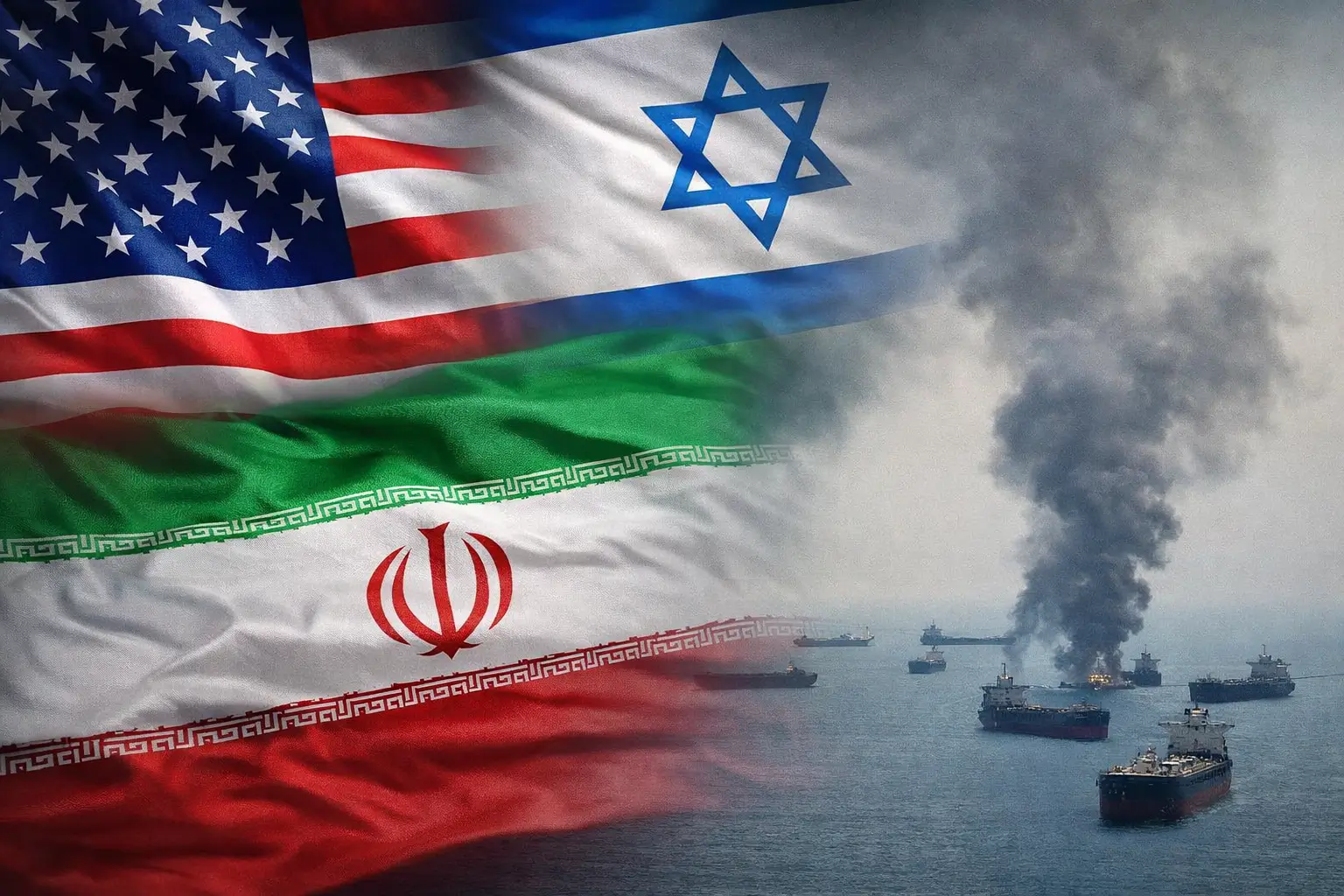 Military tensions between the United States, Israel, and Iran are rapidly spilling over into global trade and energy markets. The Strait of Hormuz—one of the world’s most strategically important shipping routes—has fallen into partial paralysis as numerous oil tankers and cargo vessels halt operations while monitoring the escalating conflict.
Experts warn that if the situation continues to deteriorate, the global energy market could face a new supply shock, while international supply chains may experience severe disruptions.
The Strait of Hormuz lies between Iran and Oman, connecting the Persian Gulf with the Gulf of Oman and the Arabian Sea. It is widely considered the “chokepoint” of the global energy market, where a large portion of Middle Eastern oil is transported to international markets.
According to international energy data, an average of 20–21 million barrels of oil pass through the strait every day, representing nearly 20% of global oil consumption and more than a quarter of seaborne oil trade.
Beyond crude oil, the Strait of Hormuz is also a major route for liquefied natural gas (LNG). Approximately one-fifth of global LNG trade passes through this corridor, particularly shipments from Qatar to Asian and European markets.
This makes Hormuz one of the world’s most critical economic chokepoints: any disruption here can quickly impact energy prices, inflation, and global financial markets.
Following US and Israeli military strikes against Iran in late February 2026, security conditions around the Strait of Hormuz have deteriorated rapidly.
Many international shipping companies have suspended voyages through the area due to fears of potential attacks. Oil tankers, container ships, and LNG carriers are currently anchoring on both sides of the strait while assessing the evolving security situation.
In the early days of the conflict, several vessels were reportedly attacked or struck by projectiles in waters near Hormuz, causing casualties among crew members and intensifying concerns within the maritime industry.
War risk insurance premiums for vessels operating in the region have also surged, prompting many shipowners to delay voyages. As a result, traffic through the strait has slowed dramatically, significantly reducing the flow of energy exports from the Persian Gulf to global markets.
Because energy trade operates within a global network, instability at Hormuz does not remain confined to the Middle East. Instead, its impact quickly spreads to major markets worldwide—particularly Europe.
The continent still relies heavily on energy supplies from Gulf nations, including crude oil, diesel, jet fuel, and liquefied natural gas.
Currently, several oil tankers and LNG carriers destined for Europe have been forced to delay their voyages. In addition to energy shipments, industrial commodities such as aluminum and fertilizers (including urea) from the Middle East are also facing delays, placing further pressure on global supply chains.
If the disruption persists, the global energy market could face a shock comparable to past oil crises. Analysts warn that oil prices may experience significant volatility, potentially fueling inflation across many major economies.
Energy markets reacted quickly as tensions escalated. Brent crude prices briefly surged as investors grew concerned that Middle Eastern supply flows could face prolonged disruption.
If traffic through the Strait of Hormuz remains restricted, millions of barrels of oil per day could become stranded in the Persian Gulf. Some energy companies are attempting to redirect exports through alternative pipeline routes, but the capacity of these pipelines remains limited.
Even if pipelines in Saudi Arabia or the United Arab Emirates operate at maximum capacity, analysts note that they could only replace a small portion of the oil typically shipped through Hormuz.
This leaves the global energy market highly vulnerable to geopolitical shocks in the region.
In response to the threat of trade disruption, several European countries have intensified both military and diplomatic efforts to safeguard freedom of navigation in the Strait of Hormuz.
France is leading an international initiative aimed at reopening the critical shipping route. French naval forces have deployed a major fleet—including an aircraft carrier and multiple warships—to establish secure corridors for escorting container ships and oil tankers.
Meanwhile, the European Union has extended and expanded its maritime security operations in the Middle East to protect commercial vessels from threats such as drones, missile strikes, and other military activities.
Countries including the United Kingdom, the Netherlands, Greece, and Germany are also participating in patrol operations to ensure the safety of vital energy shipping lanes.
Analysts warn that if the conflict in the Middle East continues, the consequences for the global economy could be severe.
Beyond oil prices, multiple sectors—including natural gas markets, shipping, maritime insurance, and even food supply chains—could experience ripple effects.
At a time when the global economy is still recovering from several major shocks, any prolonged disruption at the Strait of Hormuz could trigger a new wave of volatility in global financial markets.
For this reason, investors, policymakers, and energy companies worldwide are closely monitoring developments in the region. Even a small shift in geopolitical dynamics could have far-reaching consequences for the global energy system.