.png)
 Tiếng Việt
 English


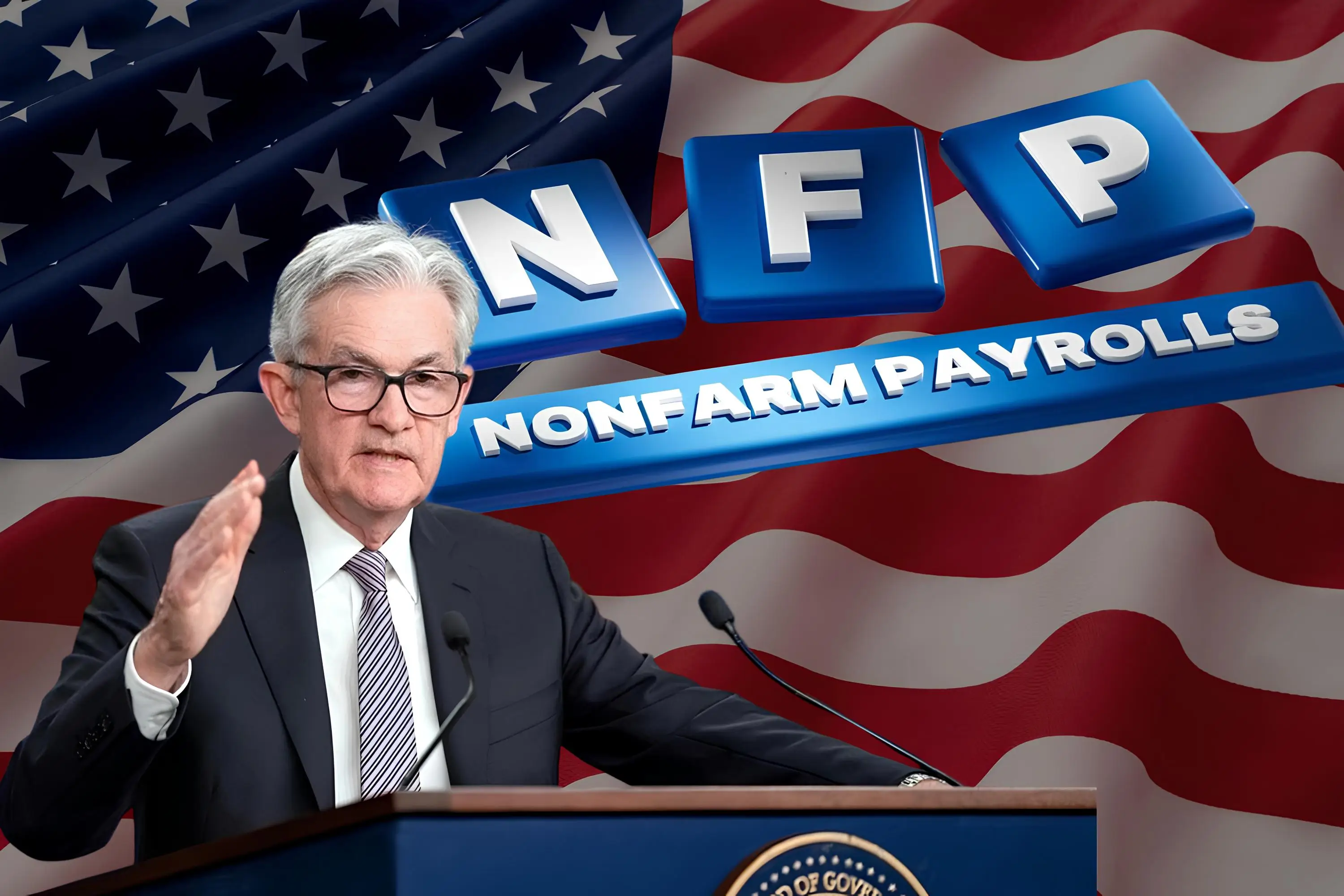
The US Nonfarm Payrolls (NFP) report is widely regarded as one of the most influential economic indicators in global financial markets. Beyond measuring job creation in the US economy, it plays a pivotal role in shaping expectations for Federal Reserve monetary policy, which in turn directly affects gold prices.
For gold investors, the NFP report influences market dynamics through three core components: average hourly earnings, changes in nonfarm employment, and the unemployment rate. Each of these variables impacts inflation expectations, interest rates, and the strength of the US dollar—key drivers of gold’s short- and medium-term price movements.
Average hourly earnings serve as a critical gauge of wage-driven inflation. When actual wage growth comes in below market expectations, it signals easing inflationary pressures.
Under this scenario:
The Federal Reserve faces less urgency to maintain restrictive monetary policy
Expectations for interest rate cuts increase
US Treasury yields and the US dollar typically weaken
As a result, gold prices tend to rise, as the opportunity cost of holding non-yielding assets declines. Market estimates suggest that average hourly earnings account for roughly 20% of the NFP report’s overall impact on gold prices.
Conversely, stronger-than-expected wage growth reinforces inflation concerns, supporting higher interest rates and exerting downward pressure on gold.
Among the components of the NFP report, changes in nonfarm employment carry the greatest influence on gold prices, accounting for an estimated 50% of the market reaction.
When job growth falls short of forecasts and declines from the previous month, markets typically interpret this as:
A cooling US economy
More cautious corporate hiring behavior
Growing pressure on the Fed to shift toward monetary easing
In such conditions, gold prices often rally sharply, driven by expectations of lower interest rates and increased demand for safe-haven assets.
On the other hand, robust job creation that exceeds forecasts strengthens the Fed’s case for keeping rates higher for longer, weighing on gold prices.
Mixed outcomes—such as job growth lower than the prior month but still above consensus forecasts—often lead to heightened short-term volatility before a clearer trend emerges.
The unemployment rate acts as a complementary indicator that confirms broader labor market trends. A declining unemployment rate signals continued economic resilience, reducing pressure on the Fed to ease monetary policy.
In this environment:
The US dollar tends to find support
Gold prices often face corrective pressure
Conversely, a rising unemployment rate strengthens expectations for rate cuts, typically providing a tailwind for gold.
While its impact is less dominant than headline job creation, the unemployment rate still accounts for approximately 30% of gold’s response to the NFP report.
Gold prices generally rise when:
Nonfarm job growth misses expectations
Wage growth slows
The unemployment rate increases
This combination reinforces expectations of a dovish Federal Reserve, boosting gold’s appeal as both a hedge against economic uncertainty and a beneficiary of lower interest rates.
Conversely, gold tends to weaken when:
Job creation exceeds forecasts
Average hourly earnings accelerate
The unemployment rate declines
Such outcomes suggest the US economy remains strong enough to justify a prolonged period of restrictive monetary policy.
Beyond the Nonfarm Payrolls report, gold prices are also influenced by broader macroeconomic and geopolitical factors, including:
Inflation indicators such as CPI and PCE
GDP growth trends
Manufacturing and services PMI data
Global geopolitical tensions
Nevertheless, the NFP report remains one of the most powerful short-term catalysts for gold price volatility, often triggering sharp market moves immediately following its release.
For investors, analyzing each component of the NFP report individually, rather than focusing solely on headline job numbers, is critical to understanding gold’s market reaction.
Market strategists typically recommend:
Closely monitoring deviations between forecasts and actual data
Watching movements in US Treasury yields and the US dollar
Avoiding impulsive trades in the minutes immediately after data release, when volatility is highest
The US Nonfarm Payrolls report exerts a profound influence on gold prices by shaping expectations around interest rates, inflation, and the US dollar. Among its components, nonfarm job creation carries the greatest weight, followed by the unemployment rate and average hourly earnings.
As global markets grow increasingly sensitive to monetary policy signals, a clear understanding of how the NFP report affects gold can help investors make more informed decisions—particularly during periods of heightened volatility.