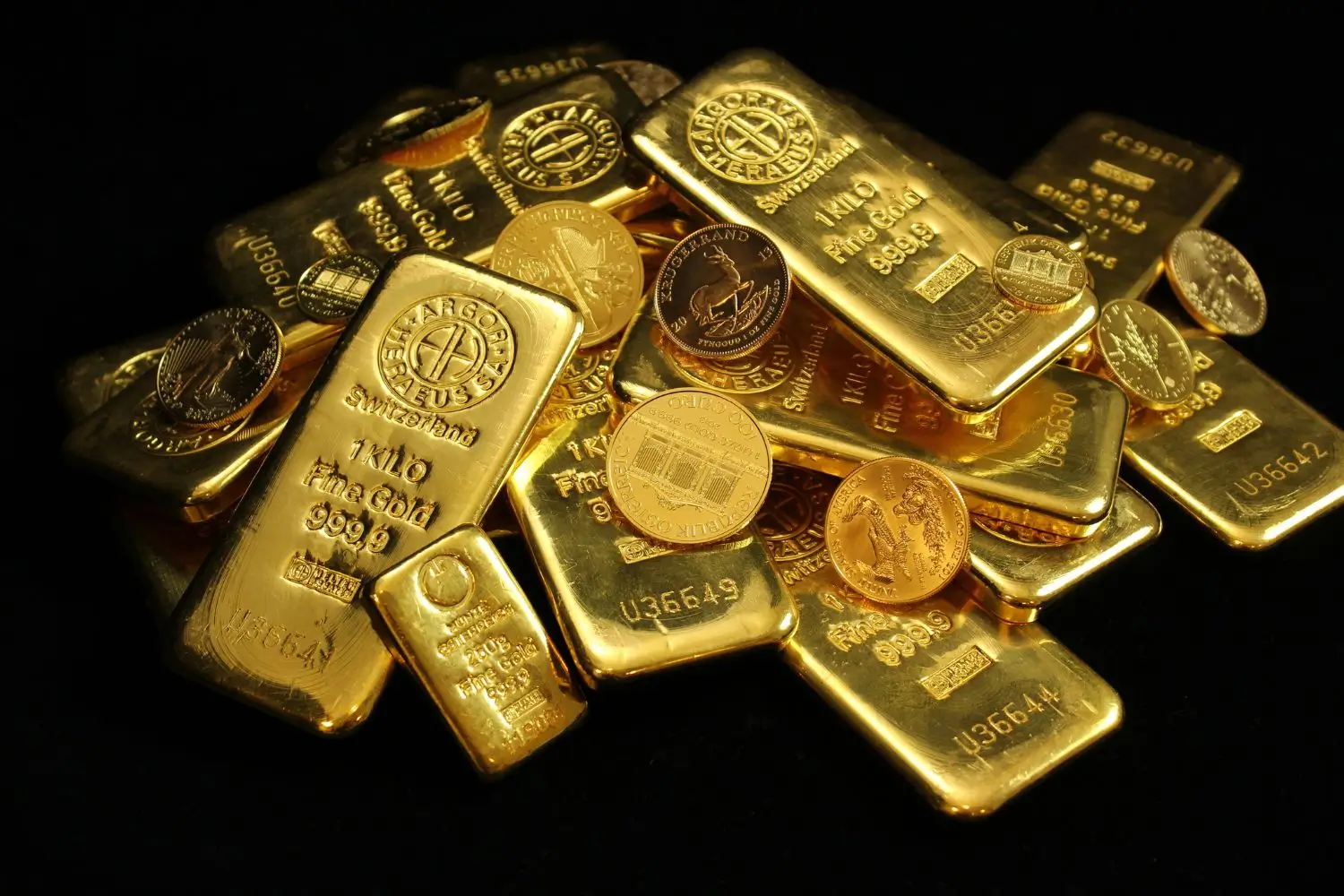
India’s gold ETFs attracted $850 million in net inflows in October, pushing 2025’s total to $3.05 billion — the highest on record. The surge highlights gold’s renewed appeal as a safe-haven asset amid global economic and geopolitical uncertainty.
India’s gold market is witnessing a new kind of gold rush — not from jewelry buyers, but from investors pouring money into gold exchange-traded funds (ETFs). According to the World Gold Council (WGC), Indian gold ETFs recorded $850 million in net inflows in October 2025, raising the year-to-date total to $3.05 billion, the highest annual figure in the nation’s history.
Although inflows were about 6% lower than September’s $911 million, it was still the second-largest monthly inflow in Asia, trailing only China. After five consecutive months of positive flows, the total assets under management (AUM) for Indian gold ETFs climbed to $11.3 billion by the end of October.
Globally, gold-backed ETFs attracted $8.2 billion in inflows during October, setting 2025 on track to become one of the strongest years ever for gold investment.
According to WGC data, India ranked third worldwide in gold ETF inflows for October, behind the United States ($6.33 billion) and China ($4.51 billion). Japan followed with nearly $500 million, while France recorded $312 million.
In contrast, several European markets saw heavy outflows, led by the United Kingdom ($3.5 billion), followed by Germany and Italy.
This divergence underscores how investor sentiment in Asia is turning defensive, with gold once again seen as a reliable store of value amid rising uncertainty.
The year 2025 has been marked by persistent economic and political instability — from the U.S. government shutdown risk to heightened geopolitical tensions and a softening U.S. dollar. These conditions have prompted global investors, particularly in India, to flock toward gold as a safe-haven asset.
Indian households have long held gold in the form of jewelry or bullion. However, gold ETFs offer a more convenient and transparent alternative — easy to trade, low in storage costs, and regulated within financial markets.
Analysts at Reuters note that this convenience, combined with improved digital access, has made ETFs increasingly popular among younger investors.
Unlike physical gold, ETFs allow investors to buy or sell instantly on stock exchanges, gain exposure to global gold prices, and avoid concerns about purity, storage, or liquidity.
The more investors enter the market, the stronger the inflows — pushing gold prices higher. In turn, rising prices attract even more participants. This self-reinforcing cycle has become increasingly visible in India throughout 2025.
The surge in ETF demand coincides with a dramatic rally in global gold prices. In October, gold surpassed the $4,000 per ounce mark for the first time, setting a new historical record.
The WGC attributes this rally to rising safe-haven demand, lower real yields, and a weaker U.S. dollar. Ongoing geopolitical conflicts have further amplified the metal’s appeal as an inflation hedge and crisis asset.
Globally, gold ETF assets rose 6% month-on-month to $503 billion, while total holdings increased 1% to 3,893 tonnes by the end of October.
Rahul Kalantri, Vice President of Commodities at Mehta Equities, commented:
“Gold’s key technical support lies between ₹1,19,870–₹1,19,280 per 10g, with resistance at ₹1,21,090–₹1,21,600. Silver is maintaining strong support around ₹1,46,450 per kg.”
Kalantri noted that gold’s upward momentum could persist if the U.S. dollar continues to weaken and geopolitical risks remain elevated. However, he cautioned that rapid gains could trigger short-term profit-taking, leading to brief market corrections.
Analysts further emphasized that while gold is a non-yielding asset, it becomes increasingly attractive in periods of low real interest rates and currency depreciation — making it a strong performer in today’s environment.
According to WGC’s global data, 2025 may be shaping up to be one of the strongest years for gold in the past decade.
U.S. gold ETFs: +$6.33 billion in October
China: +$4.51 billion
India: +$850 million
These figures reveal a clear trend — a worldwide shift toward safer, tangible assets as investors navigate inflation, interest-rate uncertainty, and geopolitical tensions.
Gold ETFs have democratized gold investment, allowing everyone — from small savers to large institutions — to participate in the market. Investors can start with small amounts, monitor live prices, and trade instantly without holding physical gold.
Still, experts recommend maintaining a balanced portfolio, with 10–15% allocated to gold, to hedge against volatility without overexposure.
The surge in ETF flows indicates a rotation from equities to defensive assets, which could temporarily impact stock market liquidity. In the long term, however, it contributes to market diversification and reduces India’s dependence on physical gold imports.
The rally in gold prices benefits miners, refiners, and distributors, but also raises concerns about over-speculation and potential pullbacks once prices reach overextended levels.
Analysts believe that the bullish momentum for gold remains intact heading into late 2025.
Key supporting factors include:
A weaker U.S. dollar,
Geopolitical instability,
Low or negative real yields, and
Continued institutional inflows into gold ETFs.
However, caution is warranted. Any signs of stabilizing inflation or rising real interest rates could lead to short-term corrections.
In the long run, India is emerging as a new powerhouse in Asia’s gold investment landscape, with ETFs bridging traditional gold ownership and modern financial markets.
The “gold wave” sweeping through India reflects a profound shift in global investment behavior — from holding physical assets to embracing financialized instruments.
In an era marked by uncertainty and volatility, gold is once again proving its timeless value as the ultimate safe haven. And with India leading the charge in ETF adoption, the country is positioning itself at the forefront of this new era of gold investment.
If current trends persist, 2025 could go down in history as the “golden year” for gold, with both retail and institutional investors united by one goal: safety, stability, and enduring value.
1. Why have India’s gold ETF inflows surged in 2025?
Global uncertainty, a weaker U.S. dollar, and rising geopolitical tensions have driven investors toward safe-haven assets like gold. ETFs offer a convenient, transparent, and regulated way to gain exposure without holding physical gold.
2. How much did India’s gold ETFs attract in October 2025?
They recorded $850 million in net inflows, bringing the total for 2025 to $3.05 billion, marking a record-breaking year.
3. Will gold prices continue to rise?
Experts anticipate further upside as long as macroeconomic risks persist and the dollar remains weak. However, near-term corrections are possible if investors take profits or if global conditions stabilize.
4. Is it a good time to invest in gold?
Gold remains an important diversification and risk-hedging tool, but investors should limit allocations to 10–15% of their portfolio and avoid buying during sharp short-term spikes.

.jpg)

.png)
 Tiếng Việt
 English