.png)
 Tiếng Việt
 English


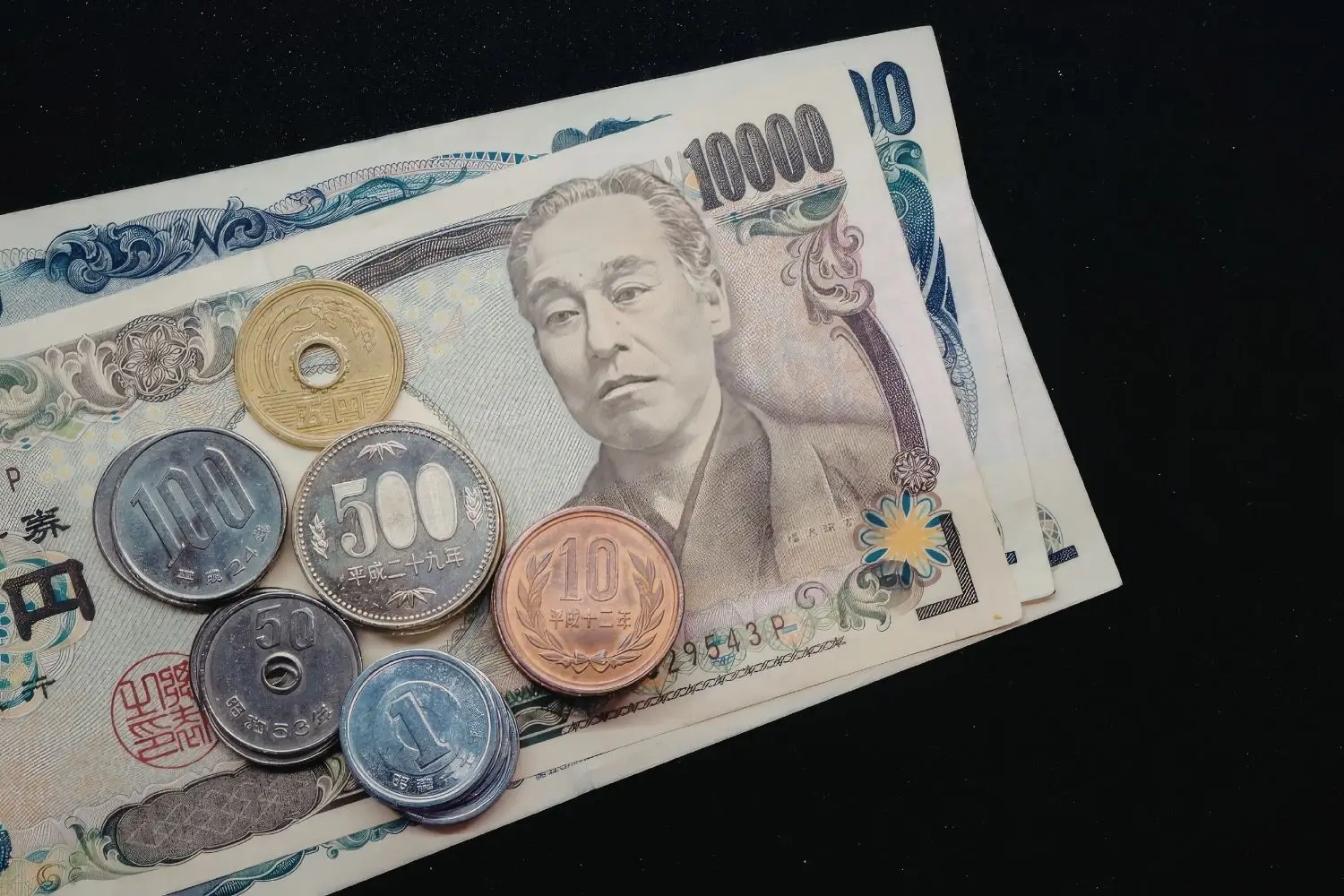 The global foreign exchange market is experiencing notable volatility as the Japanese yen continues to weaken, falling to its lowest level since July 2024. The decline comes amid escalating geopolitical tensions in the Middle East, prompting investors to shift capital toward the U.S. dollar, traditionally considered a safe-haven asset in times of global uncertainty.
During trading on March 13, the yen briefly dropped to around 159.6 yen per U.S. dollar, marking its weakest level in nearly two years. The sharp depreciation highlights not only the strengthening of the U.S. dollar but also mounting pressure on Japan’s economy as global energy prices surge.
Rising geopolitical tensions have pushed global investors toward safer assets, with the U.S. dollar and U.S. Treasury bonds typically leading the list during periods of uncertainty.
The U.S. Dollar Index (DXY)—which measures the dollar’s strength against a basket of major currencies—climbed to 99.79, its highest level since late November.
The rally in the dollar reflects growing caution across global financial markets. When geopolitical risks intensify, investors often move capital away from riskier assets and into safe-haven currencies such as the U.S. dollar.
Besides the yen, several other major currencies also weakened against the dollar. The euro slipped to its lowest level since November 2025, while the British pound and commodity-linked currencies such as the Australian dollar (AUD) and New Zealand dollar (NZD) also declined.
The main catalyst behind the currency market turbulence is the escalating military conflict in the Middle East.
Tensions surged after the United States and Israel launched airstrikes against Iran nearly two weeks ago. The strikes reportedly resulted in the death of Iran’s supreme leader, triggering retaliatory attacks from Tehran and rapidly expanding the scope of the conflict.
The back-and-forth military actions have heightened instability across the region and disrupted shipping activity in the Persian Gulf, a key hub for global energy trade.
Several major shipping routes have been severely affected, causing significant delays in cargo transportation and raising concerns over the stability of global supply chains.
One of the most immediate consequences of the escalating Middle East conflict has been a sharp increase in global oil prices.
The surge in energy prices is fueling fears of a new wave of inflation across the global economy.
Higher energy costs tend to trigger a chain reaction throughout economic systems, including:
Transportation and logistics costs rising significantly as energy prices climb.
Food and consumer goods becoming more expensive due to higher production and shipping costs.
Inflationary pressure spreading across multiple sectors of the global economy.
Analysts warn that if oil prices remain elevated for an extended period, many economies could face the challenging scenario of high inflation combined with slower economic growth, commonly referred to as stagflation.
According to Gavin Friend, senior market strategist at National Australia Bank, markets are increasingly focused on the unfavorable combination of rising inflation and weakening growth prospects should the conflict continue.
For Japan, the impact of higher oil prices is particularly significant.
As a country heavily dependent on imported energy, especially oil from the Middle East, Japan is highly vulnerable to fluctuations in global energy markets.
When oil prices rise, Japan’s energy import costs increase, placing pressure on the country’s trade balance and weakening the yen.
At the same time, the yield on Japan’s 10-year government bond climbed to approximately 2.235%, reflecting rising inflation expectations in the financial markets.
The combination of a weaker yen, higher energy costs, and rising inflation pressures is creating serious economic challenges for the world’s third-largest economy.
According to foreign exchange traders, several hedge funds have begun buying short-term call options on the U.S. dollar against a range of other currencies.
This move suggests investors are preparing for the possibility that the dollar could strengthen further if additional geopolitical developments emerge in the Middle East.
Market analysts say the global financial system is currently in a highly sensitive phase, where even small geopolitical developments could trigger significant movements in currency markets.
This is particularly true ahead of the reopening of global markets after the weekend, when unexpected news events often lead to sharp market reactions.
Amid the rapid decline of the yen, Japanese authorities have signaled that they are closely monitoring developments in the currency market.
Japan’s Finance Minister Satsuki Katayama stated that the country’s financial authorities are maintaining close communication with U.S. officials regarding foreign exchange market developments.
However, she declined to comment directly on the possibility of currency intervention to support the yen.
According to Japanese officials, the government is more concerned about the speed and volatility of exchange rate movements rather than focusing solely on a specific currency level.
In the coming weeks, global investors will pay close attention to monetary policy meetings of major central banks.
Decisions from:
the U.S. Federal Reserve (Fed)
the European Central Bank (ECB)
the Bank of Japan (BOJ)
will play a critical role in shaping the direction of global currency markets.
If the Federal Reserve keeps interest rates elevated while the Bank of Japan maintains a relatively loose monetary policy stance, the interest rate gap between the United States and Japan could widen further, putting additional downward pressure on the yen.
The Japanese yen’s fall to its lowest level since 2024 highlights how global financial markets are being heavily influenced by geopolitical tensions and energy market shocks.
Rising oil prices, escalating conflict in the Middle East, and a strengthening U.S. dollar are creating a challenging environment for many economies—particularly Japan.
In the months ahead, investors will continue to closely monitor developments in the conflict as well as monetary policy decisions from major central banks.
These factors will likely play a decisive role in determining the direction of global currency markets in the near future.