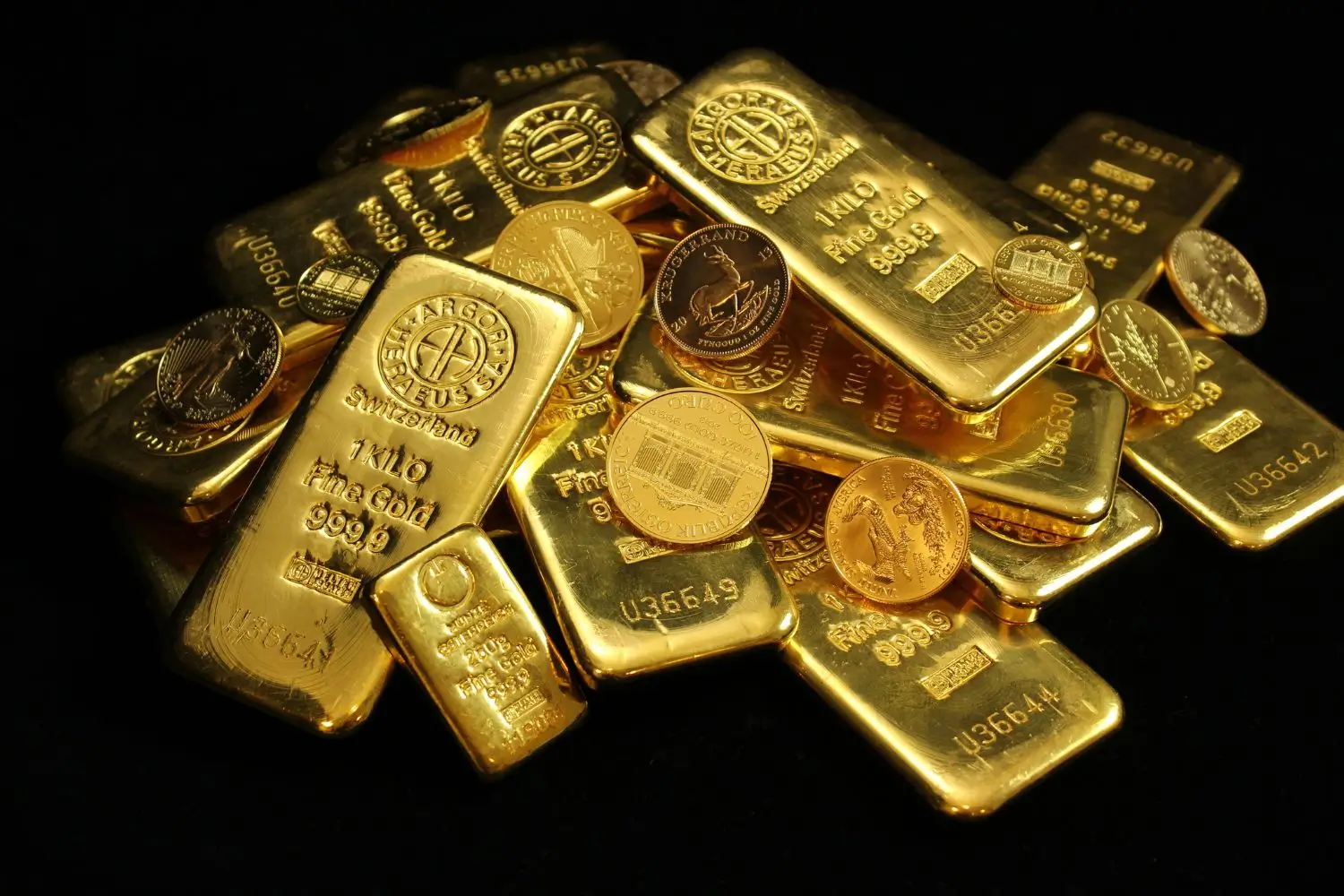
JPMorgan remains bullish on gold, forecasting prices to reach $5,055 per ounce by Q4 2026 as investors and central banks increase demand amid Fed rate cuts and global economic uncertainty.
Despite a brief pause in gold’s record-setting rally this week, JPMorgan Chase & Co. analysts remain highly optimistic about the metal’s long-term prospects.
In a report released on October 24, the bank projected that gold prices could hit $5,055 per ounce by the fourth quarter of 2026 — nearly a 25% increase from current levels.
The forecast is based on assumptions that investors and central banks will collectively purchase around 566 tons of gold per quarter throughout 2026, signaling that global institutions are continuing to view gold as a strategic long-term asset.
According to Natasha Kaneva, JPMorgan’s Head of Global Commodities Strategy, gold remains the bank’s “highest-conviction long trade” for the coming year, supported by expectations of a Federal Reserve rate-cutting cycle.
“The U.S. economy is approaching a controlled slowdown, which opens the door for rate cuts,” Kaneva said. “In such an environment, gold stands out as one of the most reliable hedges.”
Lower interest rates reduce the opportunity cost of holding non-yielding assets like gold.
As the Fed gears up for potential rate cuts — possibly beginning later this year — investors are shifting capital away from risk assets such as equities and bonds into safe-haven assets like gold.
Additionally, inflation remains above the Fed’s 2% target, prompting investors to seek assets that preserve purchasing power — further strengthening gold’s appeal.
JPMorgan also highlighted mounting fears of stagflation — a scenario of high inflation combined with slowing growth — alongside broader concerns about Fed independence and financial system fragility.
These anxieties are driving renewed interest in gold, historically one of the most trusted hedges during economic turbulence.
Foreign investors, according to JPMorgan data, are gradually reallocating a portion of their holdings from U.S. dollar–denominated assets into bullion as part of diversification efforts.
This trend does not imply a move toward “de-dollarization,” but rather a strategic rebalancing as global markets navigate persistent currency volatility.
After touching an all-time high of $4,380 per ounce in early October, gold prices experienced a mild correction — including their sharpest one-day drop in over a decade.
However, JPMorgan analysts dismissed concerns of a trend reversal, describing the move as a “healthy consolidation” after an extended rally.
“The pullback reflects the market digesting rapid price gains since August,” Kaneva explained. “It’s a normal and necessary phase before the next upward leg.”
So far in 2025, gold has risen by more than 58% year-to-date, driven by expectations of Fed rate cuts and surging demand from Asia — particularly China and India, the world’s largest gold consumers.
JPMorgan’s optimism doesn’t stop at 2026.
The bank also raised its longer-term target, predicting gold could reach $6,000 per ounce by 2028, assuming current macroeconomic and policy trends persist.
This projection is anchored in three main factors:
Persistently low real interest rates, as the U.S. government continues to expand public debt.
Increased central bank buying as nations seek to diversify away from the dollar.
Geopolitical tensions — including trade wars, currency disputes, and regional conflicts — which continue to fuel safe-haven demand.
Capital preservation during global economic uncertainty.
Strong upside potential if gold approaches JPMorgan’s forecast levels.
Portfolio stability, as gold typically moves inversely to equities.
If the Fed delays or reduces rate cuts, gold could face short-term headwinds.
A stronger U.S. dollar might weigh on gold prices.
Short-term corrections may unsettle retail investors lacking a long-term outlook.
As global markets transition into a post-tightening phase, gold is reclaiming its place as both a protection asset and a growth opportunity.
JPMorgan’s projections — $5,055 by 2026 and $6,000 by 2028 — reflect renewed confidence that the era of cheap money and macro uncertainty will continue to favor the precious metal.
For retail investors, maintaining a 5–10% gold allocation in a diversified portfolio remains a prudent strategy to balance risk and capture long-term returns in a volatile financial landscape.
1. Why does JPMorgan believe gold will reach $5,055 by 2026?
The forecast is based on strong demand from central banks and institutional investors, coupled with an expected Fed rate-cut cycle that makes gold more attractive.
2. Could gold really hit $6,000 by 2028?
Yes — if low real rates, high debt levels, and ongoing geopolitical risks persist, gold could continue to climb toward that milestone.
3. What should individual investors do now?
Adopt a long-term view. Allocate 5–10% of your portfolio to gold as a hedge against inflation and volatility.
4. What factors could invalidate JPMorgan’s forecast?
Stronger-than-expected U.S. growth, prolonged high interest rates, or a resurgent dollar could limit upside potential for gold.

.jpg)

.png)
 Tiếng Việt
 English