.png)
 Tiếng Việt
 English


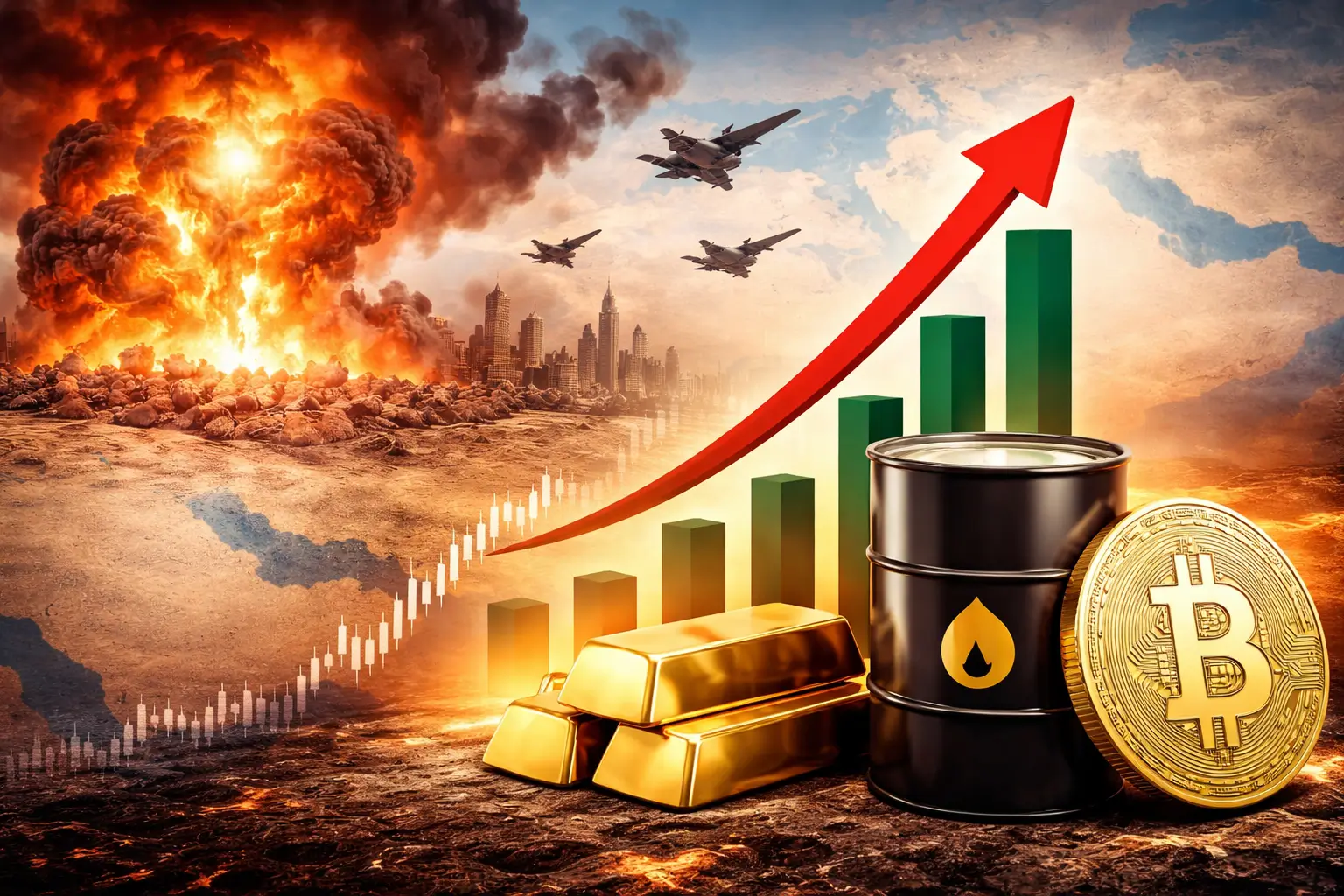
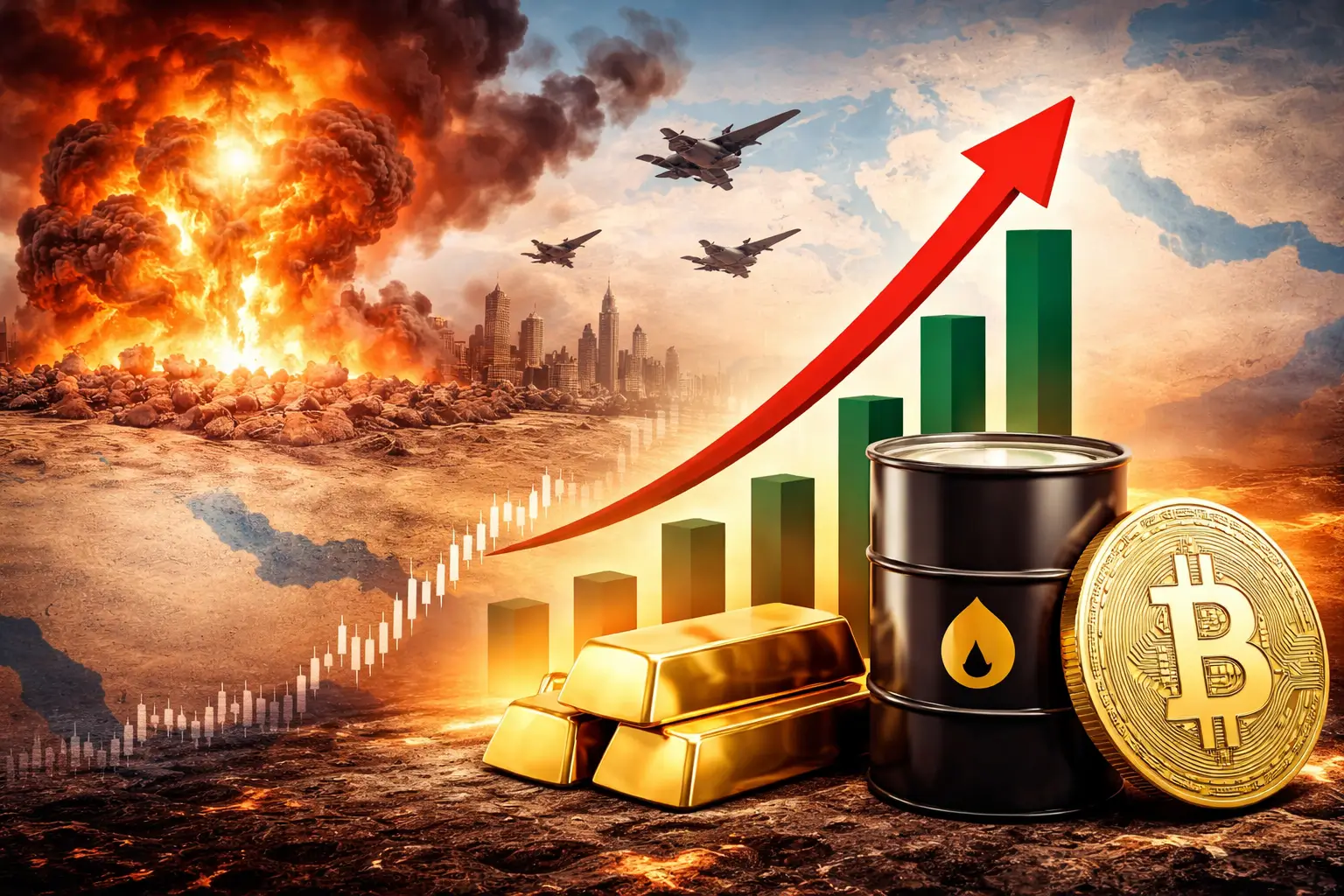 The global financial landscape is entering a highly sensitive phase as geopolitical tensions in the Middle East intensify, triggering sharp reactions across energy, commodities, and digital assets.
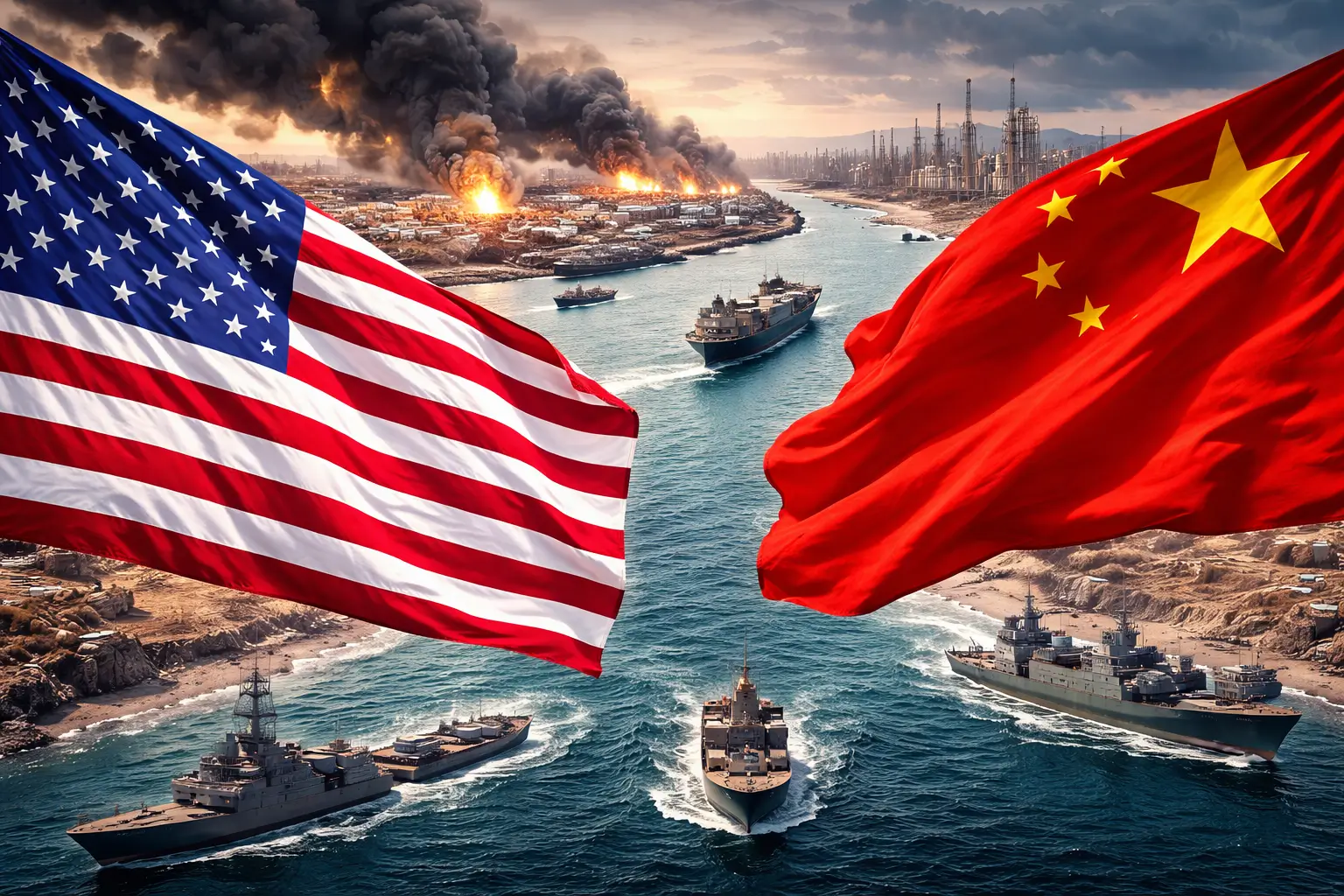
At the center of this turbulence is the ongoing conflict involving Iran, Israel and United States, which has now entered its third week. The escalation is no longer limited to military exchanges but has begun to significantly disrupt global energy supply chains—raising concerns about inflation, economic slowdown, and financial instability.
One of the most critical developments is the disruption of oil flows through the Strait of Hormuz—a chokepoint that normally handles around 20 million barrels of oil per day, equivalent to nearly 20% of global supply.
Recent attacks on oil infrastructure across the Gulf region have intensified fears of a prolonged supply shock. Brent crude has climbed above $100 per barrel, with some sessions recording sharp daily gains as markets react to escalating risks.
According to Reuters, the scale of disruption could rival or even exceed previous historical energy crises, with millions of barrels per day already removed from the market.
More concerningly, analysts warn that even if the Strait of Hormuz reopens, supply chains may not normalize quickly due to damage to infrastructure and logistics networks.
This marks one of the most severe energy shocks since the 2022 Russia–Ukraine conflict.
The conflict is increasingly spilling into broader geopolitical tensions, affecting global alliances and economic coordination.
European leaders have shown reluctance to directly support U.S. military actions in securing energy routes, highlighting fractures within Western alliances.
Meanwhile, countries across Asia are taking defensive measures, including restricting fuel exports and adjusting refinery output to cope with supply shortages.
The human and economic toll is also rising rapidly, with infrastructure damage and casualties reported across multiple countries in the region.
These developments are transforming the crisis from a regional conflict into a global geoeconomic shock.
Amid growing uncertainty, Gold continues to attract strong safe-haven demand.
Spot gold is currently trading around $5,000 per ounce, maintaining a relatively stable range despite volatile macro conditions.
The upward pressure on gold is primarily driven by:
Escalating geopolitical tensions
Rising oil prices fueling inflation concerns
Increased demand for defensive assets
Recent data shows that gold prices have surged in several markets as investors shift capital away from riskier assets.
However, gains remain capped due to:
A strong U.S. dollar
Expectations that the Federal Reserve will maintain a cautious monetary stance
High bond yields limiting non-yielding assets like gold
This creates a delicate balance between safe-haven demand and monetary policy pressure.
In parallel with traditional assets, Bitcoin is showing resilience, holding above the $74,000 level after a volatile trading period.
The cryptocurrency recently approached $76,000 before entering a consolidation phase, supported by:
Short-covering activity from bearish traders
Renewed institutional inflows into Bitcoin ETFs
Improved long-term sentiment
Unlike previous cycles, Bitcoin is increasingly behaving like a hybrid asset:
Initially reacting as a risk asset during global shocks
Gradually shifting toward a store-of-value narrative in prolonged crises
This evolving role suggests Bitcoin may become more integrated into the global financial system.
While geopolitical tensions dominate headlines, monetary policy remains a crucial factor shaping market direction.
Investors are closely watching the upcoming decision from the Federal Reserve, with expectations that interest rates will remain unchanged.
However, the real focus lies on:
Inflation outlook amid rising energy costs
Signals on future rate cuts
Assessment of economic resilience
Higher oil prices are already fueling inflation concerns, which could force central banks to maintain tighter policies for longer.
This creates a challenging environment where markets must balance geopolitical shocks and monetary tightening.
The current situation reflects a convergence of three major risks:
The Middle East conflict continues to escalate with no clear resolution in sight.
Disruptions at the Strait of Hormuz are constraining global oil flows and pushing prices higher.
Central banks face increasing difficulty balancing inflation control with economic growth.
Together, these factors are creating what analysts describe as a “triple risk environment”—one that could significantly impact global growth in the coming quarters.
Looking ahead, financial markets are expected to remain highly volatile in the short term.
Key variables to watch include:
Developments in the Middle East conflict
Stability of oil supply routes
Federal Reserve policy signals
Investor positioning across safe-haven and risk assets
Some forecasts suggest that if tensions persist, oil prices could climb further, potentially triggering a new wave of inflation and reshaping global economic dynamics.
The events unfolding in March 2026 highlight how deeply interconnected geopolitics and financial markets have become.
From surging oil prices to resilient gold and stabilizing Bitcoin, the current landscape reflects a world grappling with uncertainty on multiple fronts.
While opportunities still exist, the environment demands heightened caution, strategic allocation, and close monitoring of macroeconomic signals.
In the near term, global markets will continue to be driven by one central question:
Will geopolitical tensions escalate further—or begin to stabilize?