.png)
 Tiếng Việt
 English


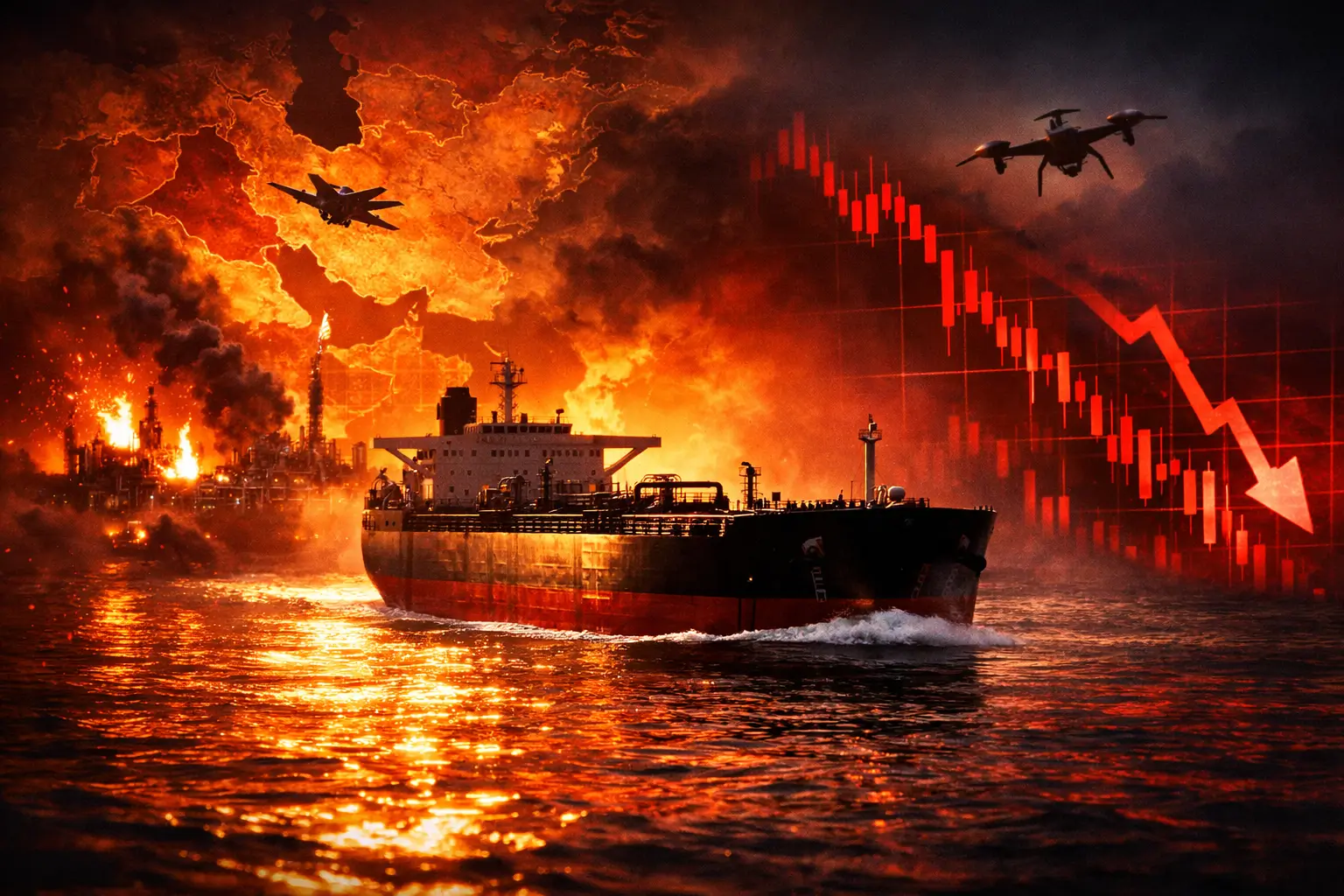 The world is entering a new phase of instability as tensions in the Middle East rapidly escalate, with the conflict involving the United States, Israel, and Iran taking center stage. These developments are not only military in nature but are also exerting profound effects on the global economy—particularly on energy markets and financial systems.
Recent international reports suggest that Washington is considering more aggressive measures, including the potential control or blockade of Iran’s Kharg Island—one of the country’s most critical oil export hubs. At the same time, Israel has intensified airstrikes targeting Iranian energy infrastructure, while Tehran has responded with missile and drone attacks across the Gulf region.
This escalation has turned the Middle East into the primary driver of global market sentiment at present.
One of the most pressing concerns for the global economy is the potential disruption of the Strait of Hormuz, a vital artery for global oil transportation.
Approximately 20% of the world’s oil supply passes through this narrow waterway each day. Even a temporary disruption could trigger a significant energy shock.
Amid rising tensions:
Oil tankers face increased risks of attacks or blockades
Maritime insurance costs have surged
Global energy supply chains are under severe stress
Experts warn that a full closure of the Strait of Hormuz could send oil prices far beyond current levels, with far-reaching consequences for the global economy.
The most immediate impact of the crisis has been the sharp volatility in oil prices.
Brent crude briefly surged to nearly $119 per barrel—its highest level in months. Although prices have since eased slightly, markets remain highly unstable due to unresolved geopolitical risks.
Rising oil prices have several direct consequences:
Increased transportation and production costs
Higher fuel prices across multiple economies
Renewed inflationary pressures after a period of cooling
For energy-importing nations in particular, this shock threatens to erode growth and widen trade deficits.
The energy crisis is placing central banks in a challenging position.
Before this escalation, many economies were preparing to enter a monetary easing cycle, with anticipated interest rate cuts aimed at supporting growth. However, the resurgence in oil prices could reignite inflation, forcing policymakers to reconsider their strategies.
Key trends include:
The U.S. Federal Reserve maintaining a cautious stance
The European Central Bank potentially delaying rate cuts
Some markets even pricing in the possibility of renewed rate hikes
This raises the risk of “stagflation”—a combination of high inflation and weak economic growth, one of the most difficult scenarios for policymakers to manage.
The impact of the Middle East crisis is not limited to energy—it is also rippling through global financial markets.
Recent sessions have seen:
Heightened volatility in global equities
Capital shifting toward safe-haven assets such as gold and the U.S. dollar
Risk assets, including technology stocks and cryptocurrencies, coming under pressure
Market sentiment is currently dominated by uncertainty. Any further escalation in the Middle East could trigger broader sell-offs across asset classes.
If the conflict persists, the global economy may face even more severe consequences.
Analysts warn that:
Global growth forecasts could be downgraded
Inflation may remain elevated for longer
Business and consumer confidence could weaken
In a worst-case scenario, the combination of high energy prices and tight monetary policy could push major economies into recession.
This pattern echoes previous oil crises, which historically have led to prolonged economic downturns.
Beyond economics, the crisis is also intensifying geopolitical divisions.
The United States is increasing its military presence in the region
Western allies are being forced to define their strategic positions
Emerging economies are expressing concern over global spillover effects
The world appears to be moving toward a more fragmented geopolitical landscape, reminiscent of post-Cold War realignments.
This shift could have long-term implications for trade, investment flows, and global supply chains.
In the near term, the outlook for the global economy will largely depend on developments in the Middle East.
Three key factors to watch include:
The level of military escalation
The operational status of the Strait of Hormuz
Policy responses from major economies and central banks
If tensions are contained, markets may stabilize relatively quickly. However, any signs of further escalation could trigger a new wave of global instability.
The Middle East crisis of 2026 is proving to be a pivotal event with far-reaching global consequences. From oil prices and inflation to monetary policy and financial markets, nearly every aspect of the global economy is being influenced by unfolding geopolitical dynamics.
In this environment, caution is paramount for both investors and policymakers. The world stands at a critical juncture, where decisions made today could reshape the economic landscape for years to come.