.png)
 Tiếng Việt
 English


NVIDIA invests $1 billion in Nokia, forming a strategic alliance to develop 6G and AI-native networks. A new chapter begins for global telecom and AI innovation.
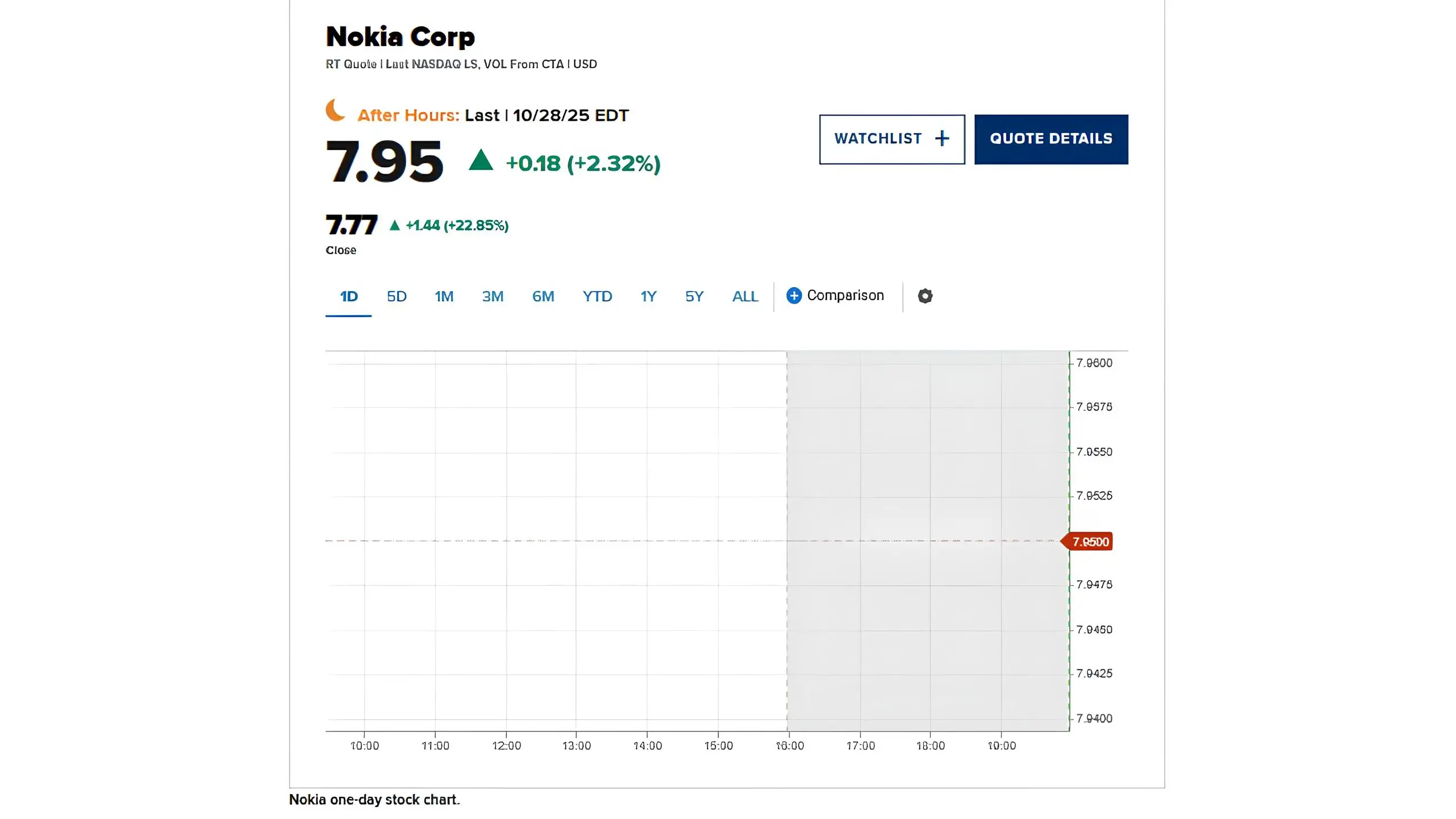
On October 28, 2025, Finnish tech giant Nokia announced that NVIDIA, the world leader in AI chips, would make a $1 billion equity investment in the company. The news immediately sent Nokia’s stock soaring 22%, marking its strongest single-day gain in nearly a decade.
According to Nokia’s official statement, the deal involves issuing 166 million new shares, representing about 2.9% of total shares post-issuance, priced at $6.01 per share. Proceeds will be used to accelerate Nokia’s expansion into artificial intelligence (AI) and for general corporate purposes.
But this is more than a financial transaction. The two companies also signed a strategic partnership to co-develop next-generation networking technologies — combining 6G and AI-native networking, paving the way for a new era of intelligent communications.
Under the agreement, Nokia and NVIDIA will collaborate on building AI-native Radio Access Network (AI-RAN) — technology that integrates AI directly into wireless infrastructure, enabling 5G and future 6G networks to become smarter, more adaptive, and self-optimizing.
Key details of the partnership include:
Nokia will adapt its 5G and 6G software to run natively on NVIDIA’s GPUs and AI computing platforms.
NVIDIA will explore incorporating Nokia’s switching and optical networking technologies into its AI infrastructure and data centers.
Both companies will co-develop AI platforms for telecommunications, with initial pilot testing expected in 2026 and commercial rollout of AI-RAN targeted for 2027–2028.
Nokia CEO Pekka Lundmark stated:
“NVIDIA’s investment not only strengthens our financial position but also validates our strategic direction — building intelligent, AI-driven networks. This marks a critical step toward the future of 6G.”
This investment is part of NVIDIA’s broader strategy to expand its presence beyond semiconductors into the entire AI ecosystem. Throughout 2025, NVIDIA has been on an aggressive investment spree:
$5 billion in Intel to advance next-generation AI data centers.
$100 billion in OpenAI to support the next wave of large language model development.
$500 million in autonomous vehicle startup Wayve.
$667 million in UK-based cloud provider Nscale.
Each investment represents a deliberate move toward NVIDIA’s vision of building an end-to-end AI infrastructure — spanning hardware (GPUs, chips), software (AI models), and now, with Nokia, the network layer that connects everything together.
By investing in Nokia, NVIDIA gains a strategic foothold in telecommunications — the very backbone of the AI era.
Analysts describe this as a “missing puzzle piece” that allows NVIDIA to control the full AI value chain, from data generation to processing and delivery.
Once the world’s dominant mobile phone brand, Nokia has spent the last decade reinventing itself as a global telecommunications equipment leader.
Today, Nokia stands among the top three 5G infrastructure providers worldwide, alongside Sweden’s Ericsson and China’s Huawei.
With NVIDIA’s backing, Nokia aims to become a pioneer of AI-native networking, where artificial intelligence doesn’t just assist but becomes the operational brain of global network systems.
According to Nokia’s estimates, the AI-RAN market could surpass $200 billion by 2030, with the company targeting a 10–15% share of that market.
Following the announcement, Nokia’s shares jumped over 20% on both the Helsinki and New York exchanges, reaching their highest levels since 2015. Analysts at Morgan Stanley called it a “transformational deal,” one that bolsters Nokia’s cash position while strengthening its competitive edge in a maturing telecom industry.
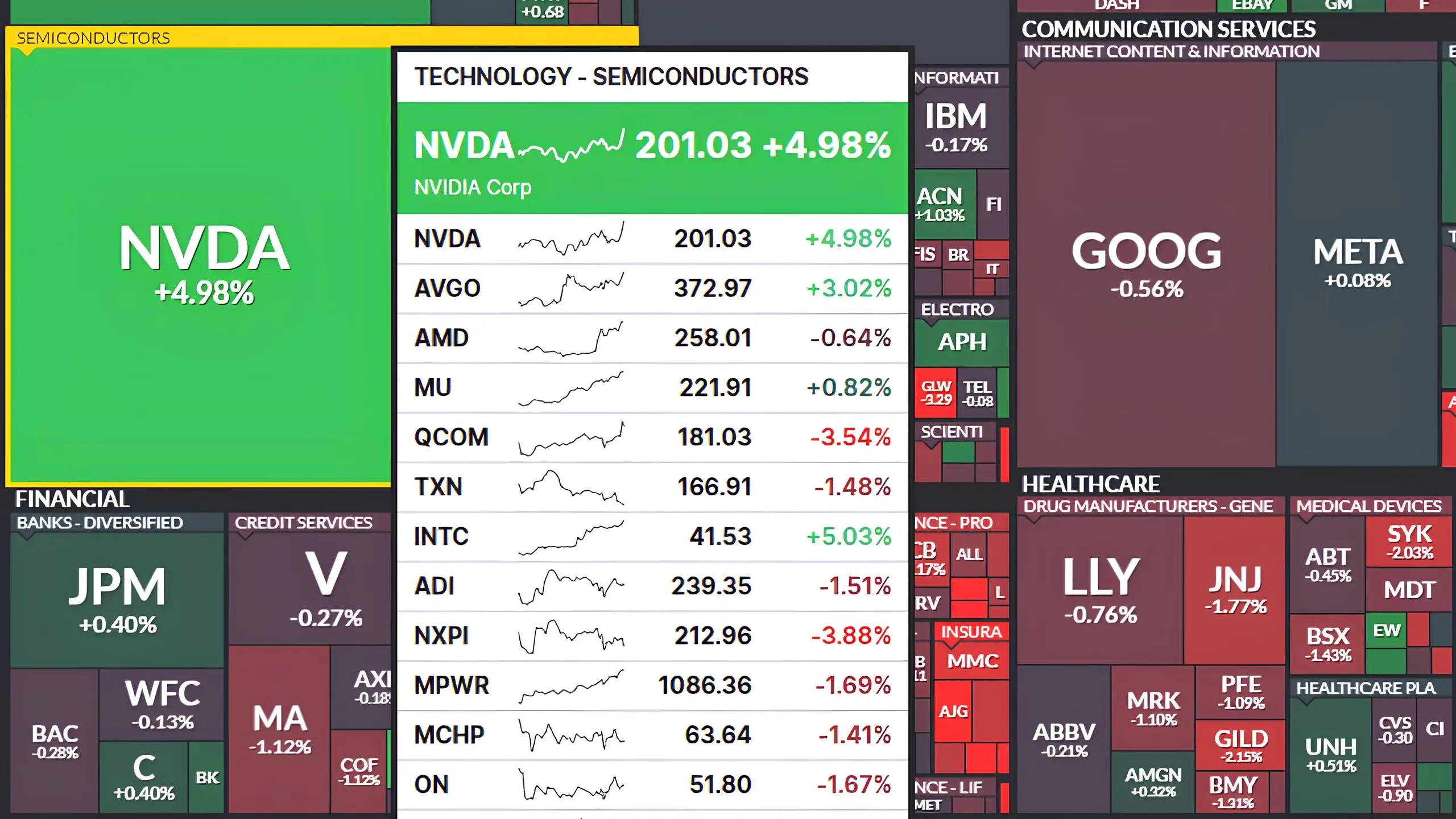
Meanwhile, NVIDIA’s stock gained about 3% on the same day — signaling investor confidence in the company’s long-term expansion strategy.
NVIDIA CEO Jensen Huang, speaking in Washington D.C. to policymakers, emphasized the broader vision:
“We are entering an era where every connection — from data to networks to AI — converges. Partnering with Nokia allows us to build the foundation of the intelligent infrastructure powering that future.”
Reshaping the Telecom Infrastructure Landscape
By combining NVIDIA’s GPU power with Nokia’s networking expertise, the partnership could yield a new generation of 5G/6G base stations — smaller, faster, and capable of real-time self-optimization.
Bringing 6G Leadership Back to the West
With an American chip giant partnering a European telecom powerhouse, analysts see this as an effort to reclaim leadership in next-generation telecom from Asia-based competitors.
Creating Intelligent Networks for AI Workloads
Future networks will not just carry data but process and learn from it. This AI-native design could revolutionize how networks serve autonomous vehicles, smart cities, and AR/VR ecosystems.
Accelerating the Global Digital Transformation
The convergence of AI, edge computing, and high-speed connectivity will empower enterprises to deploy more complex AI applications and IoT systems at scale.
Despite the excitement, experts caution that integrating AI into telecom infrastructure poses significant challenges:
Massive capital requirements: Building AI-RAN networks demands heavy investment in both hardware and standardization.
Technical complexity: Software must be optimized for AI and GPU architecture, requiring years of research and collaboration.
Fierce competition: Rivals such as Ericsson, Huawei, and Samsung are all pursuing similar AI-networking innovations, making the race for dominance highly competitive.
Industry observers predict that 2025 will be remembered as the beginning of the intelligent networking era — when AI moves from the cloud into the very fabric of global connectivity.
Through the NVIDIA–Nokia partnership, the world may soon witness a fundamental shift in how networks operate — from passive data transporters to intelligent, adaptive systems that think and act in real time.
In the coming years, as 6G becomes a reality, our smartphones, self-driving cars, smart factories, and immersive devices could all be connected through infrastructure powered by artificial intelligence.
NVIDIA’s $1 billion investment in Nokia is more than a financial commitment — it’s a strategic declaration that the networks of the future will be defined by artificial intelligence.
As two of the most influential technology companies from the U.S. and Europe join forces, the world edges closer to an intelligent 6G era — where AI doesn’t just run on networks, but flows through every signal, every device, and every connection that powers our digital lives.
1. Why did NVIDIA choose to invest in Nokia?
NVIDIA lacks direct experience in telecom, while Nokia offers decades of expertise and global infrastructure. The partnership allows NVIDIA to extend its AI ecosystem into the networking domain — a critical component of the AI-driven world.
2. How will Nokia use the $1 billion investment?
Nokia plans to channel the funds toward developing 6G software, expanding AI-networking capabilities, and strengthening its data infrastructure to support telecom operators and enterprise clients.
3. What is AI-RAN and why does it matter?
AI-RAN (AI-native Radio Access Network) embeds artificial intelligence into network operations, enabling self-learning and real-time optimization. It’s a foundational technology for future 6G networks.
4. How has the market responded to the deal?
Nokia’s stock surged over 20% immediately after the announcement, while NVIDIA’s shares also rose modestly. Investors view the alliance as a long-term growth driver for both companies.