
Nvidia is on the verge of becoming the world’s first $5 trillion company after unveiling $500 billion in AI chip bookings and announcing plans to build seven new supercomputers for the U.S. Department of Energy — marking a transformative milestone for the global tech industry.
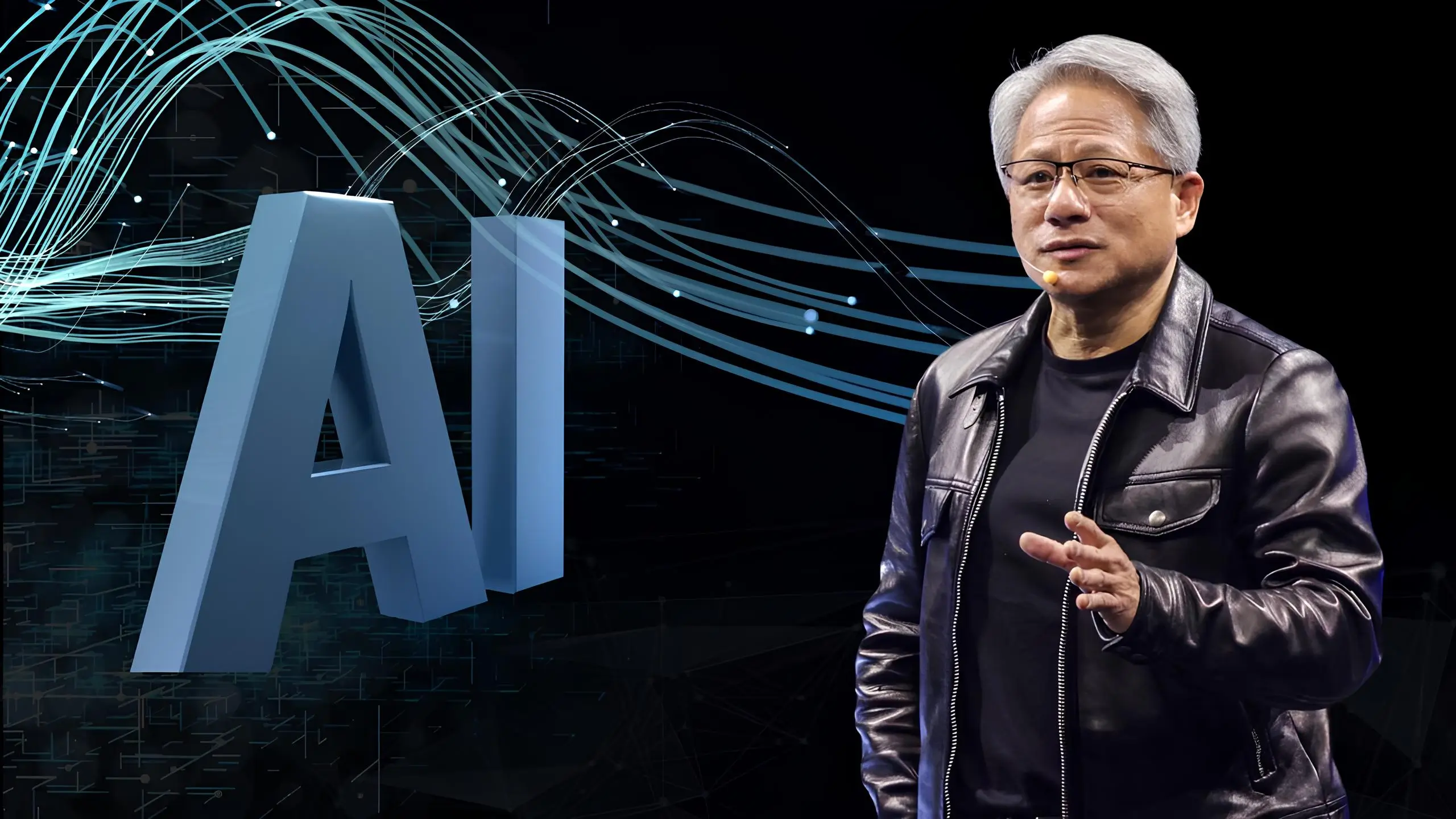
On October 28, 2025, Nvidia Corporation (NVDA.O) edged closer to a $5 trillion market capitalization, marking one of the most remarkable single-day surges in the history of technology.
According to Reuters, Nvidia’s stock jumped nearly 5%, adding more than $230 billion in market value, and closing the day at $4.89 trillion — just shy of becoming the first company ever to hit the $5 trillion mark.
This milestone came after Nvidia revealed $500 billion worth of pre-orders (bookings) for its artificial intelligence processors, alongside plans to build seven new supercomputers for the U.S. Department of Energy (DOE) — a bold move underscoring the company’s unmatched dominance in the age of AI.
Analysts describe the staggering $500 billion in pre-orders as not merely a figure of sales, but a symbol of how deeply the global economy now relies on Nvidia’s AI infrastructure.
From tech giants such as Microsoft, OpenAI, and Google, to thousands of emerging AI startups, nearly every major artificial intelligence model today runs on Nvidia’s high-performance GPUs.
Flagship chips like H100, B200 “Blackwell”, and platforms like DGX Cloud have become the core hardware of the AI revolution.
Industry veteran Patrick Moorhead, founder of Moor Insights & Strategy, noted:
“Nvidia isn’t just selling chips — it’s selling the future of AI. And the market is valuing that future at levels never seen before.”
In the same announcement, Nvidia revealed a strategic partnership with the U.S. Department of Energy to construct seven next-generation supercomputers, including systems like Aurora-Next, El Capitan 2, and a new AI compute hub at Los Alamos National Laboratory.
These systems will be powered by Nvidia’s Blackwell GPUs — the company’s most advanced AI processors to date — with each large-scale system equipped with over 100,000 GPUs designed for national-scale AI research, climate modeling, biomedical analysis, and energy security.
This move not only strengthens Nvidia’s technological leadership but also highlights how AI has become integral to America’s national research and defense strategy.
As Nvidia nears the $5 trillion threshold, it has, at various moments, surpassed Apple and Microsoft in market value — making it the most valuable publicly traded company in the world.
It’s an astonishing transformation: just a decade ago, Nvidia was primarily known as a graphics card maker for gamers, generating less than $10 billion in annual revenue.
Today, it is the undisputed “King of AI”, boasting a gross margin near 75%, annual revenue projected to exceed $180 billion, and a growth rate unmatched even during Apple’s iPhone boom years.
From gaming and autonomous vehicles to national research labs, every corner of the AI ecosystem now runs on Nvidia’s hardware.
Nvidia’s meteoric rise is doing more than enriching investors — it’s reshaping the balance of power across global technology markets.
In the U.S., Nvidia’s dominance reinforces the country’s leadership in the AI arms race against China.
Across Asia, manufacturers like TSMC, Samsung, and Foxconn are thriving as essential supply chain partners producing Nvidia’s advanced chips.
In financial markets, Nvidia now accounts for nearly 7% of the entire S&P 500 index, meaning its stock movements can significantly sway global indices.
Veteran analyst Dan Ives of Wedbush Securities commented:
“Nvidia isn’t just a tech company — it’s the infrastructure of the AI age. Every new order they announce shakes the foundations of global markets.”
Despite its staggering success, Nvidia’s path forward isn’t without obstacles. Analysts highlight three major challenges the company must navigate:
Rising Competition – Rivals such as AMD, Intel, and China’s Huawei are ramping up investments in next-gen AI chips. While Nvidia still leads by a wide margin, the competitive gap is closing faster than ever.
Geopolitical Risks – U.S. export restrictions on advanced AI chips to China could affect up to 25% of Nvidia’s revenue in the coming quarters.
Sky-High Market Expectations – At nearly $5 trillion in valuation, Nvidia is priced for perfection. Maintaining 50–60% annual growth — as investors now expect — will be an extraordinary challenge.
Market analysts warn that even a minor earnings miss or slowdown in chip demand could trigger volatility in Nvidia’s stock, given how much optimism is already priced in.
Yet amid these challenges, one thing remains clear: Nvidia is at the epicenter of the 21st century’s most transformative technological shift.
As AI continues to permeate every sector — from healthcare and finance to education and national security — Nvidia is poised to become the physical foundation of the digital world.
Industry forecasts suggest that by 2027, Nvidia’s software and AI cloud services could account for 20–25% of total profits, positioning the company to evolve beyond hardware — similar to how Microsoft and Amazon turned cloud computing into trillion-dollar empires.
Nvidia’s near-$5 trillion valuation is more than a financial milestone; it symbolizes a new era of technological and economic power.
It represents the point where artificial intelligence becomes the fuel of global growth, much like the Internet in the 2000s or smartphones in the 2010s.
If Nvidia can continue to innovate, execute, and defend its AI dominance, it won’t just be the first company to hit $5 trillion —
it will become the backbone of the world’s AI infrastructure, shaping the direction of the global economy for decades to come.
1. Why is Nvidia nearing a $5 trillion market cap?
Because of record AI chip demand — with $500 billion in bookings and seven new supercomputers for the U.S. Department of Energy — reinforcing its role as the global leader in AI infrastructure.
2. What does the $5 trillion milestone mean for the market?
It marks the rise of AI as the world’s new economic engine and highlights Nvidia’s unmatched influence across the global tech landscape.
3. Can Nvidia maintain its growth momentum?
Possibly, if it expands into software, AI cloud services, and new data center technologies while managing export and competition risks.
4. What should investors watch next?
Quarterly earnings, AI infrastructure deals, and U.S.–China policy shifts — all key factors that could determine Nvidia’s next move toward or beyond the $5 trillion mark.

.jpg)

.png)
 Tiếng Việt
 English