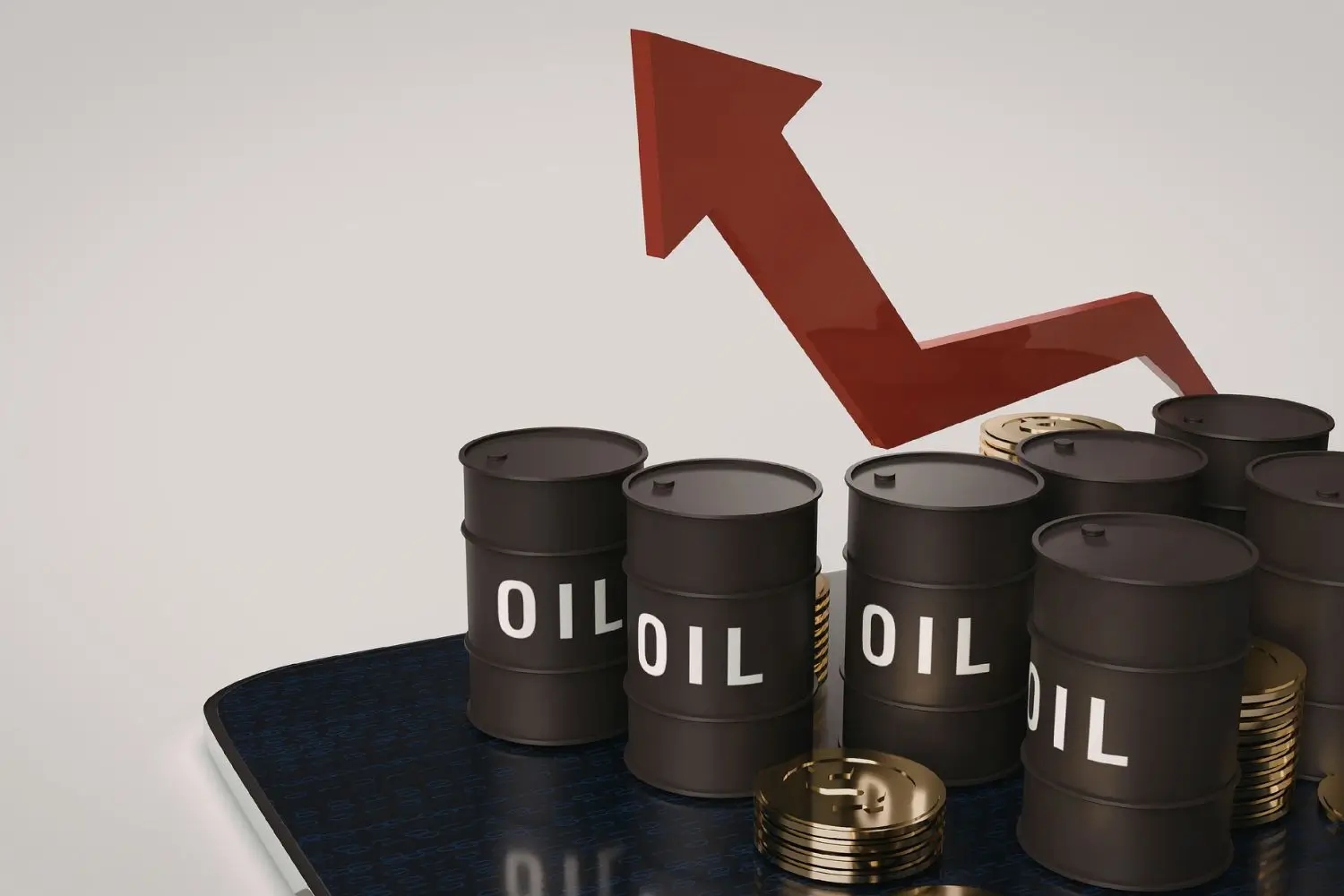

Global oil prices edged lower during Asian trading on Wednesday, easing from their highest levels in several weeks after a strong rally in the previous session. The pullback reflected investor caution as markets weighed two opposing forces: heightened supply disruption risks stemming from Iran and data pointing to a sharp increase in U.S. crude inventories.
As of 20:18 ET (01:18 GMT), March Brent crude futures slipped 0.4% to USD 65.19 per barrel, while U.S. West Texas Intermediate (WTI) crude futures fell 0.5% to USD 60.87 per barrel.
The modest decline followed gains of more than 2.5% on Tuesday, which pushed Brent to an 11-week high and WTI to a 10-week peak, extending a four-session winning streak for the oil market.
Tuesday’s strong advance in oil prices was largely fueled by growing concerns over potential supply disruptions linked to escalating anti-government protests in Iran. The unrest has raised fears over future crude exports from one of the Organization of the Petroleum Exporting Countries’ (OPEC) key producers.
In response, traders priced in a significant geopolitical risk premium, reflecting the possibility that global oil supply could tighten if conditions in Iran deteriorate further.
Iran holds some of the world’s largest oil reserves and plays a critical role in global supply dynamics. Any disruption to its production or export capacity could have far-reaching consequences, particularly in a market already sensitive to geopolitical developments.
Market concerns have been amplified by a hardening stance from U.S. President Donald Trump regarding the situation in Iran. Trump warned of potential military action should Iranian authorities continue their crackdown on protesters and urged demonstrators to “take over your institutions.”
In a series of social media posts, the U.S. president also stated that “help is on the way,” further heightening uncertainty over a possible escalation in tensions between Washington and Tehran.
Additionally, Trump threatened to impose tariffs on countries conducting business with Iran in an effort to isolate the regime. These statements and policy signals increased geopolitical risk premiums and helped support oil prices in the short term.
Countering geopolitical support, fresh data on U.S. oil inventories weighed on market sentiment. According to a report released by the American Petroleum Institute (API) on Tuesday, U.S. crude inventories rose by 5.3 million barrels last week.
The figure far exceeded analysts’ expectations for an increase of around 2 million barrels, underscoring ample supply conditions in the world’s largest oil-consuming economy.
Inventories of refined products also posted sharp increases. Gasoline stocks rose by approximately 8.2 million barrels, while distillate inventories climbed by about 4.3 million barrels, highlighting an oversupply of refined fuels relative to current demand.
Following the API report, market attention has shifted to official inventory data from the U.S. Energy Information Administration (EIA), due for release later on Wednesday. The EIA report is widely regarded as more authoritative and could trigger notable price swings if it confirms—or contradicts—the sharp build reported by the API.
Should the EIA data also show substantial increases in crude and product inventories, downward pressure on oil prices could intensify in the near term. Conversely, a smaller-than-expected build or a drawdown could allow prices to rebound quickly, especially as geopolitical risks remain elevated.
In the short term, oil prices are expected to trade within a narrow range as investors balance geopolitical supply risks in the Middle East against evidence of abundant supply in the United States.
Over the medium term, price direction will depend heavily on developments in Iran, production policies by OPEC and its allies, and the outlook for global energy demand amid ongoing economic uncertainty.
Analysts note that while geopolitical tensions can trigger sharp price spikes, sustained upside momentum may be limited unless actual supply disruptions materialize. High inventory levels and stable production continue to act as a counterweight to long-term price gains.
Oil prices are entering a period of technical consolidation after reaching multi-week highs, as markets grapple with mixed signals. Escalating geopolitical risks tied to Iran remain a key source of support, while sharply rising U.S. crude inventories exert downward pressure.
In this environment, near-term oil price movements are likely to hinge on official inventory data from the EIA and further developments in the Middle East. Investors are advised to closely monitor these factors to better assess the direction of the global energy market in the days ahead.

.jpg)

.png)
 Tiếng Việt
 English