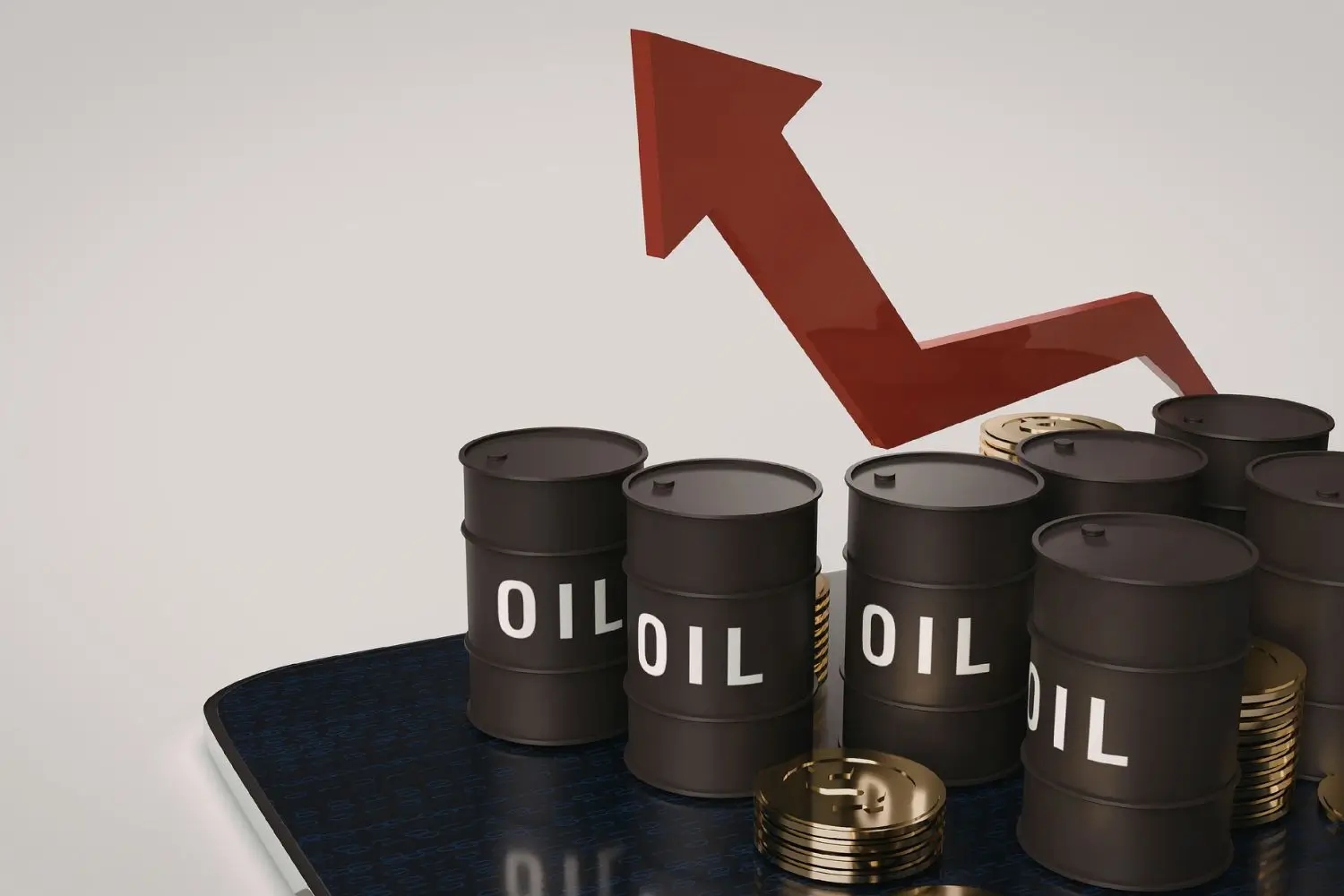
 Global oil prices rebounded during Wednesday’s Asian session, remaining just below the seven-month highs reached earlier this week. The primary driver is not purely supply-demand fundamentals, but mounting geopolitical risk as tensions between the United States and Iran continue to cast a shadow over global energy markets.
As of 22:41 ET (14:41 Vietnam time), April Brent crude futures climbed 1% to $71.49 per barrel, while U.S. West Texas Intermediate (WTI) crude futures rose 1.3% to $66.46 per barrel. The rebound came after both benchmarks fell roughly 1% on Tuesday amid renewed concerns over U.S. trade tariff policy.
The back-to-back volatility underscores how sensitive the oil market has become, with every political headline or inventory report capable of triggering swift price reversals.
Oil prices are currently supported by an elevated geopolitical risk premium tied to the Middle East. U.S. envoys, including Steve Witkoff and senior adviser Jared Kushner, are expected to meet Iranian representatives in Geneva in an effort to revive progress toward a nuclear agreement.
Iran’s foreign minister has signaled that a diplomatic breakthrough remains possible if both sides prioritize negotiations and the U.S. demonstrates flexibility regarding sanctions relief.
However, the market remains cautious. Diplomatic optimism is tempered by the understanding that negotiations could unravel quickly.
U.S. President Donald Trump warned of “very severe consequences” should talks fail, reinforcing fears that diplomatic efforts could escalate into confrontation. Meanwhile, the United States has continued strengthening its military presence in the region — a move that traders interpret as a sign that all options remain on the table.
Analysts at ING noted that the 10–15 day deadline reportedly set by Washington would fall in early March, leaving markets highly sensitive to developments in the coming weeks.
This uncertainty keeps a substantial geopolitical premium embedded in oil prices, even as supply data suggests otherwise.
On the supply side, fresh data painted a more bearish picture.
The American Petroleum Institute (API) reported an 11.4 million-barrel increase in U.S. crude inventories for the week ending February 20 — dramatically exceeding market expectations of a 1.9 million-barrel build.
Such a sharp rise may indicate slowing refinery activity or softer demand, both of which could weigh on oil prices if sustained.
However, gasoline and distillate inventories declined during the same period, suggesting end-user fuel consumption remains relatively stable. Traders are now awaiting official confirmation from the U.S. Energy Information Administration (EIA) later in the day.
If the EIA data corroborates the large crude build, oil prices could face renewed downward pressure in the short term.
Beyond geopolitics and inventory data, global market sentiment has also been shaped by fresh trade policy developments in the United States.
The administration of Donald Trump implemented a 10% global import tariff effective Tuesday, with plans to potentially raise it to 15% in the coming weeks. The move followed a ruling by the Supreme Court of the United States, which rejected a previous tariff framework and prompted the White House to apply alternative legal authority.
Broader tariffs risk slowing global trade flows and economic growth — a direct headwind for oil demand. In a scenario where economic activity decelerates, crude consumption could soften, placing downward pressure on prices.
For now, however, geopolitical tension appears to outweigh growth concerns in market pricing.
Oil markets are currently caught between opposing forces:
Bullish drivers: Elevated Middle East tensions and potential supply disruptions.
Bearish pressures: A substantial U.S. crude inventory build and trade-related growth risks.
In such an environment, price swings are likely to remain sharp and headline-driven.
Should U.S.–Iran negotiations collapse, the risk of disruption to Middle Eastern oil flows could intensify, potentially pushing prices beyond their recent highs.
Conversely, a successful nuclear agreement and easing of sanctions could allow Iranian crude to re-enter global markets more fully, increasing supply and capping further gains.
The balance between diplomacy and escalation will likely define the market’s next major move.
Speculative funds continue to hold net long positions in crude futures, reflecting confidence that geopolitical risks are not yet fully priced in.
However, trading volumes have shown signs of moderation as investors await clarity on several key events:
The outcome of the Geneva talks
Official EIA inventory data
Further statements from Washington
This pause suggests that while bullish sentiment persists, conviction remains conditional.
Brent crude trading near $71–72 per barrel indicates that short-term momentum remains constructive. If tensions escalate, prices could break above recent seven-month highs.
On the other hand, confirmation of sustained inventory builds combined with diplomatic progress could trigger a corrective pullback.
At present, oil prices are functioning not only as a reflection of physical supply-demand fundamentals, but also as a real-time barometer of geopolitical risk.
Oil prices today highlight a clear tug-of-war between fundamental supply data and geopolitical uncertainty. A sharp rise in U.S. crude inventories would normally pressure prices lower, yet fears of U.S.–Iran escalation and broader trade instability are keeping a risk premium firmly in place.
As long as Middle East tensions persist, oil is likely to remain supported by geopolitical factors. In a market this reactive, volatility is no longer the exception — it is the baseline condition.

.jpg)

.png)
 Tiếng Việt
 English