.png)
 Tiếng Việt
 English


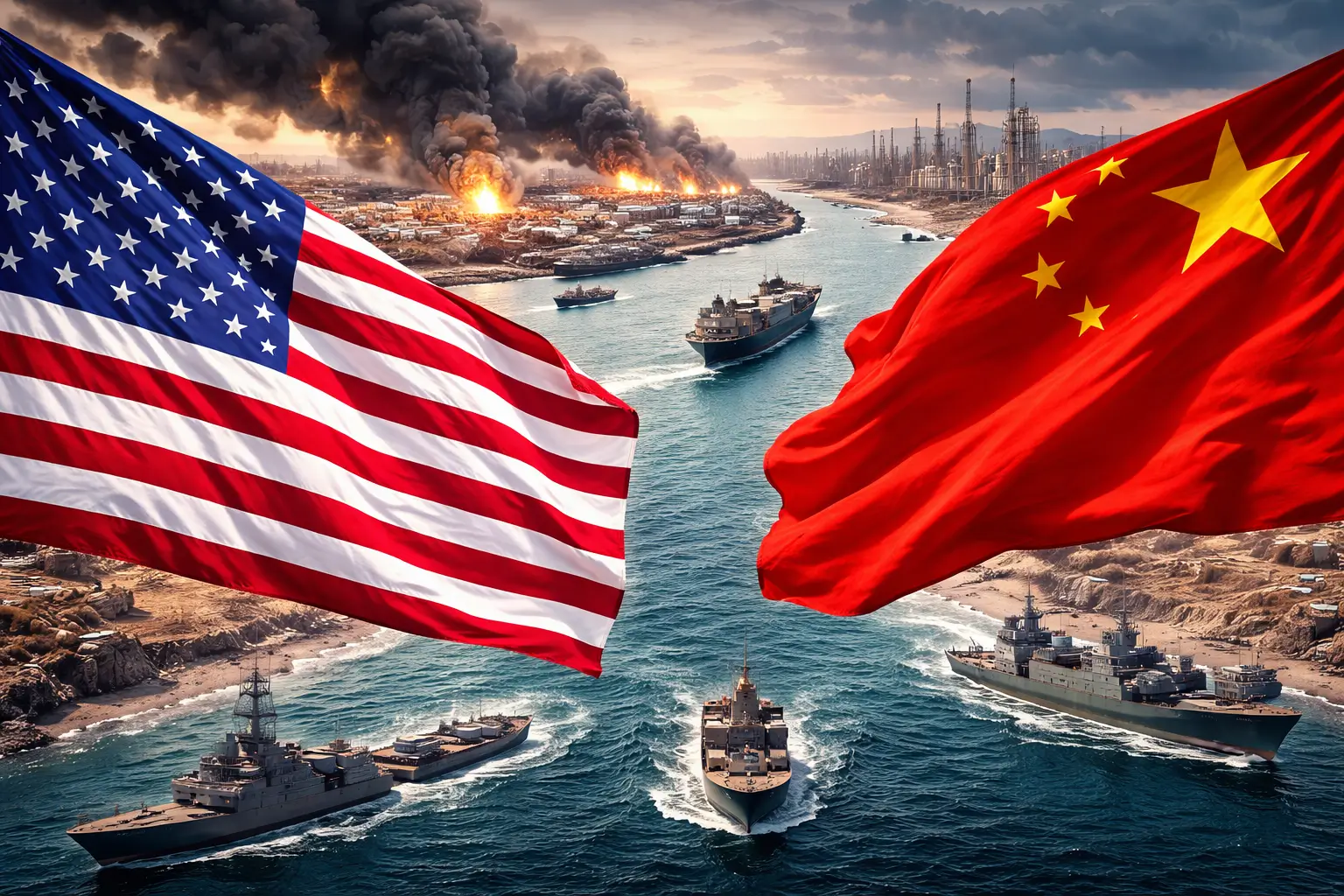
 Global oil prices extended gains during Wednesday’s Asian trading session, building on two consecutive days of sharp increases. The rally is being driven by escalating military tensions involving the United States, Israel, and Iran—developments that have significantly heightened fears of potential disruptions to global crude supply.
As of 10:25 a.m. (Vietnam time), May futures for Brent crude rose 1% to $82.21 per barrel, while WTI crude futures gained 0.7% to $75.07 per barrel. Both benchmarks had already closed nearly 5% higher on Tuesday. Notably, Brent briefly surged above $85 per barrel, marking its highest level since July 2024.
The sharp move reflects a rapid repricing of geopolitical risk, particularly as vital oil transit routes in the Middle East face mounting threats.
The current crisis erupted over the weekend following coordinated military strikes by U.S. and Israeli forces targeting Iranian military assets. The situation intensified further on Tuesday with additional attacks on facilities linked to Iran, deepening instability across the region.
In response, Tehran has expanded its military presence in the Gulf and issued stern warnings to international shipping operators. At the center of market anxiety is the Strait of Hormuz—a narrow but critical waterway that handles roughly one-fifth of the world’s globally traded oil supply.
Iranian officials have declared that any tanker passing through the strait could be considered a target. Such threats have sent shockwaves through energy markets, given that Hormuz serves as a primary export route for major oil producers including Saudi Arabia, Iraq, and the United Arab Emirates.
Even minor disruptions in the strait could severely constrain global crude flows, triggering a fresh supply shock.
Beyond rhetoric, tangible signs of supply disruption are beginning to emerge. Analysts at ING report that Iraq has started scaling back production at key oil facilities.
Operations at the Rumaila oil field—Iraq’s largest producing field—as well as West Qurna 2 have been partially suspended, removing an estimated 1.2 million barrels per day from output.
Rumaila serves as the backbone of Iraq’s crude exports, while West Qurna 2 ranks among the country’s most productive assets. If these shutdowns persist, the global oil market could face a substantial and sustained supply deficit rather than a short-term speculative spike.
According to ING analysts, “Disruptions to flows through the strait are beginning to impact upstream operations,” signaling that the crisis may already be translating into real supply constraints.
Despite the surge in prices, gains were partially trimmed after U.S. President Donald Trump announced that the U.S. Navy would escort commercial vessels through the Strait of Hormuz if necessary to ensure safe passage.
The pledge comes amid reports that global insurers have begun canceling war-risk coverage for ships transiting the area. Without such coverage, shipping costs could soar, further amplifying upward pressure on crude prices.
While Washington’s commitment offers a measure of reassurance, analysts caution that implementation will take time. In the interim, markets have already priced in a substantial geopolitical risk premium.
Traders are now focused on a crucial question: Will the Strait of Hormuz remain open?
If Iran proceeds with large-scale military action targeting oil tankers, Brent crude could quickly push beyond the $90 per barrel threshold in the near term. In a worst-case scenario involving prolonged disruption, the market could enter a new bullish cycle reminiscent of previous supply crises.
Conversely, coordinated international efforts to secure maritime routes—including U.S. naval involvement—may help contain escalation and limit further price spikes.
This push-and-pull dynamic explains the extreme volatility currently gripping the oil market: on one side, the risk of expanding conflict; on the other, the possibility of stabilization through diplomatic and military safeguards.
The impact of surging oil prices extends well beyond the energy sector. Higher crude prices threaten to reignite inflationary pressures worldwide, particularly in oil-importing economies across Asia and Europe.
Rising transportation and production costs could complicate central banks’ efforts to ease monetary policy. For countries still grappling with post-pandemic inflation, a renewed energy shock may delay anticipated interest rate cuts.
Financial markets are also reacting sensitively to developments in the Middle East. Energy stocks may benefit from sustained higher prices, while sectors such as aviation, shipping, and consumer goods could face mounting cost pressures.
In the near term, oil prices are expected to remain highly sensitive to geopolitical headlines. Investors will closely monitor:
The scope and speed of U.S. naval deployment in Hormuz
Further production decisions by Iraq and OPEC members
Iran’s next military moves
Developments in maritime insurance markets
Only once shipping lanes are demonstrably secure and production stabilizes can the current risk premium begin to unwind.
The recent surge in oil prices is not merely a technical rebound but a reflection of genuine fears surrounding global energy security. With the Strait of Hormuz—often described as the world’s most critical oil chokepoint—under threat, markets are bracing for potential supply shocks.
In an environment marked by geopolitical fragility, energy traders and policymakers alike face a period of heightened uncertainty. Prices may continue to climb if tensions escalate, but they could just as swiftly retreat should international efforts succeed in stabilizing the region.
One thing is clear: the global oil market has entered a new phase of volatility, where geopolitical risk once again stands at the forefront of price dynamics.