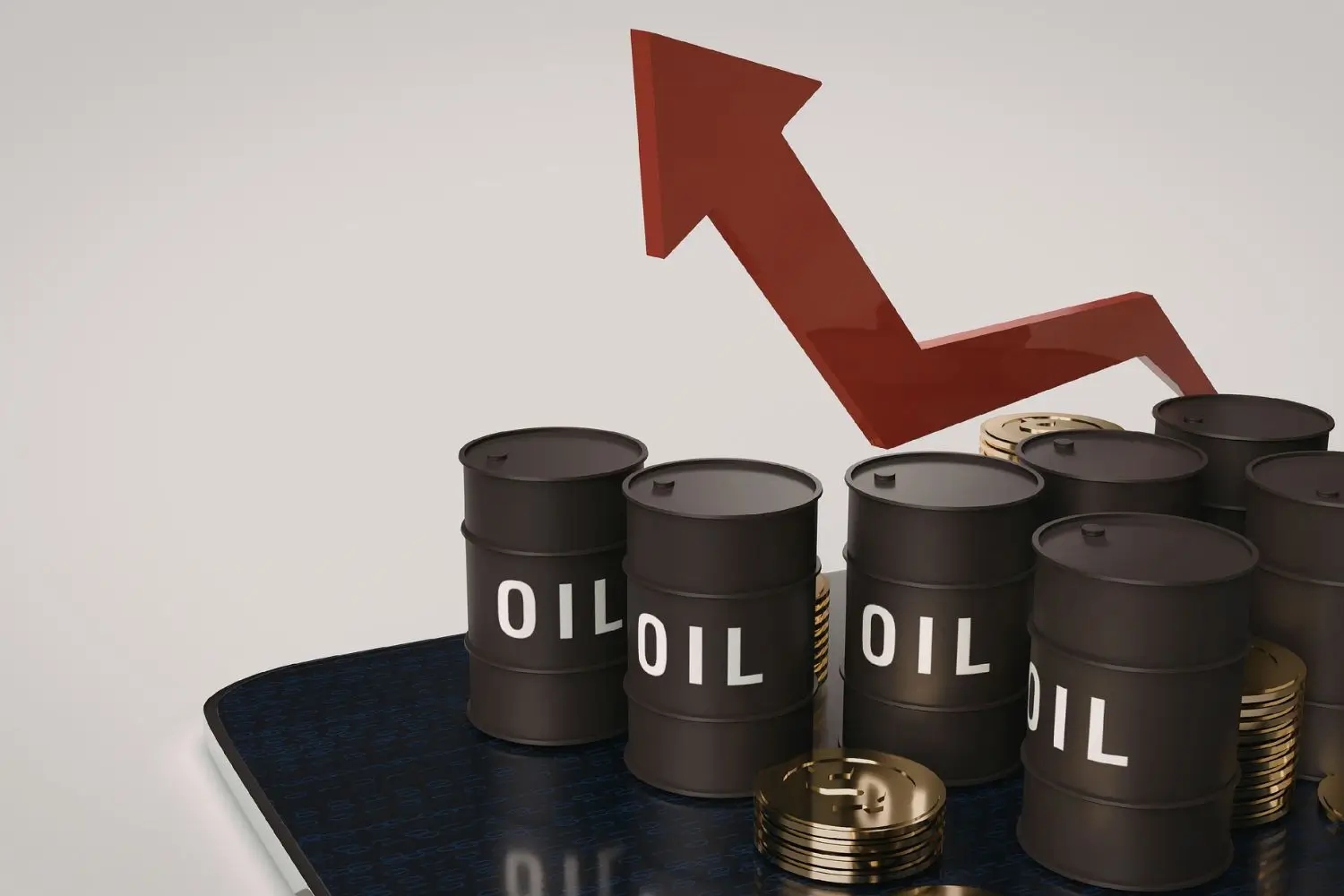
Oil prices rallied sharply in global markets on January 23, 2026, with Brent and West Texas Intermediate (WTI) crude futures climbing nearly 3% after the United States announced fresh sanctions targeting Iranian oil shipments and signaled the deployment of a naval fleet to the Middle East. The combined impact of escalating geopolitical tensions and ongoing production disruptions in Kazakhstan intensified concerns over potential supply shortages from key energy producers.
In Friday’s trading session, Brent crude futures rose by $1.82 per barrel, or 2.8%, to settle at $65.88, marking the highest level seen in more than a week. Meanwhile, U.S. West Texas Intermediate (WTI) crude finished up $1.71, or 2.9%, at $61.07 per barrel.
Across the week, both benchmarks recorded weekly gains exceeding 2.5%, reflecting a notable rebound in oil markets after earlier volatility. Analysts attributed the upside primarily to intensifying geopolitical risks rather than immediate shifts in demand fundamentals.
The price surge followed announcements from Washington that the U.S. government has imposed new sanctions on nine oil tankers and eight companies associated with transporting Iranian crude and petroleum products. These measures are part of a broader strategy to exert economic pressure on Tehran.
Officials also stated that a U.S. naval “armada,” including an aircraft carrier and guided-missile destroyers, is heading to the Middle East, a move that further heightened market fears of potential interruption to oil exports from the region.
Iran, which produces roughly 3.2 million barrels per day, ranks as the fourth-largest crude producer within the Organization of the Petroleum Exporting Countries (OPEC) and is a significant supplier to major importers such as China. Disruptions to its output or exports could ripple across global oil markets.
While geopolitical dynamics have dominated headlines, supply-side issues in Kazakhstan — another key oil producer — have compounded fears of constrained global crude availability.
According to industry reports, production at the Tengiz oil field, one of the world’s largest operated by Consortium Tengizchevroil with Chevron as a principal partner, remains halted following a fire earlier in January. Chevron indicated that output at both the Tengiz and nearby Korolev fields has yet to resume.
The shutdown at Tengiz has intensified challenges for Kazakhstan’s energy sector, which already faces logistical bottlenecks and export disruptions through the Caspian Pipeline Consortium (CPC) due to damage at the Russian Black Sea terminal. Analysts from JP Morgan have warned that Tengiz production could remain offline through the end of January, cutting national crude output to between 1.0 and 1.1 million barrels per day — well below the normal 1.8 million bpd.
This reduction undermines Kazakhstan’s role as a significant exporter and tightens supply, reinforcing upward pressure on prices already elevated by Middle East tensions.
Oil markets have been especially sensitive to geopolitical developments involving Iran and the broader Middle East. Commentary from financial institutions suggests that even if military confrontation is avoided, the mere prospect of supply disruption places a geopolitical risk premium on crude prices.
In recent sessions, price movements were also influenced by shifting rhetoric from global leaders. Reports of U.S. diplomatic shifts regarding Greenland and reduced threats of immediate military action momentarily eased market anxiety earlier in the week, triggering price pullbacks.
However, the renewed sanctions and naval deployment statement reversed that trajectory, pushing prices back up as traders recalibrated risk expectations.
Even as geopolitical strife dominates near-term price drivers, longer-term supply fundamentals remain critical. OPEC members, including Saudi Arabia, Iraq, the United Arab Emirates, and Iran, collectively shape much of the global supply backdrop. Iran’s production shortfalls or export challenges could shift the balance, especially as China — the world’s second-largest oil consumer — continues robust import activity.
Oil markets also remain attentive to other supply signals, such as U.S. crude stock levels, seasonal refinery maintenance cycles, and production decisions by major exporters.
Despite volatility earlier in the week — including a nearly 2% drop on Thursday following softened geopolitical rhetoric — oil markets ended the period on a strong note, with both Brent and WTI securing gains and posting their highest levels in days.
Market analysts note that energy prices in early 2026 have shown signs of resilience, with structural geopolitical risk often overshadowing short-term inventory pressures or demand concerns.
Traders and investors will be watching closely for further indications of supply disruption — particularly developments involving Iranian crude exports — as well as updates on Kazakhstan’s production restarts. Any signs of prolonged outages or escalated regional conflict could sustain the current premium in oil prices.
Oil’s near 3% surge on January 23, 2026, underscores the continued influence of geopolitical tensions and supply-side constraints on energy markets. U.S. sanctions targeting Iranian oil transport, coupled with disruptions at Kazakhstan’s key Tengiz oil field, have reinforced concerns about global supply tightness. As energy markets navigate an uncertain landscape shaped by geopolitical risk and production challenges, crude prices are likely to remain sensitive to headlines and supply developments in the weeks ahead.

.jpg)

.png)
 Tiếng Việt
 English