As Russia’s influence wanes in the Caspian Sea, Turkey and its regional partners, including Azerbaijan and Kazakhstan, are reshaping the naval balance and redefining the strategic order of this crucial region.
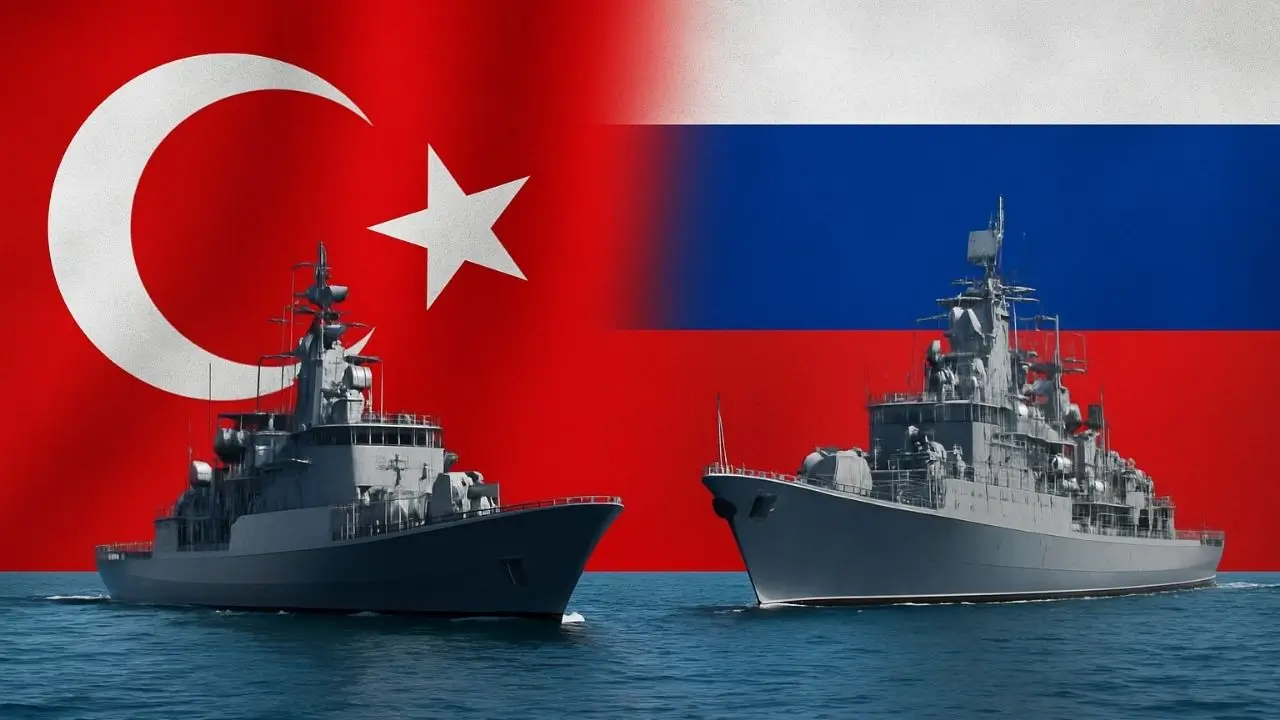
For decades, the Caspian Sea was often referred to as “Russia’s lake” — a maritime zone where Moscow exerted near-total dominance since the Soviet era. Yet, that balance is changing rapidly.
Since 2020, and especially after the outbreak of the Russia–Ukraine war in 2022, the regional balance of power has begun to shift. Russia’s traditional naval influence has waned, while Turkey has emerged as a rising strategic player, strengthening its partnerships with coastal states such as Azerbaijan and Kazakhstan.
According to Fuad Shahbazov, a political analyst at the Jamestown Foundation (U.S.), “Russia’s absence from several recent multilateral naval drills in the Caspian clearly demonstrates Moscow’s diminishing role in a region it once dominated.”
For nearly thirty years, Russia’s Caspian Flotilla symbolized its maritime supremacy in the region, playing a vital role in operations from Syria to the Caucasus. However, since 2022, the Ukraine conflict has stretched Moscow’s military and financial resources, forcing it to scale back regional activities.
Analysts note that Russia’s ability to serve as a regional naval leader has significantly eroded. Meanwhile, Central Asian nations — once reliant on Moscow for defense technology — are turning to Turkey and Western partners for modern equipment, training, and logistical cooperation.
Sanctions from the West have further crippled Russia’s defense industry, limiting its ability to export naval vessels and maintain joint projects with Caspian allies.
As Russia’s power recedes, Turkey has seized the opportunity to expand its presence in Central Asia and the South Caucasus.
The Azerbaijani victories in Nagorno-Karabakh in 2020 and 2023, achieved with Ankara’s robust military and intelligence support, transformed Baku into a mid-tier regional power and strengthened its strategic bond with Turkey.
Since then, Ankara has actively sought to extend its naval footprint across the Caspian. In May 2025, a Turkish naval delegation visited Azerbaijan’s major naval facilities, including Baku’s training centers and warship bases. The visit underscored both nations’ growing defense collaboration and Ankara’s intent to deepen its strategic role in the region.
“Turkey is emerging as the nucleus of a new naval cooperation framework in the Caspian,” Shahbazov observed. “Ankara’s influence is no longer confined to the Black Sea or the Mediterranean — it’s now reaching into the very heart of Eurasia.”
While Azerbaijan has become Turkey’s closest military ally in the region, Kazakhstan is steadily aligning its maritime strategy with Ankara’s vision.
Previously reliant on Moscow for shipbuilding and training, Astana signed a naval cooperation agreement with Turkey in 2023, marking a pivotal shift in regional defense ties.
Under this deal, Turkish firm YDA Group, along with Asfar and Kazakhstan’s Uralsk “Zenit” JSC, agreed to co-produce a new fleet of patrol and surface combat vessels. The project represents Kazakhstan’s bid to modernize its navy while reducing dependence on Russian technology.
Meanwhile, Azerbaijan continues to serve as the central hub of Turkey’s Caspian strategy. On October 25, 2025, Azerbaijani naval forces took part in Nusret-2025, a large-scale drill hosted by Turkey in the Gulf of Saros — another step in their expanding defense partnership.
The emergence of a Turkey–Central Asia defense bloc has pushed Russia toward closer cooperation with Iran — one of the few regional powers still aligned with Moscow.
In July 2025, the two nations conducted joint naval exercises in the Caspian, officially described as efforts to “enhance maritime security and protect energy corridors.”
However, experts view the move as largely symbolic, given Iran’s limited naval capabilities in the area.
Even so, the exercise highlighted Moscow’s determination to preserve at least a symbolic foothold in the Caspian — a region critical for oil and gas transportation and for maintaining strategic access between Europe and Asia.
Perhaps the clearest evidence of this geopolitical realignment lies in the composition of recent regional military exercises, which notably exclude Russia.
Birlestik-2024, a major joint exercise involving Azerbaijan, Kazakhstan, Uzbekistan, Tajikistan, and Kyrgyzstan, was the first Caspian-centered drill conducted without Russian participation.
Khazri-2025, a bilateral naval exercise between Azerbaijan and Kazakhstan, was held off Kazakhstan’s coast in June 2025 — again, without Moscow’s involvement.
These developments underscore the emergence of a new multilateral defense framework, in which Turkey has become a central pillar, and Caspian states are taking increasing control of their own security agendas.
Beyond its military significance, the Caspian Sea remains a critical energy hub, holding vast reserves of oil and natural gas and serving as a key route for regional pipelines linking Central Asia to Europe.
As Turkey strengthens its position, it not only gains greater leverage in global energy diplomacy but also helps create alternative export corridors that bypass Russia.
For Caspian nations like Kazakhstan and Azerbaijan, the diversification of alliances means access to advanced technology, defense know-how, and broader trade networks, bolstering both security and economic independence.
Observers suggest that unless Russia redefines its regional strategy, it risks losing its traditional dominance in the Caspian altogether.
Turkey’s proactive diplomacy, coupled with the cooperative stance of Turkic states, is gradually reshaping the security landscape.
That said, a complete Russian withdrawal remains unlikely. With its nuclear arsenal, defense production capacity, and growing ties with Iran, Moscow still wields enough influence to maintain a limited but meaningful presence in the region’s security architecture.
The evolving dynamics of the Caspian Sea reflect a broader global trend toward multipolarity, where power is increasingly decentralized and regional middle powers are asserting themselves.
By leveraging military cooperation, defense technology, and diplomatic outreach, Turkey has entered a domain once firmly under Russian control, redefining the strategic map of Eurasia.
In this context, the Caspian Sea may well become a testing ground for a new era of geopolitical competition — one where cooperation and rivalry coexist, and where traditional hierarchies give way to a more balanced, multifaceted order.
1. Why is Russia losing influence in the Caspian Sea?
Due to the ongoing war in Ukraine, economic sanctions, and the shift of regional states toward partnerships with Turkey and Western allies.
2. What role does Turkey play in the Caspian region?
Turkey provides military training, defense technology, and naval cooperation to countries like Azerbaijan and Kazakhstan, becoming a key security partner.
3. How does the Turkey–Central Asia alliance affect regional security?
It reduces dependence on Russia, promotes multilateral defense frameworks, and enhances coordination on maritime and energy security.
4. What lies ahead for the Caspian’s geopolitical future?
The region is expected to evolve into a multi-polar security hub, balancing cooperation among Turkey, Central Asian states, Russia, and Iran — reflecting the new global power structure.

.jpg)

.png)
 Tiếng Việt
 English