.png)
 Tiếng Việt
 English


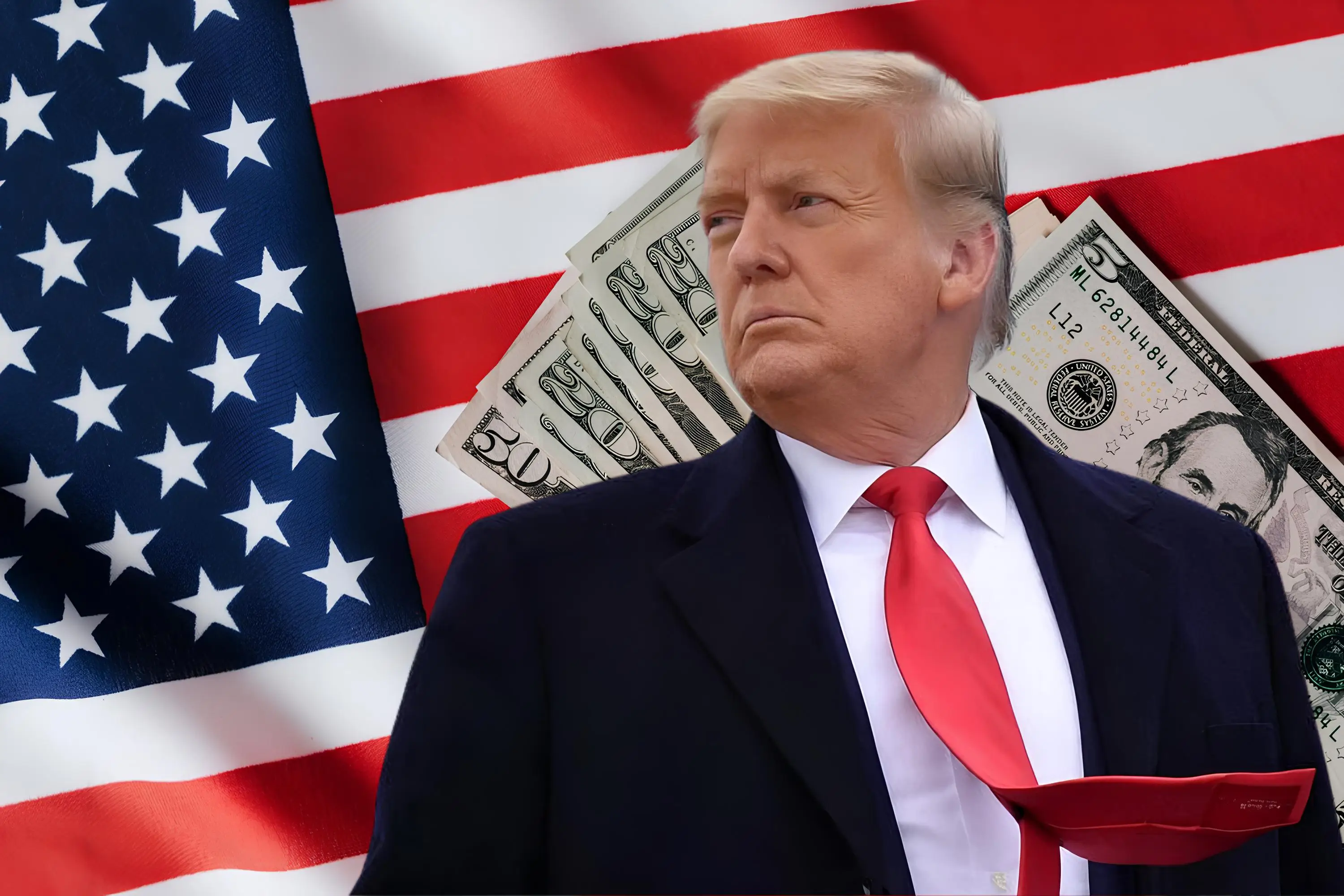 U.S. President Donald Trump announced over the weekend that he would raise global tariffs from 10% to 15%, just one day after the U.S. Supreme Court struck down much of his earlier tariff program.
Posting on Truth Social, Trump declared that the new 15% rate would “take effect immediately” and warned that additional trade measures could follow in the coming months. The announcement marks a dramatic escalation in U.S. trade policy and sets the stage for renewed legal and political battles over presidential tariff authority.
The move also injects fresh uncertainty into global markets, with investors, lawmakers, and trade partners closely monitoring the next steps from Washington.
Trump’s decision to increase the global tariff rate came swiftly after the Supreme Court ruled 6–3 that he had improperly invoked the International Emergency Economic Powers Act (IEEPA) to justify earlier sweeping trade duties.
The ruling determined that the administration exceeded its authority under IEEPA when imposing broad-based tariffs framed as emergency economic measures. The decision effectively invalidated significant portions of the previous tariff regime.
In response, Trump pivoted to Section 122 of the Trade Act of 1974, a rarely used provision that allows the president to impose temporary tariffs of up to 15% for a maximum of 150 days without prior congressional approval.
By raising the rate to the statutory ceiling of 15%, Trump signaled his intention to push executive trade powers to their legal limits.
Unlike IEEPA, which provides emergency powers in matters of national security, Section 122 of the Trade Act is designed to address balance-of-payments issues or trade imbalances.
Under Section 122, tariff measures:
Can last no more than 150 days
Must not exceed 15%
Require congressional approval for extension
While Trump claimed the measure is “legally allowed and verified,” legal scholars note that Section 122 has rarely been invoked in modern trade disputes, leaving its broader interpretation open to potential court challenges.
Moreover, despite Trump’s statement that the new tariffs are already in effect, it remains unclear whether a formal executive order has been signed specifying the implementation timeline. A White House document released Friday had indicated that the initial 10% tariff would take effect at 12:01 a.m. Eastern Time on February 24.
The White House has yet to clarify the precise administrative steps behind the 15% escalation.
The tariff escalation has intensified political polarization in Washington.
Senate Minority Leader Chuck Schumer welcomed the Supreme Court’s ruling, calling the prior tariffs “chaotic and unlawful.” Democratic lawmakers argue that the Constitution grants Congress—not the president—the primary authority over trade and taxation.
Tariff policy is now expected to become a central issue in the upcoming U.S. midterm elections in November, with economic performance and inflation likely to dominate campaign messaging.
Within the Republican Party, reactions have been mixed. Some members criticized the Supreme Court’s decision, framing it as judicial overreach. Others, however, emphasized that tariff authority constitutionally resides with Congress and cautioned against expanding executive power too aggressively.
Trump himself sharply criticized the Court’s ruling, labeling it “illogical, weakly reasoned, and extremely anti-American.” He also publicly rebuked Justices Neil Gorsuch and Amy Coney Barrett for siding with the majority.
Financial markets reacted swiftly to the Supreme Court decision.
U.S. equities initially rallied on hopes that limiting executive tariff authority could ease trade tensions and reduce business uncertainty. Stocks later pared gains before rebounding again, reflecting mixed investor sentiment.
Market participants are weighing several possible outcomes:
Reduced trade friction with key U.S. partners
Potential tariff refunds for importers
Moderating inflationary pressures if tariffs are scaled back
However, Trump’s immediate escalation to 15% tariffs tempers expectations of a lasting de-escalation in trade tensions.
One of the most significant unresolved issues is the potential refund of tariffs previously collected under the invalidated IEEPA framework.
According to some estimates, the U.S. government could be required to reimburse more than $175 billion to importers if courts determine that the earlier tariffs were unlawfully imposed.
Such a refund would carry substantial fiscal implications:
Increased federal budget pressure
Administrative complexity in processing reimbursements
Potential ripple effects across global supply chains
At present, the administration has not clarified how it intends to address the refund issue, leaving businesses in limbo.
Raising global tariffs to 15% risks reigniting trade disputes with key partners in Europe, Asia, and Latin America.
Higher import costs could:
Disrupt multinational supply chains
Trigger retaliatory tariffs
Increase consumer prices domestically
While Trump argues that many countries have “taken advantage” of the United States for decades, economists warn that broad-based tariffs often function as a tax on domestic businesses and consumers.
The policy shift comes at a sensitive moment for the global economy, as growth remains uneven and inflationary pressures persist in several advanced economies.
Beyond immediate market effects, the episode has reignited a fundamental constitutional debate over the separation of powers.
The U.S. Constitution grants Congress the authority to regulate commerce with foreign nations. Over decades, however, lawmakers have delegated varying degrees of trade authority to the executive branch through statutes like the Trade Act of 1974 and IEEPA.
The Supreme Court’s recent ruling suggests a renewed judicial willingness to scrutinize expansive interpretations of emergency powers in trade matters.
If future legal challenges arise under Section 122, courts may further define—or limit—the scope of presidential authority in imposing tariffs.
Looking forward, several factors will shape the trajectory of U.S. trade policy:
Whether Congress seeks to reassert greater control over tariff decisions
Potential legal challenges to the Section 122 tariffs
The economic impact of higher import duties on inflation and growth
Political dynamics ahead of the midterm elections
For now, Trump’s escalation to 15% underscores a confrontational approach to global trade and signals that tariff policy will remain a central economic and political battleground.
President Donald Trump’s decision to raise global tariffs to 15%—immediately after the Supreme Court curtailed his earlier trade authority—marks a pivotal moment in U.S. economic policy.
While framed as a defense of American interests, the move introduces fresh legal uncertainty, fiscal risk, and market volatility. With billions in potential refunds at stake and Congress poised to weigh in, the battle over trade authority is far from settled.
As the 150-day clock under Section 122 begins ticking, investors, lawmakers, and global trade partners alike are bracing for what could become one of the most consequential economic policy debates of the year.