
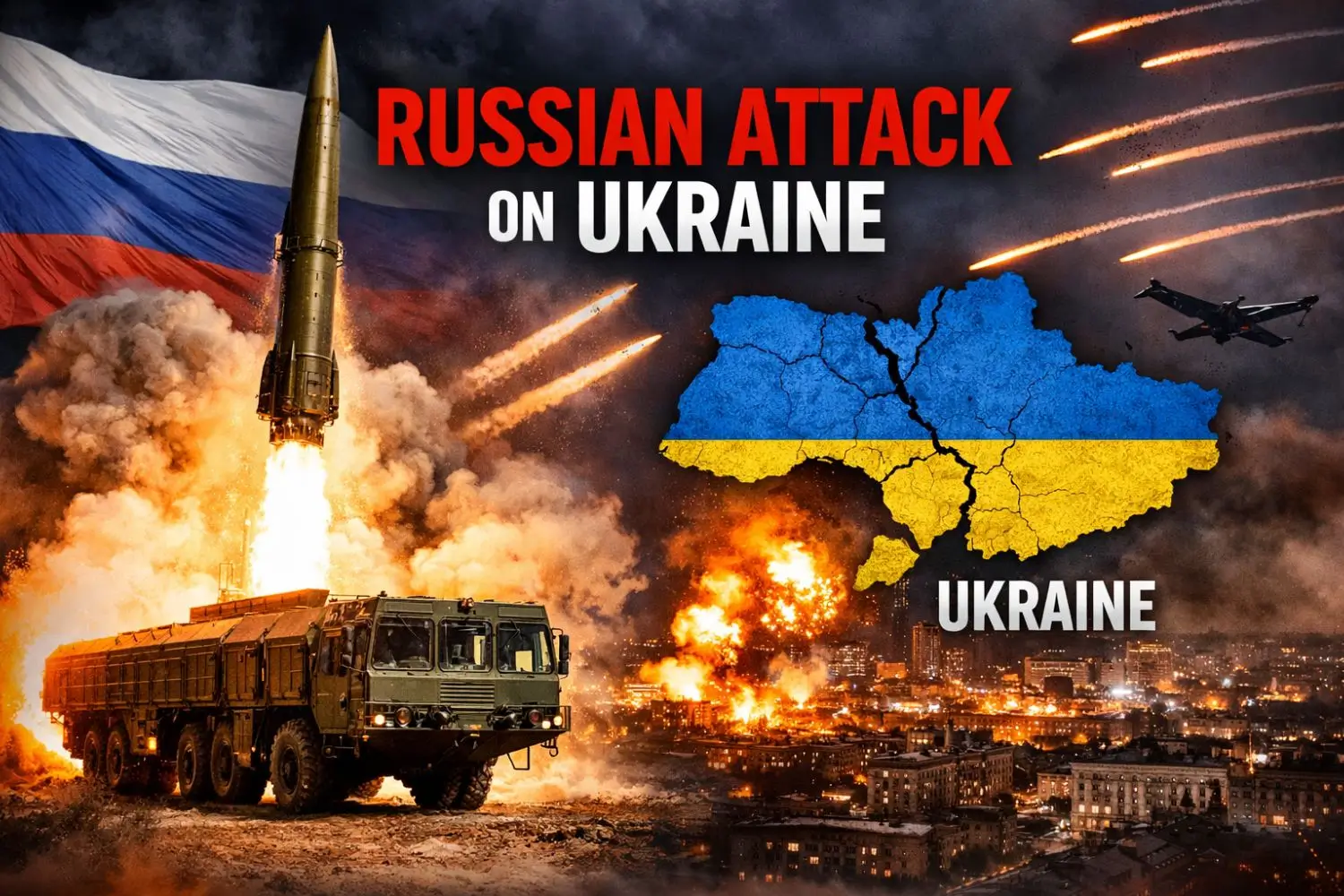
Russia has conducted one of the most extensive coordinated strikes on Ukraine since the beginning of the conflict, deploying more than 500 drones and missiles in a single night. Ukrainian military officials reported that the assault included a record number of Iskander-M tactical ballistic missiles, marking a significant escalation in Moscow’s aerial campaign.
The attack targeted multiple regions across Ukraine, including Kyiv, Kharkiv, Dnipropetrovsk, Vinnytsia, and Odesa, and came just days after the expiration of a temporary pledge by Russia to refrain from striking the Ukrainian capital.
According to Ukraine’s Air Force Command, Russian forces launched a mixed barrage consisting of:
Hypersonic Zircon and P-800 Oniks anti-ship missiles
32 Iskander-M ballistic missiles and S-300 missiles modified for ground attacks
Kh-22/32 supersonic cruise missiles
Kh-101 and Iskander-K cruise missiles
Around 450 unmanned aerial vehicles (UAVs) of various types
Ukrainian authorities described the assault as the largest combined missile and drone operation carried out by Russia to date, surpassing previous large-scale strikes recorded in 2025.
Kyiv claims that its air defense network managed to intercept a substantial portion of the incoming weapons:
4 Zircon/Oniks missiles
11 Iskander-M/S-300 missiles
3 Kh-22/32 missiles
20 Kh-101/Iskander-K cruise missiles
More than 400 UAVs
Despite these interceptions, at least 27 missiles and 31 drones reportedly hit designated targets, while debris fell across 17 different locations. Ukrainian officials said they were still verifying information about several remaining missiles whose impact sites remain unclear.
Military analysts noted that this strike represented the highest number of Iskander-M launches in a single operation since the war began. The previous peak was recorded in October 2025, when Russia fired 26 such missiles during one wave of attacks.
Open-source intelligence accounts reported that key energy facilities, including major substations and thermal power plants near Kyiv and Dnipropetrovsk, were hit by multiple Iskander-M strikes, causing widespread disruptions.
Several energy installations suffered direct hits:
The 750 kV “Kyiv” substation was struck by Zircon and Kh-32 missiles
CHP-4 and CHP-5 power plants were targeted by Iskander-M
Trypillya thermal plant sustained damage from Kh-32 and Kh-101 missiles
Prydniprovska power station in Dnipropetrovsk was hit by up to 18 Iskander-M missiles
Local authorities reported that more than 1,100 residential buildings in Kyiv lost heating, while Kharkiv was forced to reduce heating capacity for 800 households to prevent the entire grid from freezing amid temperatures as low as -23°C.
The strikes occurred during one of the coldest periods of the winter, intensifying humanitarian concerns. Ukrainian officials urged residents to seek warming shelters and accused Moscow of deliberately waiting for freezing temperatures to maximize damage to civilian infrastructure.
Ukraine has been reinforced with advanced Western air defense platforms such as Patriot, SAMP/T, IRIS-T, and NASAMS. The Patriot systems equipped with PAC-3 MSE interceptors are capable of engaging ballistic missiles at ranges of up to 60 km, but each interceptor costs around USD 4 million, making large-scale defense financially and logistically demanding.
Repeated mass attacks have left some units short of ammunition, while several batteries have been targeted and damaged by Russian strikes.
The Iskander-M missile remains one of the most difficult weapons for Ukraine to counter due to its high speed, maneuverable trajectory, and ability to deploy decoys. Russia has also reportedly used modified S-300 missiles—dubbed “zombie missiles”—to overwhelm Ukrainian defenses.
Experts warn that ballistic missiles will become an even greater challenge for Kyiv in 2026 as Moscow increases production and refines its tactics.
The attack took place immediately after the end of a one-week pledge by Russia not to strike Kyiv, an arrangement reportedly proposed by U.S. President Donald Trump to facilitate peace talks with Vladimir Putin.
Ukrainian Foreign Minister Andrii Sybiha condemned the assault, calling for stronger international pressure on Russia and additional deliveries of air defense systems.
Western governments have yet to announce new aid packages, but analysts expect renewed debates over long-range interceptors and energy infrastructure support.
Military observers believe the operation reflects a deliberate Russian strategy to:
Overload Ukrainian air defenses with mixed weapon types
Destroy power generation and transmission nodes
Undermine civilian morale during winter
Strengthen Moscow’s bargaining position ahead of negotiations
At the same time, the scale of Ukrainian interceptions demonstrates the growing effectiveness of Western-supplied systems, even if they remain insufficient against attacks of this magnitude.
Russia’s overnight barrage, featuring a record deployment of Iskander-M ballistic missiles, marks a new phase in the air war over Ukraine. While Kyiv succeeded in shooting down hundreds of drones and missiles, the damage to energy infrastructure highlights the continuing vulnerability of civilian systems.
With diplomatic efforts stalled and winter conditions worsening, the conflict appears poised for further escalation, placing renewed urgency on international support for Ukraine’s air defense and reconstruction needs.

.png)
 Tiếng Việt
 English