.png)
 Tiếng Việt
 English



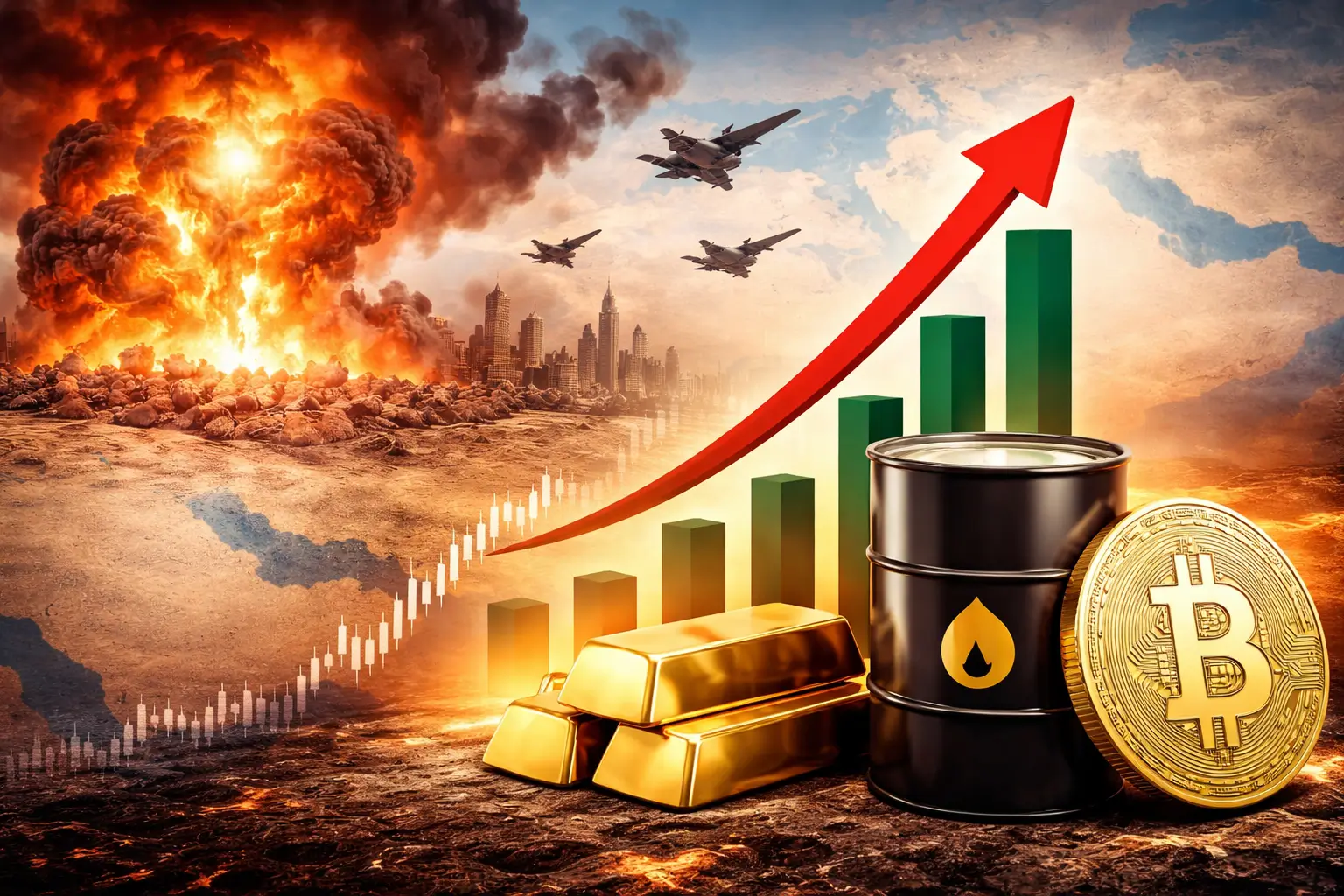
Global financial markets are entering a prolonged period of heightened volatility, as inflationary pressures, shifting monetary policies, geopolitical conflicts, and recession risks intersect. In such an environment, risk assets such as equities and currencies from emerging markets often face significant pressure, prompting investors to seek more effective hedging instruments.
As a result, safe-haven assets and alternative investments are increasingly viewed as critical tools for stabilizing portfolios, mitigating risk, and preserving purchasing power over the long term.
Safe-haven assets are instruments that tend to retain or increase their value during periods of economic or financial stress. Common characteristics include high liquidity, broad market acceptance, and resilience to systemic shocks.
Historically, whenever markets have faced financial crises, wars, or surging inflation, capital has flowed out of riskier assets and into these perceived “safe zones.” This pattern has strengthened in recent years as global risks have become more complex, persistent, and difficult to predict.
Gold has long been regarded as the quintessential safe-haven asset. Independent of any government or monetary system, gold functions as a long-term store of value.
In periods of high inflation or shifting interest-rate expectations, gold often benefits from a weakening of fiat currencies. In addition, sustained purchases by central banks in recent years have reinforced gold’s strategic importance in global portfolios.
That said, gold does not generate income and can experience sharp short-term fluctuations, making appropriate portfolio weighting essential.
Alongside gold, the US dollar and US government bonds remain among the most important safe-haven assets worldwide. During times of crisis, heightened demand for liquidity often drives capital back into the dollar, reinforcing its dominance.
US Treasury bonds—particularly longer-dated maturities—are considered safe due to their high creditworthiness and the central role of the United States in the global financial system. However, in a prolonged high-interest-rate environment, their defensive effectiveness may be reduced by price pressures.
Alternative investments include assets outside traditional equities and bonds, with the primary goal of diversifying portfolios and reducing correlation with broader financial markets.
The growing role of alternative investments reflects the reality that portfolios relying solely on stocks and bonds are becoming less effective at weathering systemic macroeconomic shocks.
Beyond gold, commodities such as silver, copper, crude oil, and agricultural products are also classified as alternative investments. Industrial metals, particularly copper, are benefiting from global trends such as energy transition, infrastructure development, and electrification.
However, commodities are highly sensitive to economic cycles and supply-demand dynamics, making them more suitable for investors with a medium- to long-term investment horizon.
Real estate has traditionally been viewed as a hedge against inflation, as property values and rental income tend to rise alongside construction costs and living expenses. For investors who prefer not to hold physical assets, real estate investment trusts (REITs) provide exposure with greater liquidity.
Nevertheless, real estate remains sensitive to interest rates and credit cycles, requiring careful macroeconomic assessment before capital allocation.
Cryptocurrencies—particularly Bitcoin—are often described as “digital gold” due to their limited supply. In practice, however, crypto assets remain highly volatile and have yet to consistently demonstrate reliable safe-haven characteristics during major crises.
Still, for some long-term investors, cryptocurrencies are considered a strategic alternative asset, suitable for small allocations aimed at capturing asymmetric returns.
There is no universal allocation model for safe-haven assets and alternative investments. The optimal strategy depends on each investor’s risk tolerance, financial objectives, and investment horizon.
In an environment of prolonged uncertainty, many experts recommend using safe-haven assets to stabilize portfolios, while alternative investments serve to enhance diversification and return potential.
Safe-haven assets and alternative investments are becoming central pillars of modern investment strategies. As global risks grow more complex, understanding the role of each asset class—and how they interact within a portfolio—can significantly improve resilience against market volatility.
Over the long term, a well-balanced portfolio that integrates both defensive and growth-oriented assets not only helps preserve capital but also positions investors to capitalize on opportunities as markets enter new cycles.