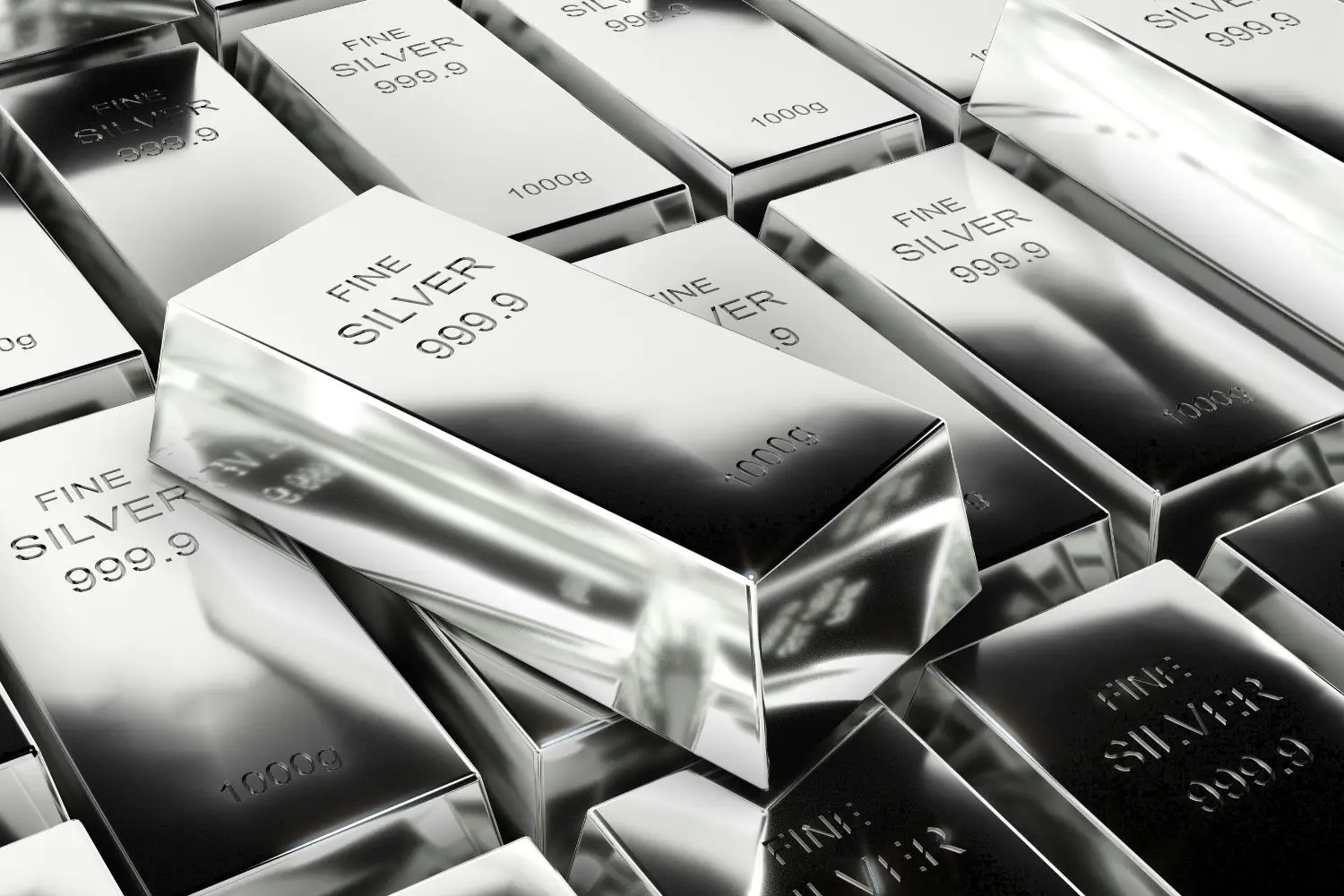
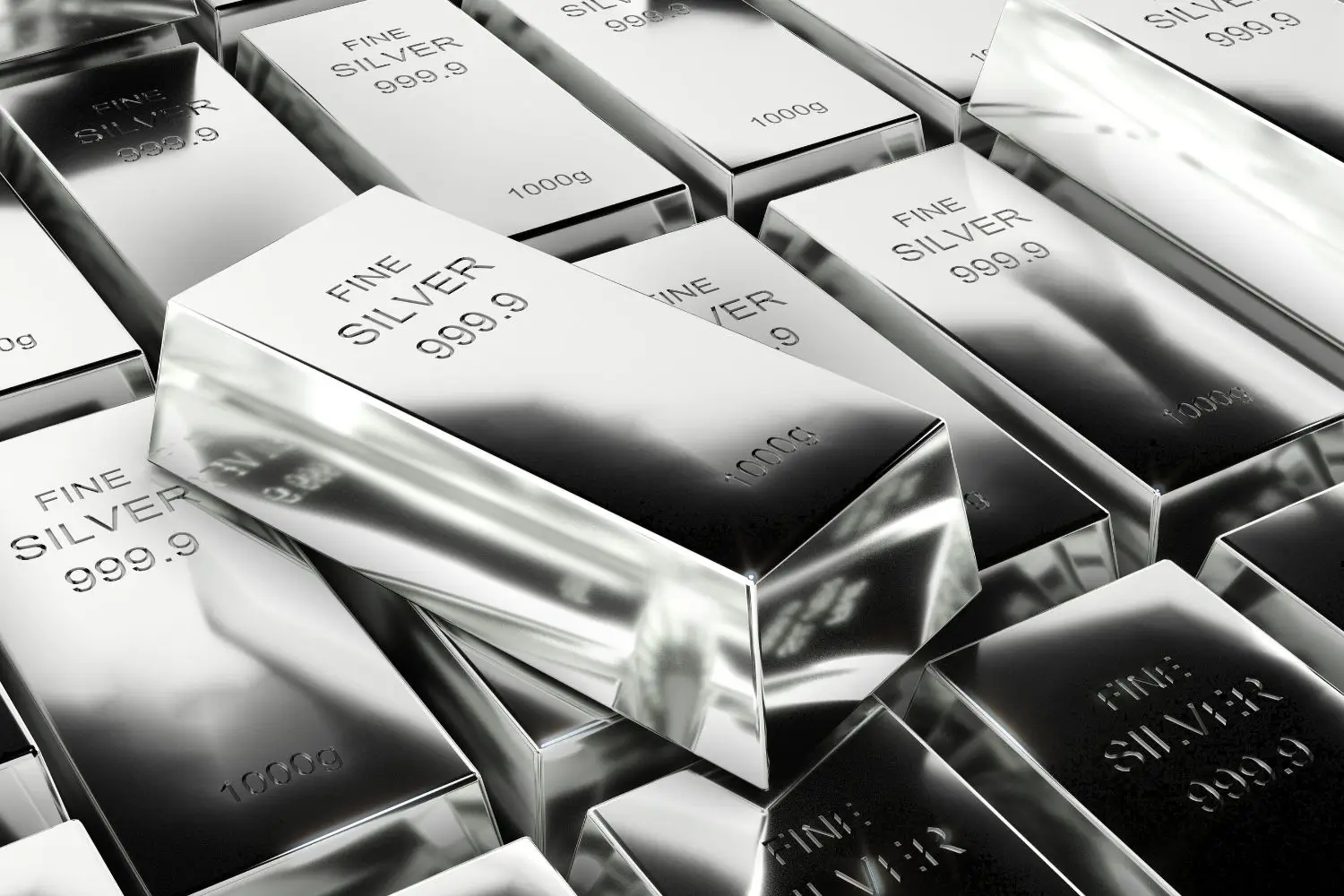
 Silver prices on February 24, 2026 showed diverging trends between domestic and international markets. While Vietnam’s silver market experienced sharp intraday swings following the Lunar New Year holiday, global silver prices climbed nearly 3%, supported by safe-haven demand amid escalating U.S. trade tensions and persistent geopolitical risks in the Middle East.
The latest movements raise a key question for investors: can silver sustain its upward momentum and break through the critical $90 per ounce threshold?
The first trading session after the Lunar New Year opened on a strong note, with multiple brands raising prices simultaneously. Notably, silver bars surged by more than VND 6 million per kilogram during the morning session.
However, bullish momentum proved short-lived. As the afternoon session unfolded, profit-taking pressure intensified, driving prices sharply lower. At one point, 1kg silver bars fell nearly VND 3 million from their intraday peak.
By the close of February 23:
Ancarat listed 999 silver taels at VND 3.228–3.328 million per tael (bid–ask), down VND 1,000 per tael compared to the session’s opening level.
Its 1kg silver bars traded around VND 86.08–88.747 million per kg, edging slightly lower on both sides.
At Sacombank-SBJ:
999 silver taels declined to VND 3.456–3.558 million per tael, down VND 111,000.
1kg silver bars dropped sharply by VND 2.96 million per kg to VND 92.16–94.88 million per kg.
Meanwhile, Phu Quy Group moved in the opposite direction:
999 silver taels rose to VND 3.238–3.338 million per tael, up VND 84,000–86,000 from the opening.
1kg silver bars increased by more than VND 2.2 million to VND 86.346–89.013 million per kg.
The mixed performance highlights how domestic prices remain heavily influenced by localized supply-demand dynamics and post-holiday investor sentiment.
In contrast to domestic volatility, international silver prices posted a solid rally.
As of 8:00 PM (Vietnam time) on February 23, spot silver traded between $86.95 and $87.2 per ounce, up $2.43 from the previous session, equivalent to a 2.88% gain.
The rally was fueled in part by the United States raising global import tariffs from 10% to 15% following a ruling by the Supreme Court of the United States.
Ongoing delays in trade negotiations between Washington and several major partners have further heightened concerns about global trade disruptions.
Investors are also closely monitoring geopolitical risks in the Middle East, particularly speculation that Washington could pursue military action against Iran amid stalled nuclear negotiations.
In times of heightened uncertainty, silver—alongside gold—is widely regarded as a safe-haven asset that helps preserve value during financial turbulence.
Additionally, trading activity is expected to pick up this week as Chinese exchanges resume operations after an extended holiday, potentially boosting liquidity across precious metals markets.
March silver futures have climbed more than $4, trading around $86.345 per ounce.
From a technical perspective, bulls are targeting a decisive close above the key resistance level of $90 per ounce. A successful breakout could reinforce the medium-term bullish trend.
However, significant uncertainties remain.
Analysts maintain a cautiously optimistic outlook for silver, citing several structural drivers:
Amid intensifying trade tensions and geopolitical uncertainty, demand for precious metals as portfolio hedges continues to strengthen.
Global silver supply has struggled to keep pace with demand in recent years, particularly as the metal plays an increasingly important role in renewable energy and advanced technology sectors.
Unlike gold, silver carries a dual identity: it functions both as a defensive asset and as a critical industrial input, especially in electronics, solar panels, and semiconductor technologies.
This “dual-demand” characteristic provides additional upside potential, whether driven by economic recovery or heightened risk aversion.
In the short term, volatility is likely to remain elevated. Investors should closely monitor:
Monetary policy signals from the Federal Reserve
Global trade developments
Middle East geopolitical tensions
Industrial demand indicators, particularly from China
The Federal Reserve’s interest rate path will be particularly influential, as higher rates typically increase the opportunity cost of holding non-yielding assets such as silver.
Silver prices on February 24, 2026 reflect a market shaped by both domestic factors and global macroeconomic forces. While Vietnam’s market experienced sharp post-holiday fluctuations, international silver surged nearly 3% amid safe-haven demand fueled by trade and geopolitical uncertainty.
With the $90 per ounce level now within reach, silver is poised to remain in the spotlight. However, the sustainability of its rally will largely depend on policy developments and the broader global economic outlook.

.jpg)
.png)
 Tiếng Việt
 English