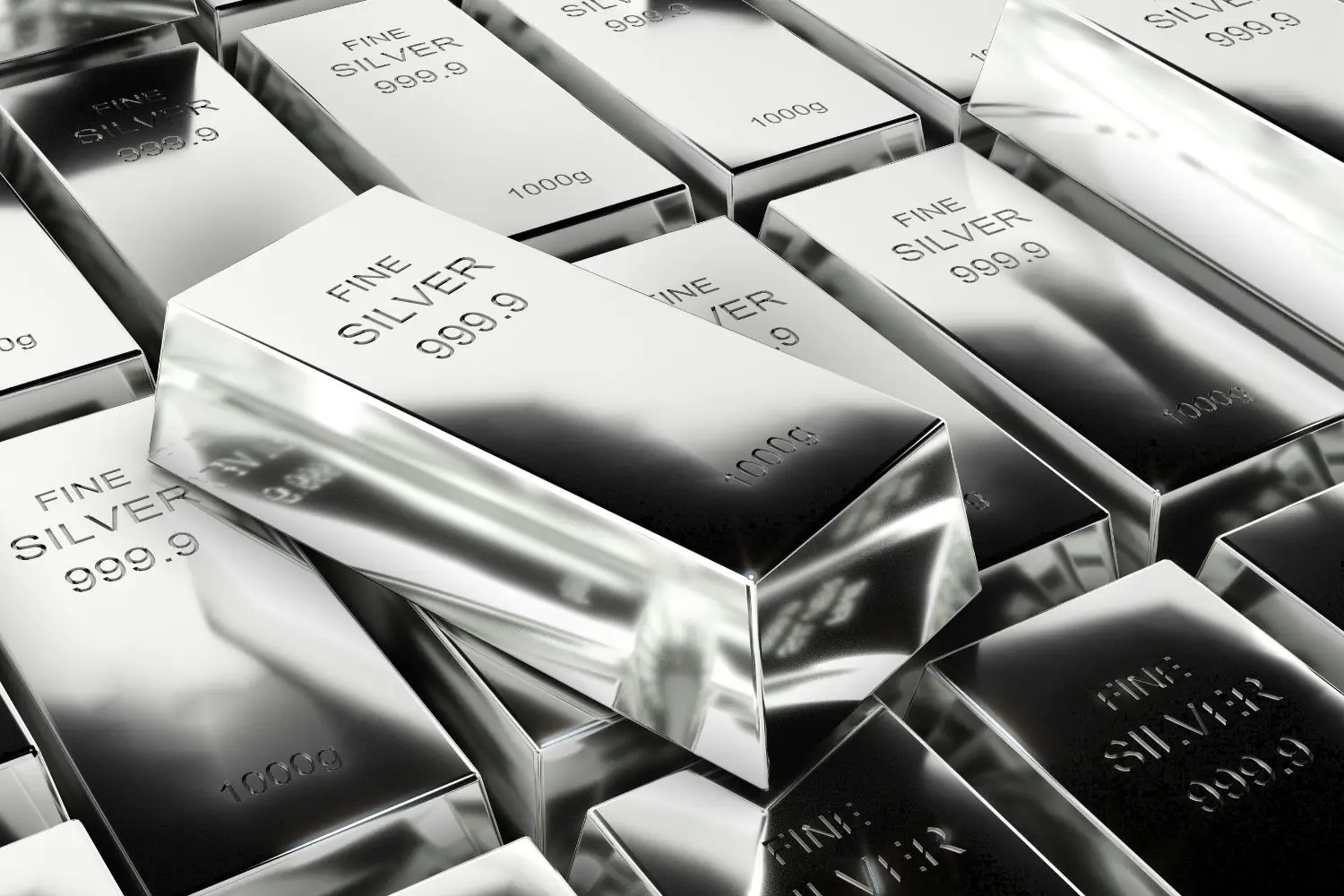
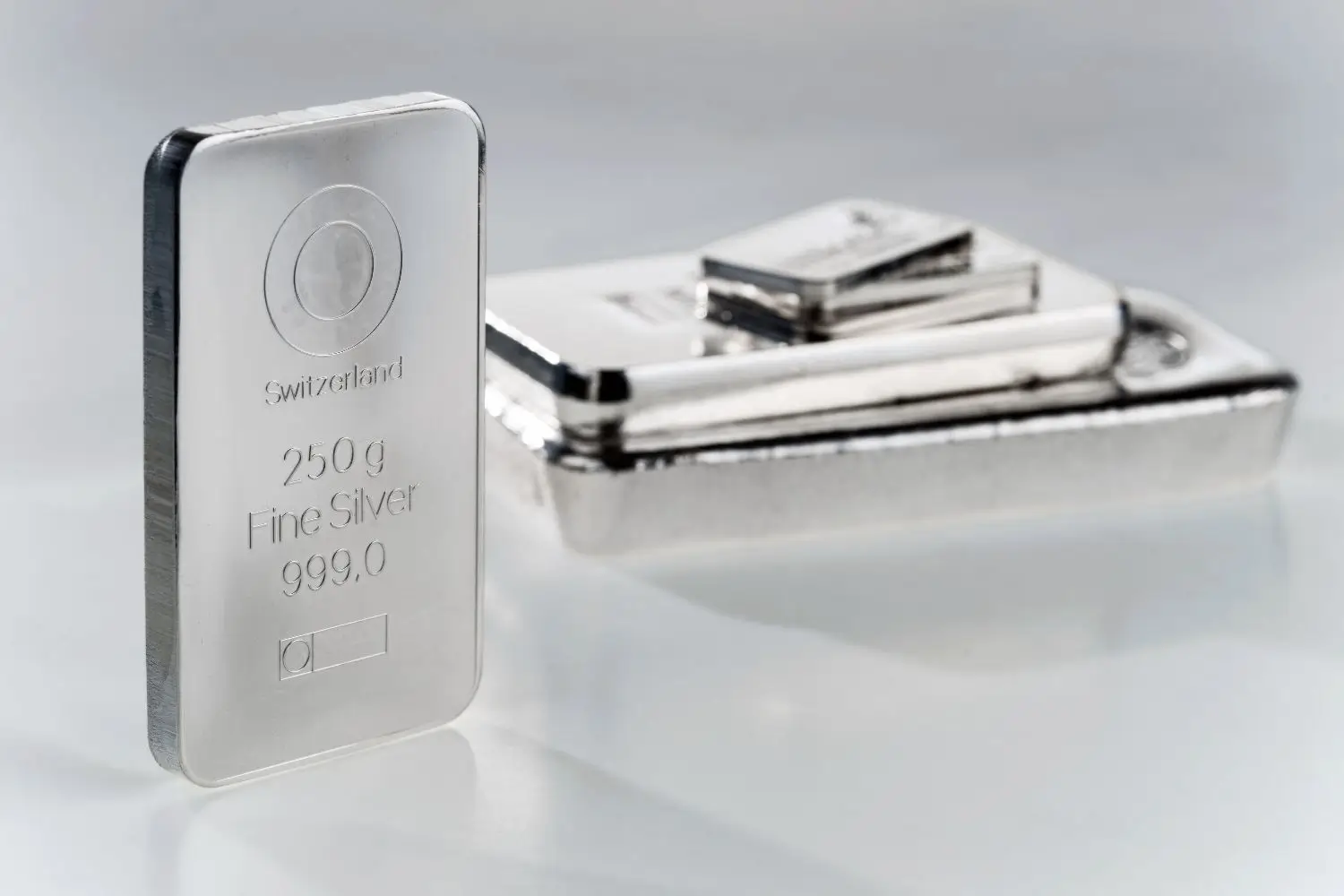
Silver is experiencing one of the strongest rallies in its history, propelling the precious metal to the position of the world’s second-largest asset by market capitalization, trailing only gold and overtaking Bitcoin as well as a host of leading technology giants such as Apple, Microsoft, Nvidia, and Amazon.
This remarkable development not only reflects rising demand for safe-haven assets amid global uncertainty, but also underscores silver’s increasingly vital role in the new upward cycle of the global commodities market.
During the trading session on January 20, silver prices surged by more than 5%, breaking above $94.5 per ounce and setting a new all-time high. This sharp rally pushed silver’s total market capitalization above $5.3 trillion, the highest level in the metal’s thousands-year history.
At current price levels, silver’s market value is approximately 2.9 times larger than Bitcoin’s, the world’s most valuable digital asset. As a result, silver has officially overtaken Bitcoin to become the second-largest asset globally by market capitalization, ranking just behind gold and far ahead of many major technology corporations long regarded as pillars of the digital economy.
Silver’s ascent up the global asset rankings has been notably swift. In just three months, the precious metal has climbed four positions on the list of the world’s largest assets by market value. As recently as October 2025, silver was still ranked among the top six global assets.
This rapid shift highlights a clear reallocation of global capital, as investors increasingly seek assets that not only preserve value but also benefit from long-term structural trends such as the energy transition and the expansion of green technologies.
One of the key drivers behind silver’s surge is the escalation of trade tensions between the United States and Europe. Signals from Washington regarding additional tariffs on eight European countries linked to the Greenland issue have heightened concerns over a new round of retaliatory trade measures.
In response, European leaders have discussed potential countermeasures, including revisiting plans to reimpose tariffs on U.S. goods that were prepared last year. Some scenarios also involve the possible activation of the European Union’s Anti-Coercion Instrument, designed to counter actions deemed coercive in international trade.
Amid growing uncertainty, capital has flowed into safe-haven assets, with silver emerging as an increasingly attractive alternative alongside gold.
Previously, silver prices had come under pressure for two consecutive sessions after the U.S. administration excluded certain key minerals from tariff lists. However, silver’s long-term outlook remains firmly supported, particularly after the United States classified it as a strategic mineral last year.
Silver plays a critical role in high-tech industries, especially in renewable energy, batteries, electronics, and electric vehicles. As the global economy accelerates its transition toward sustainability, industrial demand for silver is expected to continue rising sharply in the years ahead.
In addition to rising demand, the silver market is facing a structural supply deficit. Over the past year, the London market—one of the world’s largest precious metals trading hubs—has repeatedly experienced supply tightness, providing sustained support for elevated prices.
Analysts note that expanding silver production is increasingly challenging due to higher costs. Moreover, most silver output is produced as a byproduct of mining other metals, limiting the industry’s ability to quickly increase supply in response to rising prices.
Beyond geopolitical factors, recent economic data suggest that U.S. inflation is easing, strengthening expectations that the Federal Reserve will continue to loosen monetary policy.
With the Fed widely expected to cut interest rates twice more this year, the opportunity cost of holding non-yielding assets such as precious metals has declined, further encouraging capital inflows into silver and gold.
Silver’s rally has also been reinforced by renewed institutional buying. After a period of profit-taking, the iShares Silver Trust ETF (SLV)—the world’s largest silver-backed exchange-traded fund managed by BlackRock—returned to net buying during the most recent trading session.
Although the fund has recorded net outflows of more than $1 billion year-to-date, the renewed purchases suggest that institutional investors are reassessing silver’s prospects under the current macroeconomic environment.
Amid the strong rally, several major financial institutions have issued optimistic forecasts for silver, while also cautioning about near-term risks. Strategists at Citigroup continue to highlight silver’s dual role as both a safe-haven asset and a strategic industrial metal, raising their short-term price target to $100 per ounce.
According to Citigroup, the current uptrend is supported by three key factors: prolonged geopolitical risks, constrained physical supply, and concerns surrounding the Federal Reserve’s independence. Some analysts even suggest that in Q1 2026, silver could outperform gold.
However, market expert Jonathan Da Silva warns that excessive consensus around a bullish outlook may increase the risk of heightened volatility or short-term corrections, even as silver’s long-term trajectory remains firmly positive.

.jpg)
.png)
 Tiếng Việt
 English