Starting January 1, 2026, Thailand will impose a 10% customs duty on low-priced imports—mainly from China—to protect local SMEs from an influx of cheap goods disrupting domestic production.
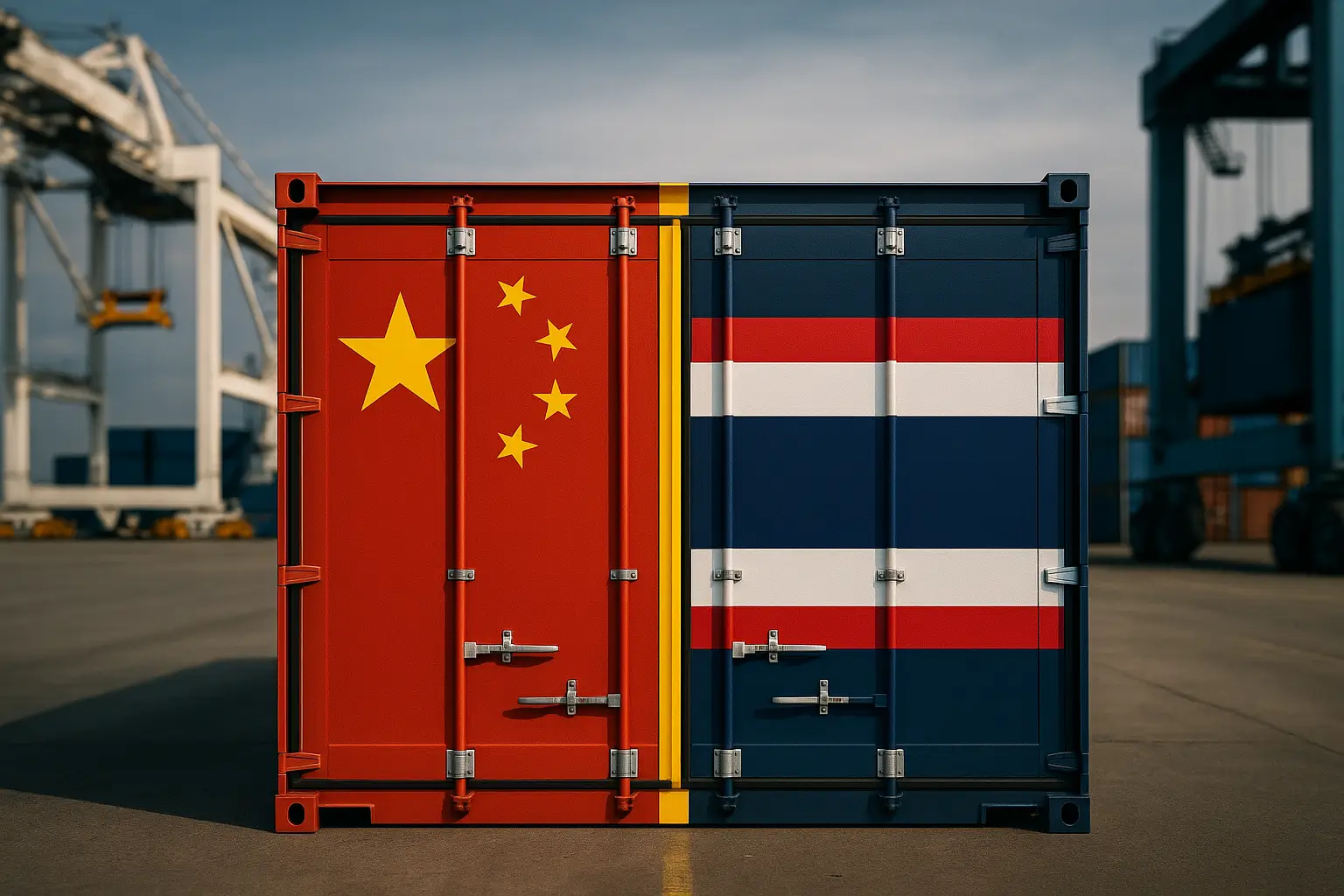
Thailand will begin collecting a 10% customs duty on low-priced imported goods—primarily from China—from January 1, 2026, the country’s Deputy Prime Minister and Finance Minister Ekniti Nithanprapas announced on November 14.
The move marks a major step to protect domestic producers, who have been struggling to compete against a flood of ultra-cheap imports from China.
Currently, Thailand exempts import taxes on parcels valued below 1,500 baht (about USD 46.4). However, this tax-free threshold has allowed large volumes of low-cost Chinese goods—especially through e-commerce platforms—to enter the market unchecked, undercutting local manufacturers and forcing many small factories to close.
Ekniti said the measure is designed to create fairer competition between Thai and foreign businesses, particularly as SMEs face closures and rising unemployment due to cheap imports.
“Low-cost imports are flooding our markets and undermining local manufacturers. We must act to ensure a fairer trading environment,”
— said Ekniti Nithanprapas, Deputy Prime Minister and Finance Minister.
The Finance Ministry noted that consumer electronics, clothing, household goods, and accessories will be among the most affected categories.
These are the same product groups where Chinese suppliers dominate on e-commerce platforms such as Shopee, Lazada, and TikTok Shop.
The 10% import tax is expected to raise costs for foreign sellers, allowing local producers to regain domestic market share and stabilize production.
According to law firm Tilleke & Gibbins, the new tariff will have significant ripple effects across e-commerce, logistics, and retail, as millions of small-value parcels from China currently enter Thailand tax-free.
Local logistics providers are already facing heavy workloads handling low-value shipments, and a new tax regime will require additional administrative procedures such as verifying declared values and product origins.
This could lead to higher delivery costs and longer shipping times for cross-border orders.
“The new tariff will likely slow cross-border delivery times and increase logistics costs—especially for small parcels shipped directly from China,”
— Tilleke & Gibbins said in a note.
E-commerce platforms are expected to revise pricing policies, possibly cutting back on free-shipping programs or increasing service fees to offset the new customs burden.
Thailand’s decision comes amid a regional trend across Asia to rein in cheap Chinese imports.
India has raised tariffs on textiles and electronic components, while Malaysia and Indonesia have tightened customs rules for cross-border e-commerce to protect their domestic manufacturing bases.
Thailand, whose economy relies heavily on exports and tourism, is seeking to balance trade openness with industrial resilience.
The Ministry of Industry recently reported that over 1,200 small Thai businesses shut down in 2024, citing declining sales due to low-cost imports from China.
“This tariff signals that the Thai government is willing to take stronger action to safeguard jobs and SMEs,”
— said an economist from Thammasat University.
“However, it will be crucial to monitor implementation to avoid unintended harm to consumers.”
The government is now working with major e-commerce platforms such as Shopee, Lazada, and TikTok Shop to develop an automated tax collection system for imported goods.
The goal is to ensure accurate and transparent customs payments, while minimizing disruption to legitimate online trade.
The Finance Ministry and the Customs Department are also building an electronic tracking platform to monitor shipment origins and declared values in real time.
Officials say the system will help increase fiscal revenue and create a level playing field for domestic companies competing with large cross-border sellers.
“Our goal is not to block imports, but to ensure fairness,”
— Ekniti emphasized.
“Thailand welcomes global trade, but we cannot allow domestic businesses to be hurt by unfair competition.”
Thailand’s 10% import tax on low-value goods marks a significant shift in trade policy, aligning the country with the global trend of tightening controls on cheap imports to protect local manufacturing.
While the new rule may temporarily raise consumer prices and logistics costs, economists believe it will strengthen Thailand’s SME sector, which accounts for 99% of registered businesses and contributes over one-third of national GDP.
By targeting structural fairness rather than isolationism, Thailand aims to build a more sustainable industrial ecosystem—one capable of withstanding future trade disruptions and global price competition.
1. When will Thailand’s 10% import tariff take effect?
→ The measure will take effect on January 1, 2026, covering all low-value imported goods—mostly from China.
2. What is the main purpose of the new tariff?
→ To protect domestic small and medium-sized enterprises (SMEs) from cheap imports that have driven down prices, caused factory closures, and led to job losses.
3. Which sectors will be most affected?
→ E-commerce, logistics, and retail, as most low-value imports from China enter Thailand through online shopping platforms.
4. How will this impact consumers?
→ Retail prices for imported goods may rise slightly, but in the long term, the policy aims to support local manufacturing and job stability, reducing dependence on foreign low-cost products.

.jpg)

.png)
 Tiếng Việt
 English