The U.S. and Switzerland have reached a trade agreement to reduce tariffs to 15%. Swiss companies have pledged $200 billion in U.S. investments by 2028, focusing on manufacturing, pharmaceuticals, and workforce development.
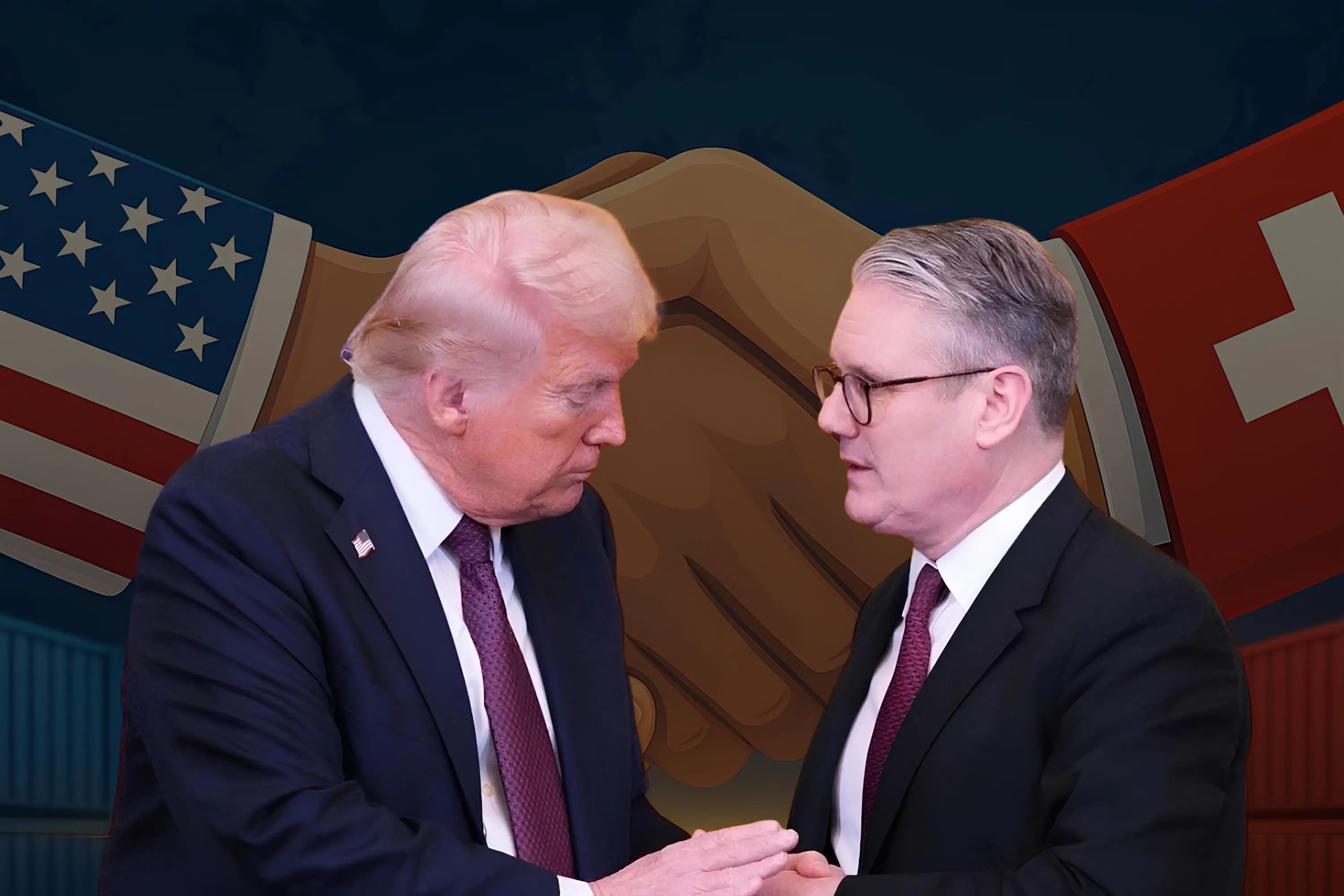
The United States and Switzerland have reached a historic trade deal that will lower tariffs on Swiss goods to 15%, U.S. Trade Representative Jamieson Greer announced on CNBC’s “Squawk Box” on Friday morning.
“We’ve essentially reached a deal with Switzerland,” Greer said.
“They’re going to send a lot of manufacturing here to the United States — pharmaceuticals, gold refining, railway equipment — so we’re really excited about what this means for American industry.”
The Swiss government confirmed the agreement in a post on social media platform X (formerly Twitter), noting that further details would be released at 4 p.m. local time.
The deal aligns the tariff rate on Swiss imports with that applied to the European Union, marking a significant step toward normalizing bilateral trade relations between Washington and Bern.
In July, President Donald Trump had announced a 39% tariff on Swiss imports after last-minute talks between the two sides in Washington failed to produce a deal.
That rate was among the highest levied by the U.S. administration on any single country, sparking concerns across Switzerland’s export-driven economy.
Switzerland’s key export sectors — including pharmaceuticals, watches, precious metals, and luxury goods — have been hit hard. The Swiss government cut its 2026 economic growth forecast last month, citing the “heavy burden” of U.S. import duties on domestic industries.
A centerpiece of the deal is Switzerland’s pledge to invest $200 billion in the U.S. economy by the end of 2028, spanning manufacturing, infrastructure, and education initiatives.
“Like all of the president’s deals, we retain a tariff,” Greer said.
“We have to keep one to manage the trade deficit. But Switzerland has agreed to address its trade surplus by investing in American production — building plants and creating jobs here.”
Among the investors, Swiss pharmaceutical giant Roche has already pledged $50 billion to expand its U.S. operations, focusing on biotechnology and medical research.
Other Swiss companies in gold refining, railway equipment, and luxury consumer goods are expected to follow suit.
According to a statement from the Swiss government, the investment package includes substantial funding for education and workforce training, aimed at strengthening long-term economic cooperation between the two countries.
The Swiss government welcomed the deal, saying the tariff reduction would help “stabilize bilateral trade relations.”
While overall tariffs remain higher than before April’s increase, officials said the new rate would “have a positive impact on the Swiss economy.”
Financial markets responded swiftly. The Swiss franc rose 0.4% against the U.S. dollar following the announcement, reflecting renewed investor confidence in Switzerland’s trade outlook.
Analysts noted that the agreement could revitalize Swiss export growth and bolster investment flows after months of uncertainty.
Economists say the deal offers mutual benefits: it relieves pressure on Swiss exporters while allowing the U.S. to attract high-value investment in industries that align with its domestic manufacturing goals.
“This is a pragmatic agreement,” said a senior economist at UBS.
“It shows that the U.S. is willing to work with partners who can offer tangible investment commitments rather than just seeking tariff relief.”
Beyond its immediate trade implications, the U.S.–Switzerland deal carries strategic weight in Washington’s broader effort to rebuild economic alliances in Europe.
By securing a deal with one of Europe’s most stable and affluent economies — renowned for its leadership in finance, pharmaceuticals, and luxury manufacturing — the U.S. sends a message that it is open to “fair trade” partnerships that deliver shared growth.
“This agreement signals that the U.S. is open to cooperation with responsible partners while maintaining leverage to protect domestic industries,”
— said an analyst at the Brookings Institution.
Observers also view the deal as part of Washington’s ongoing global trade rebalancing strategy, as the U.S. seeks to diversify economic ties beyond China and strengthen supply chains through trusted allies in Europe.
The trade agreement between the United States and Switzerland marks a turning point in bilateral economic relations, blending tariff reform with massive investment commitments.
With tariffs reduced to 15% and $200 billion in Swiss investment on the way, both countries stand to benefit from stronger trade flows, job creation, and industrial cooperation.
Analysts believe the deal could serve as a template for future U.S.–Europe trade frameworks, where mutual investment and balanced trade objectives replace aggressive tariff battles.
Ultimately, the agreement highlights a shared vision: open markets backed by reciprocal economic responsibility.
1. When will the new U.S.–Switzerland trade deal take effect?
→ Full details will be announced on November 14, with the new 15% tariff rate expected to take effect in early 2026.
2. How does the new tariff compare to previous rates?
→ Tariffs on Swiss imports will be cut from 39% to 15%, matching those applied to goods from the European Union.
3. How much will Swiss firms invest in the United States?
→ Around $200 billion by 2028, targeting manufacturing, pharmaceuticals, infrastructure, and workforce development.
4. What are the broader implications of the deal?
→ The agreement could stabilize transatlantic trade relations, encourage foreign direct investment, and serve as a model for future U.S. trade agreements with other European nations.

.jpg)

.png)
 Tiếng Việt
 English