.png)
 Tiếng Việt
 English


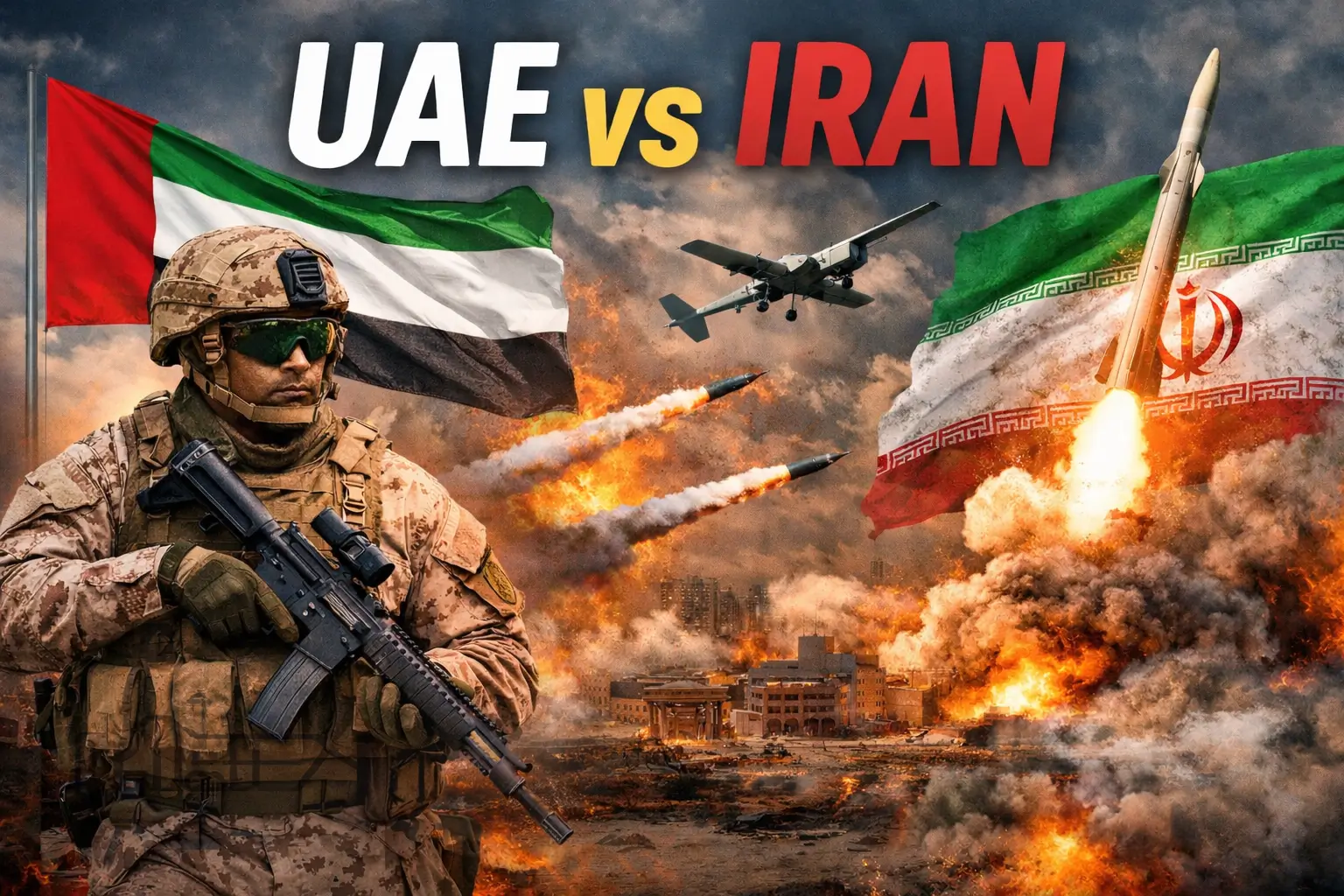 Amid intensifying geopolitical tensions in the Middle East, United Arab Emirates (UAE) has issued a firm yet cautious statement: it has not made any decision to participate in military operations against Iran, but it continues to assert its right to self-defense in response to missile and drone attacks targeting its territory.
The latest developments are not only reshaping the regional security landscape but also drawing close attention from global investors, especially as the Middle East remains a critical hub for energy supply chains.
According to sources cited by Axios, the UAE is weighing an unprecedented step: potentially joining strikes against Iran in response to repeated attacks involving missiles and unmanned aerial vehicles.
Axios reported that the UAE is considering “proactive defense” measures against Iran. However, the country has emphasized that it is not currently participating in the conflict in any form. Despite this stance, the UAE has become one of the most heavily targeted nations since the outbreak of hostilities.
The UAE Ministry of Foreign Affairs stated:
“The UAE maintains its right to self-defense. No decision has been made to change our defensive posture in response to the continued attacks.”
This message signals that Abu Dhabi is attempting to strike a delicate balance: refraining from formal escalation while keeping all defensive options on the table.
On March 3, the UAE Ministry of Defense reported that Iran had launched a total of 186 ballistic missiles toward the UAE since the conflict began.
The breakdown is as follows:
172 missiles were intercepted
13 missiles fell into the sea
1 missile landed on UAE territory
In addition, 812 drones were detected:
755 drones were intercepted
57 drones reached targets within UAE territory
These figures highlight the intensity of the threat and the immense operational strain placed on the UAE’s air defense systems.
Notably, according to Axios, the UAE has been targeted even more frequently than Israel during the same period. This has raised serious questions about deterrence dynamics and the long-term sustainability of the country’s defensive posture.
The term “proactive defense” in this context extends beyond traditional missile interception. It may include:
Preemptive strikes on launch sites
Targeting military infrastructure
Cyber or electronic warfare operations
For a Gulf state like the UAE, considering actions beyond conventional defense could set a significant regional precedent. Such a shift might alter the broader security architecture of the Middle East.
Officials cited in the report argued that no country in the world would fail to reassess its defensive posture under similar circumstances. This reasoning appears aimed at legitimizing a potential recalibration of strategy.
However, the line between “proactive defense” and active participation in war is exceedingly thin—particularly in a region marked by decades of volatility.
The UAE is a major financial and energy hub in the Middle East and plays a significant role within OPEC. Any escalation involving the country could:
Drive oil prices higher due to fears of supply disruption
Increase volatility in regional equity and currency markets
Raise maritime insurance costs in the Persian Gulf
At a time when the global economy remains fragile under inflationary pressure and geopolitical risk, large-scale attacks on a key economic center like the UAE are far from trivial.
Market analysts warn that if the UAE shifts from a defensive to an offensive stance, energy markets could experience sharp fluctuations reminiscent of previous peak tension periods around the Strait of Hormuz.
From a strategic standpoint, the UAE appears to have three primary options:
Maintain a purely defensive posture, reinforcing missile interception and air defense systems.
Implement limited proactive defense measures targeting specific threats without broadening the conflict.
Join a larger-scale military campaign, potentially altering the regional balance of power.
Each path carries significant risks. While retaliatory measures could strengthen deterrence, they could also entangle the UAE in a prolonged cycle of escalation.
The UAE’s latest statement underscores its effort to retain strategic flexibility without formally escalating the conflict. Yet with more than 800 drones and 186 ballistic missiles recorded, domestic political and security pressures are likely mounting.
In a region as sensitive as the Middle East, any shift in the UAE’s posture could trigger ripple effects across both security and global economic domains.
For now, Abu Dhabi continues to emphasize its right to self-defense while stopping short of committing to military retaliation. The critical question remains: if attacks persist at a similar scale, will this restrained stance hold?
Investors, policymakers, and energy markets worldwide are watching closely—because any decisive move by the UAE at this juncture could become the catalyst for a new phase of volatility in the Middle East.