.png)
 Tiếng Việt
 English


 Large-scale drone strike targets Moscow
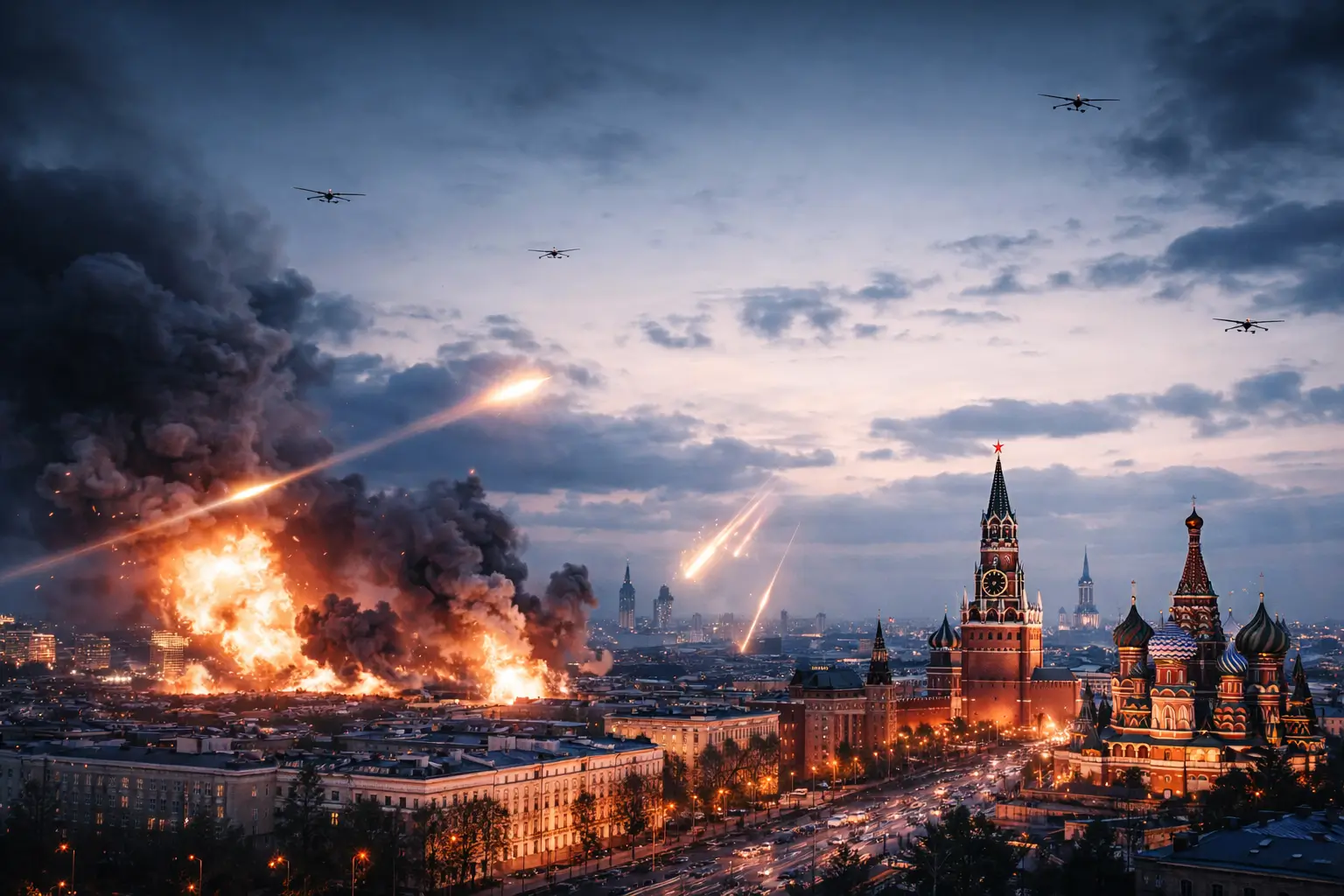
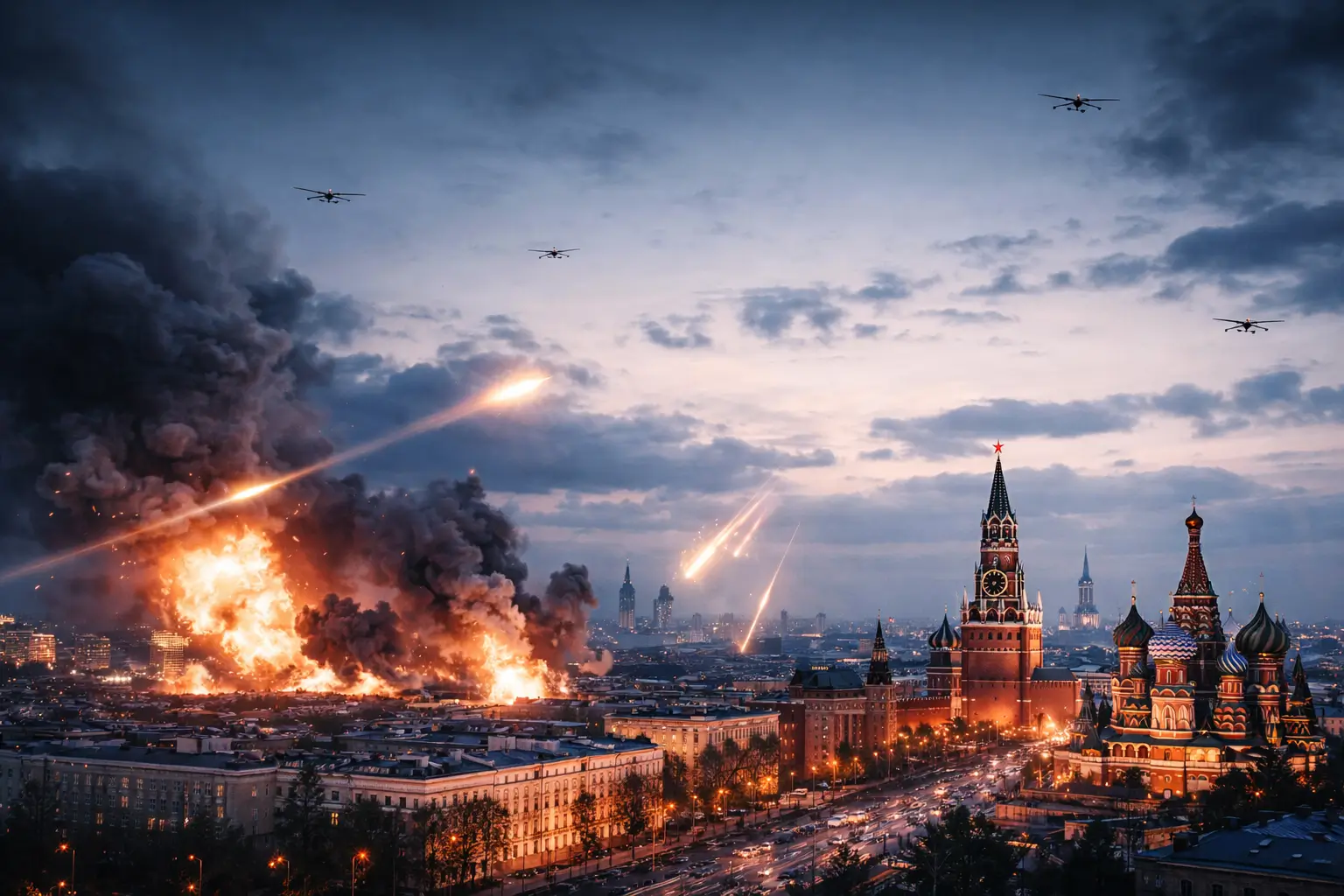
Russia said Ukraine launched a large-scale drone attack targeting the capital city of Moscow, marking one of the most notable attempts in recent months to strike the political center of the country.
According to Russian officials, air defense systems shot down at least 38 drones before they could reach the city, preventing potential damage to critical infrastructure and residential areas.
The incident highlights a growing shift in how the war between Ukraine and Russia is being fought, with drone technology increasingly playing a central role in modern military operations.
Although most of the unmanned aerial vehicles were neutralized before reaching their targets, the scale of the operation suggests a rising capability for long-range drone strikes within the conflict.
Authorities in Moscow confirmed that the capital’s air defense systems responded quickly after detecting incoming aerial targets.
Emergency services were placed on high alert when radar systems identified multiple airborne objects approaching the city. Russian air defense forces then deployed interception systems to destroy the drones before they entered densely populated areas.
Local officials reported no major casualties or significant infrastructure damage, though debris from intercepted drones reportedly fell in nearby districts.
The attack illustrates that even heavily defended cities can become targets in drone warfare, a tactic that has become increasingly common in modern conflicts.
Over the past two years, both sides have widely deployed drones for reconnaissance missions, targeted strikes, and psychological pressure on major urban centers.
Military analysts say the latest attack reflects a broader trend in modern warfare, where unmanned aerial vehicles are becoming an increasingly critical battlefield asset.
Drones offer several advantages compared with traditional weapons systems, including:
Lower operational costs compared with many conventional weapons systems, making drones effective tools in large-scale military campaigns.
Long-range mobility that allows drones to carry out distant strikes without requiring direct troop deployment on the battlefield.
Difficulty in detection by traditional radar systems, complicating defense efforts against drone attacks.
The ability to conduct swarm-style operations that can overwhelm air defense systems and increase the likelihood of penetrating defensive networks.
Within the context of the Russian invasion of Ukraine, drone technology has significantly reshaped the dynamics of the conflict.
Ukraine has increasingly used long-range drone strikes targeting military bases, logistics hubs, and infrastructure located deep within Russian territory. These operations aim not only to cause military disruption but also to signal that areas far from the front lines remain vulnerable.
For Russia, defending against these threats requires expanding air defense coverage across its vast territory, including major urban centers such as Moscow.
Although the drones were intercepted, analysts say attacks targeting the Russian capital carry both strategic and symbolic significance.
Strikes against Moscow could:
Increase pressure on Russia’s domestic security system, forcing authorities to enhance monitoring and defense capabilities.
Compel the government to allocate additional resources toward domestic defense operations, including expanded air defense coverage around major cities.
Create political and psychological pressure within society as residents realize that the war could directly affect areas far from the battlefield.
Even when such attacks do not cause major damage, they can still produce meaningful strategic effects by exposing potential vulnerabilities in national defense systems.
Security experts note that the psychological impact of drone attacks often extends far beyond the physical damage they cause, as the threat to major cities can influence public perception of the war.
Beyond the military dimension, developments in the conflict also carry significant economic and geopolitical consequences.
Tensions linked to the Russo-Ukrainian War have already reshaped global energy markets, defense spending priorities, and international supply chains.
Each escalation in the conflict can trigger reactions across several key sectors:
Global commodity markets as investors worry about potential disruptions to raw material and energy supplies.
Energy prices in Europe, where markets remain sensitive to geopolitical instability in Eastern Europe.
Defense industry stocks as governments increase military spending to strengthen national security.
Geopolitical risk indicators reflecting heightened uncertainty in global financial markets.
Financial markets closely monitor developments in the conflict because they can directly influence investor sentiment and global risk appetite.
Historically, geopolitical tensions often push investors toward safe-haven assets such as gold, government bonds, and major reserve currencies.
Although the latest attack reportedly caused limited damage, it underscores the continued intensity of the conflict.
Military analysts believe both sides are likely to expand their use of long-range drone capabilities as the war enters a new phase.
For the international community and global financial markets, the incident serves as a reminder that geopolitical risks remain elevated.
As the conflict becomes increasingly technology-driven, with cross-border drone attacks becoming more common, the potential for escalation could continue to influence global geopolitical and economic dynamics in the months ahead.