.png)
 Tiếng Việt
 English


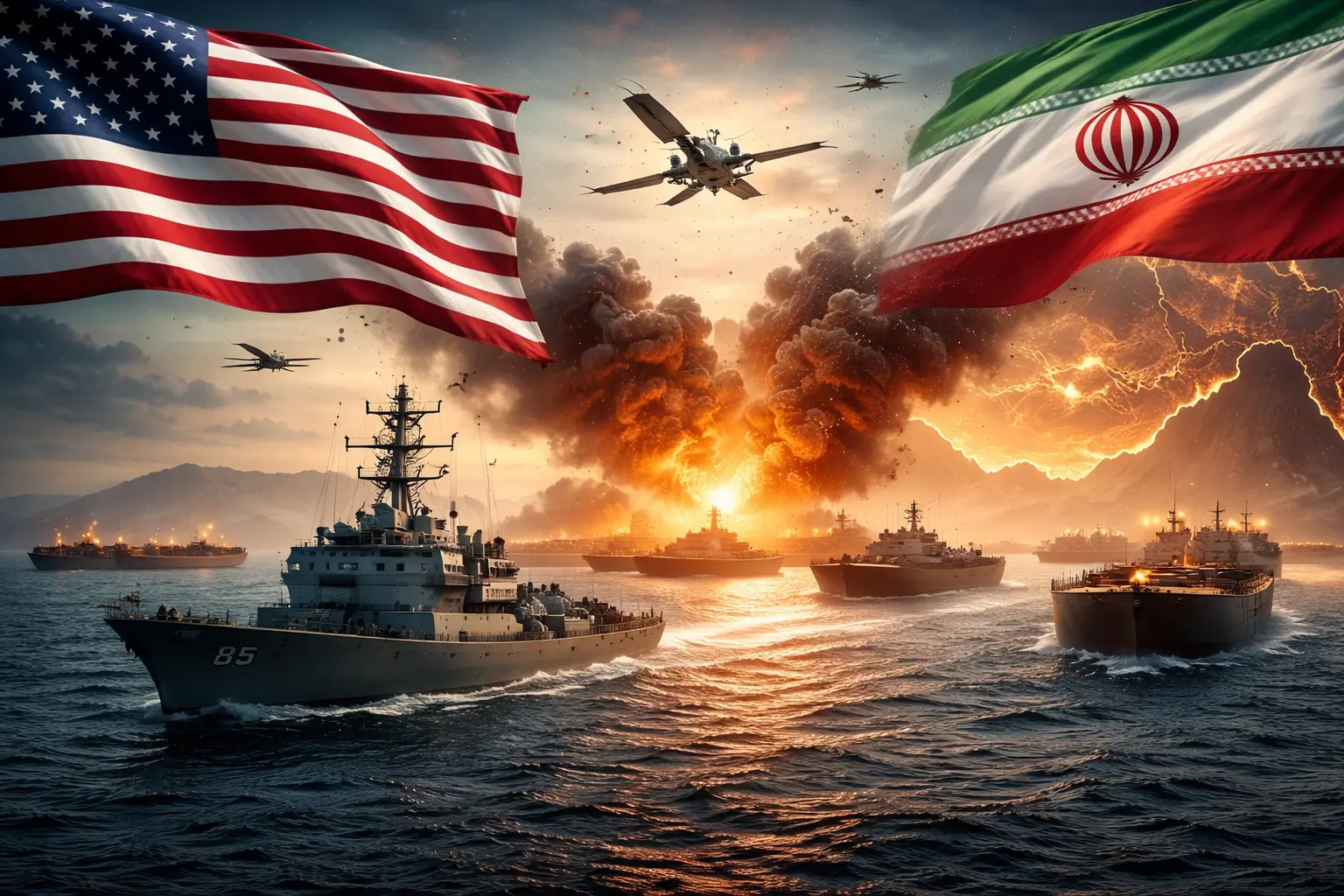 The confrontation between the United States and Iran has entered one of its most dangerous phases in years, with retaliatory strikes unfolding across multiple fronts — from the Middle East to cyberspace and global financial markets.
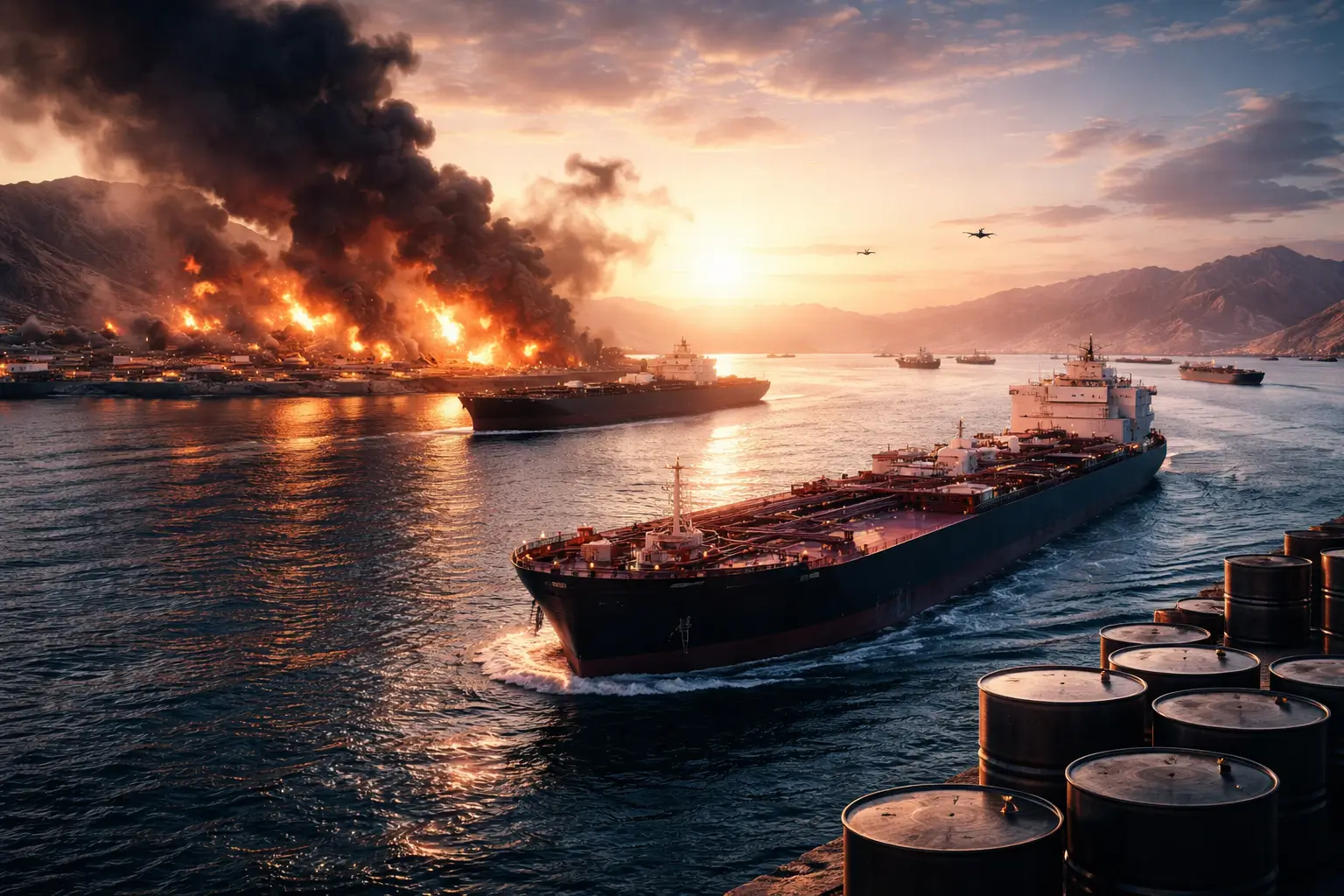
According to updates from Reuters, a commander of Iran’s Revolutionary Guard declared that the Strait of Hormuz has been closed and warned that any vessel attempting to pass through would be targeted. Such a move could deliver a profound shock to global energy supply chains, as Hormuz remains one of the world’s most critical oil transit chokepoints.
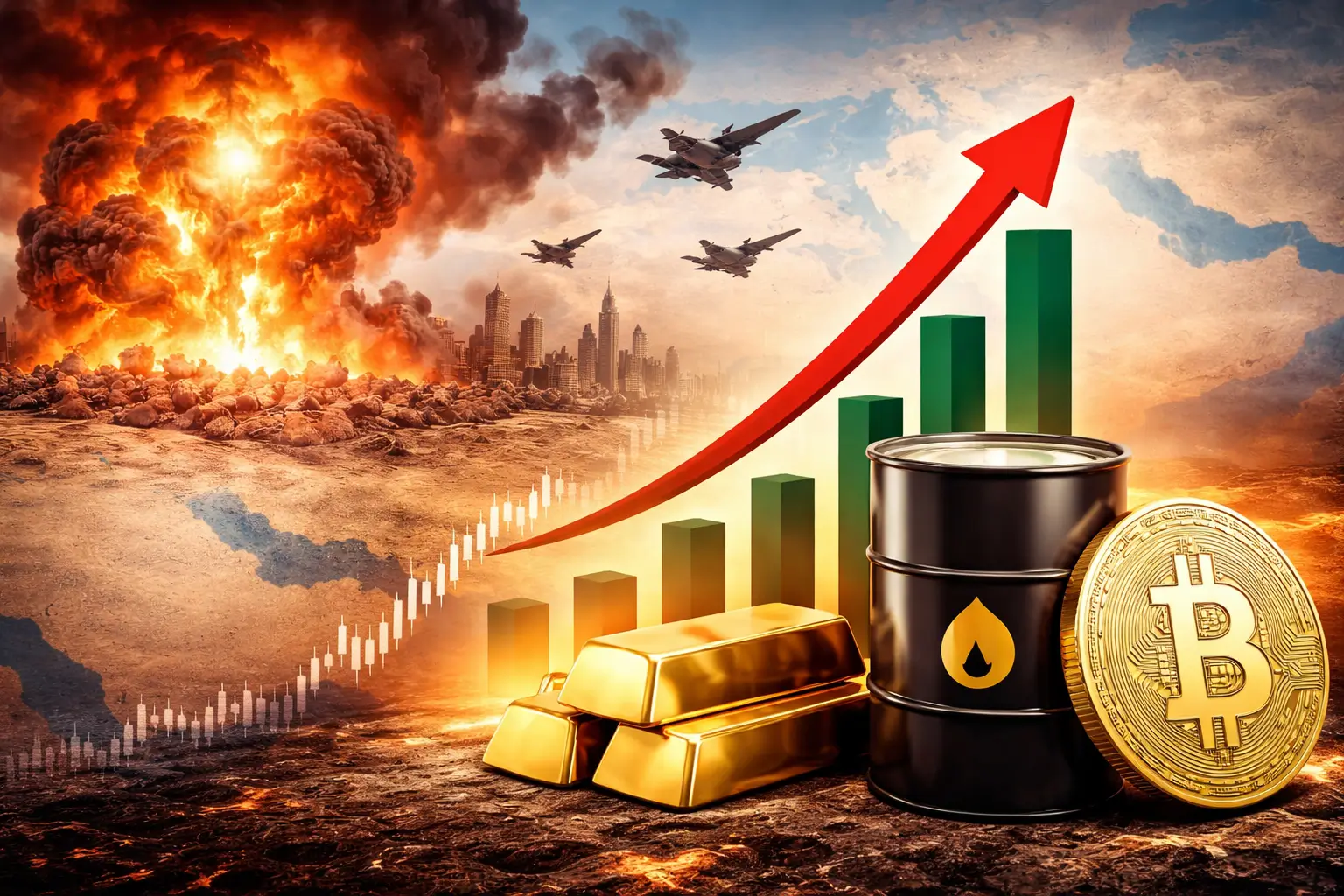
With tensions mounting, markets are increasingly pricing in geopolitical risk — from oil and gold to equities and freight rates.
Saudi Arabia’s Ministry of Defense confirmed that two drones struck the US Embassy in Riyadh, causing minor fires and limited material damage. No casualties were reported. However, Washington swiftly advised American citizens in the region to shelter in place and restrict movement.
President Donald Trump, in his first public remarks since hostilities intensified, stated that the conflict could last four to five weeks, while not ruling out a significantly longer timeline.
Meanwhile, Secretary of State Marco Rubio warned that the most powerful US military strikes “have not yet occurred,” suggesting the next phase could be “far more severe” for Tehran.
Domestically, Senate Democratic Leader Chuck Schumer criticized the administration for acting too hastily and called on Congress to limit presidential war powers.
The United States Central Command reported that six American service members have now been killed following Iran’s initial strikes on US-linked military facilities in the region.
At the same time, Iran-backed militias in Iraq claimed responsibility for multiple drone attacks targeting US-related assets.
Analysts warn that the conflict could spill over into Lebanon, Iraq and across the Gulf, pushing the Middle East into a new cycle of instability. The broader regional risk premium is now embedded into energy and equity markets worldwide.
News of a potential Hormuz closure immediately triggered a spike in oil prices amid fears of supply disruption. Given that roughly one-fifth of the world’s oil consumption passes through this narrow corridor, any sustained blockade could tighten global supply significantly.
US gasoline prices have already jumped, with gasoline futures reaching their highest levels since mid-2024. Energy analysts estimate that for every $10 increase in crude oil, gasoline prices could rise by approximately 25 cents per gallon within a week.
The surge in oil underscores the fragile balance global economies face: many are still battling inflation, and a renewed energy shock could derail progress made over the past year.
Amid mounting uncertainty, gold — the traditional crisis hedge — rallied sharply, briefly surpassing $5,400 per ounce before easing slightly.
Several major financial institutions suggest that bullion could climb further if the conflict drags on. Investors are reallocating capital toward defensive assets as geopolitical risk intensifies.
The move highlights a classic market pattern: when geopolitical instability rises, capital flows out of equities and into safe-haven assets such as gold and the US dollar.
Equity markets across the United States, Europe and Asia declined in response to escalating tensions. Risk-sensitive sectors, particularly transportation and airlines, came under heavy pressure as thousands of regional flights were canceled.
In contrast, defense-related stocks posted strong gains, reflecting expectations of increased military spending.
Shipping markets also reacted sharply. Daily charter rates for Very Large Crude Carriers (VLCCs) surged above $170,000 per day — several times higher than levels seen earlier this year. Higher freight costs are likely to feed through to consumers via elevated fuel and petrochemical product prices.
Beyond energy and markets, the conflict is impacting technology infrastructure.
Amazon confirmed that three Amazon Web Services (AWS) data centers in the UAE and Bahrain sustained drone-related damage, forcing partial service disruptions. The company has advised customers to reroute workloads to other regions amid what it described as an “unpredictable” security environment.
Cybersecurity experts are warning of an increased risk of retaliatory cyberattacks and terrorism. Leaders of major US banking institutions have privately expressed concerns that financial infrastructure and banking systems could become potential targets.
The digital dimension of the conflict adds another layer of systemic risk to global markets.
Israeli Prime Minister Benjamin Netanyahu argued that the military campaign could reshape regional security architecture and potentially create new opportunities for normalization between Israel and Saudi Arabia. However, he acknowledged that the confrontation could persist for some time.
On the other side, Tehran has vowed not to retreat, framing its actions as defensive retaliation.
The looming threat to the Strait of Hormuz places the world in a precarious position. If oil flows are significantly disrupted for an extended period, global inflation could reaccelerate just as major economies attempt to stabilize prices and restore growth momentum.
The US–Iran confrontation has evolved beyond a regional military standoff. It now represents one of the most significant variables shaping the global economic outlook this year.
Oil prices, gold, freight rates, equities and even digital infrastructure are responding to escalating risk. Policymakers must weigh military objectives against economic consequences, while investors navigate heightened volatility.
The coming weeks may prove decisive: whether the conflict remains contained at a level of strategic deterrence or escalates into a broader regional crisis could determine the trajectory of global inflation, energy security and financial stability for the remainder of the year.
For now, markets remain on edge — and the Strait of Hormuz stands at the center of a geopolitical storm with worldwide implications.