.png)
 Tiếng Việt
 English


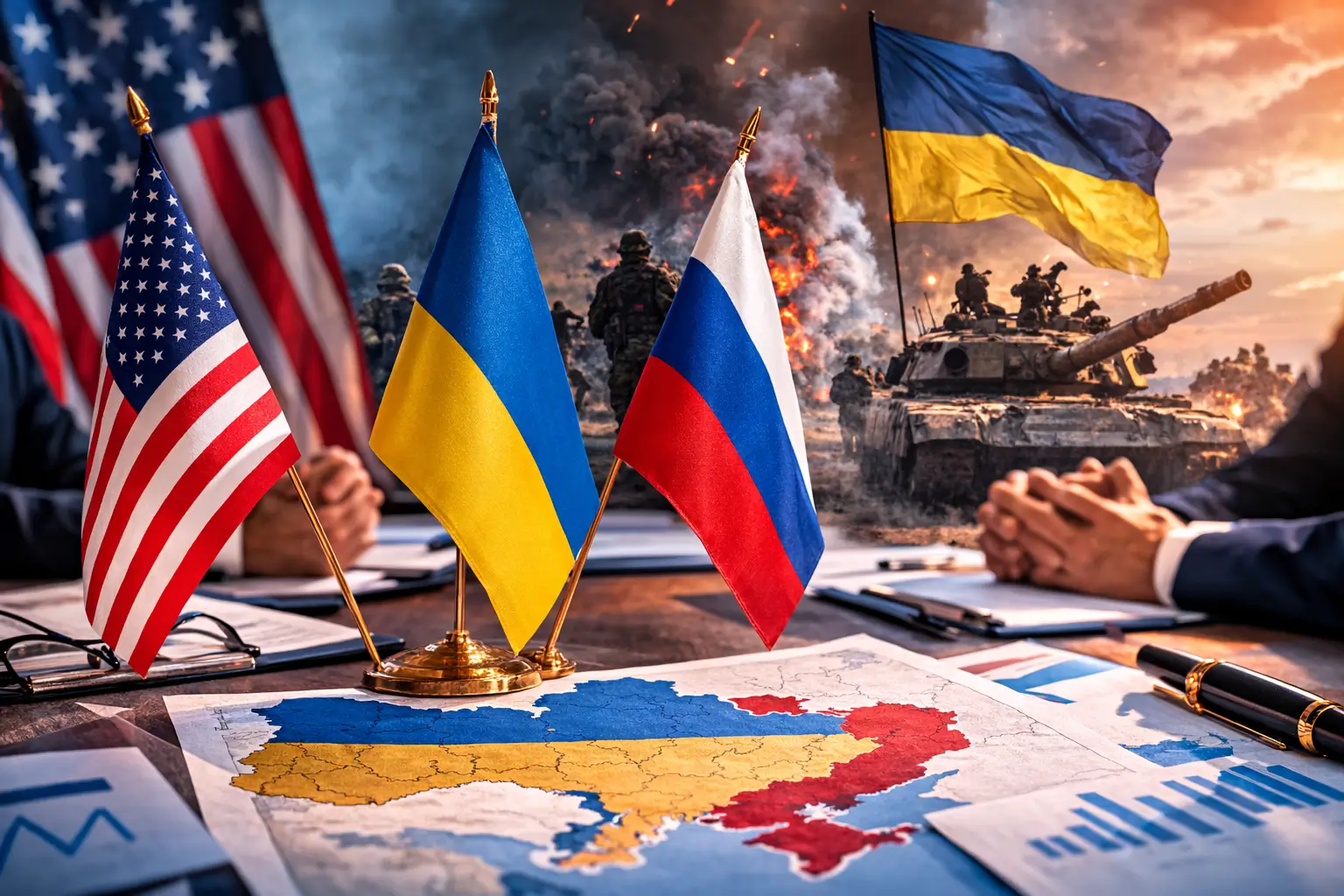 As the Russia–Ukraine war continues into its fifth year, the United States has proposed a new round of negotiations aimed at advancing diplomatic efforts to end the conflict. Ukrainian President Volodymyr Zelensky confirmed that Washington is working to organize another trilateral meeting involving Ukraine, Russia, and the United States in the near future.
The proposed talks represent the latest attempt by international mediators to restart a stalled diplomatic process that has struggled to gain momentum since the full-scale war began in 2022. Although previous rounds of negotiations produced limited progress, the new initiative signals that major powers are still seeking a political pathway to de-escalate one of the most consequential geopolitical conflicts of the decade.
Beyond the battlefield, the war has had profound implications for the global economy—affecting energy markets, trade routes, inflation, and geopolitical stability. As a result, any diplomatic breakthrough could reverberate far beyond Eastern Europe.
According to statements from Ukrainian officials, the upcoming negotiations may take place in either Switzerland or Turkey after earlier plans to host the meeting in the United Arab Emirates were reconsidered.
The original timeline for the meeting was expected to fall between early March dates, but shifting geopolitical circumstances—particularly escalating tensions in the Middle East—prompted discussions about postponing or relocating the talks.
President Zelensky noted that the United States is acting as the main convening party for the negotiations, inviting both Ukraine and Russia to participate in a trilateral format.
Diplomatic sources suggest the agenda could include several key issues:
Prisoner exchanges between Ukraine and Russia
Potential frameworks for a temporary ceasefire
Arrangements for future high-level political meetings
Security guarantees and monitoring mechanisms
While expectations remain cautious, these discussions could open the door to further diplomatic engagement if both sides find common ground.
The upcoming talks would build on earlier negotiation rounds that took place earlier this year in locations including Abu Dhabi and Geneva.
Although those meetings helped facilitate limited humanitarian measures—such as prisoner exchanges—they failed to resolve core political disagreements between Kyiv and Moscow.
Among the most contentious issues are territorial control and security guarantees. Russia continues to demand significant concessions regarding regions in eastern Ukraine, while Kyiv maintains that it will not surrender sovereign territory as part of any peace agreement.
President Zelensky has repeatedly emphasized that Ukraine’s territorial integrity remains non-negotiable. At the same time, Ukrainian officials acknowledge that diplomatic channels remain necessary to explore possible conflict de-escalation.
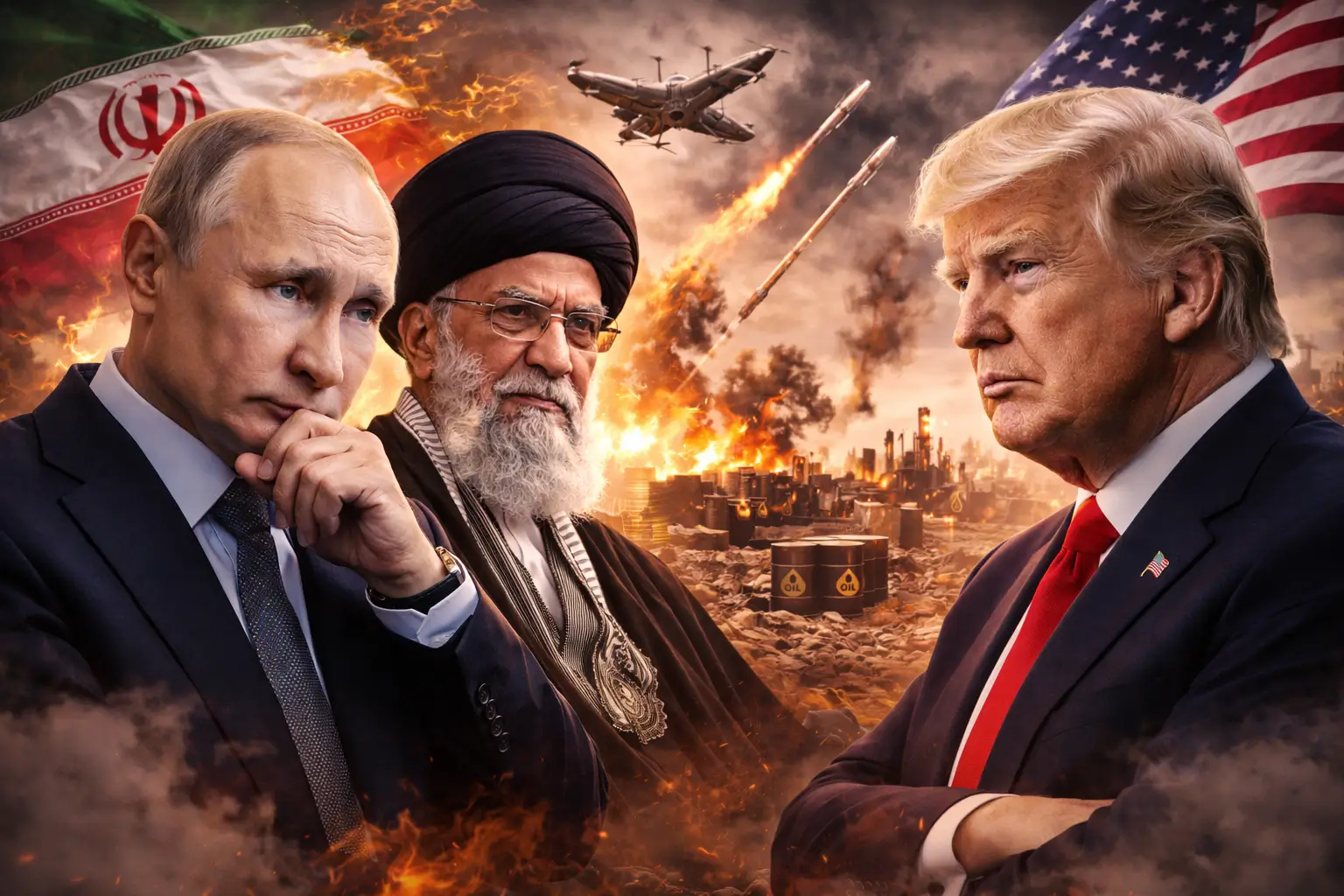
Interestingly, recent geopolitical developments in the Middle East have also influenced the timing of the proposed talks.
The escalation of regional conflicts—particularly attacks involving Iran and U.S. forces—has created uncertainty about where and when negotiations can take place.
Originally, Abu Dhabi was expected to host the next round of discussions. However, security concerns following regional tensions prompted diplomats to explore alternative venues.
These overlapping geopolitical crises illustrate how interconnected global security challenges have become. Conflicts in one region increasingly affect diplomatic processes and economic conditions elsewhere.
The Russia–Ukraine conflict has had major economic consequences since it began. One of the most significant impacts has been on global energy markets.
Russia is among the world’s largest exporters of oil, natural gas, and key raw materials. Sanctions imposed by Western countries have disrupted traditional energy supply chains, forcing Europe and other economies to rapidly diversify their energy sources.
These shifts have led to:
Higher global energy prices
Increased volatility in commodity markets
Supply chain disruptions in agriculture and industrial materials
Higher inflation across many economies
Ukraine, meanwhile, plays a crucial role in global grain exports. The war has repeatedly threatened shipping routes in the Black Sea, affecting global food security and pushing up agricultural prices.
For investors and policymakers alike, the conflict remains a major source of geopolitical risk.
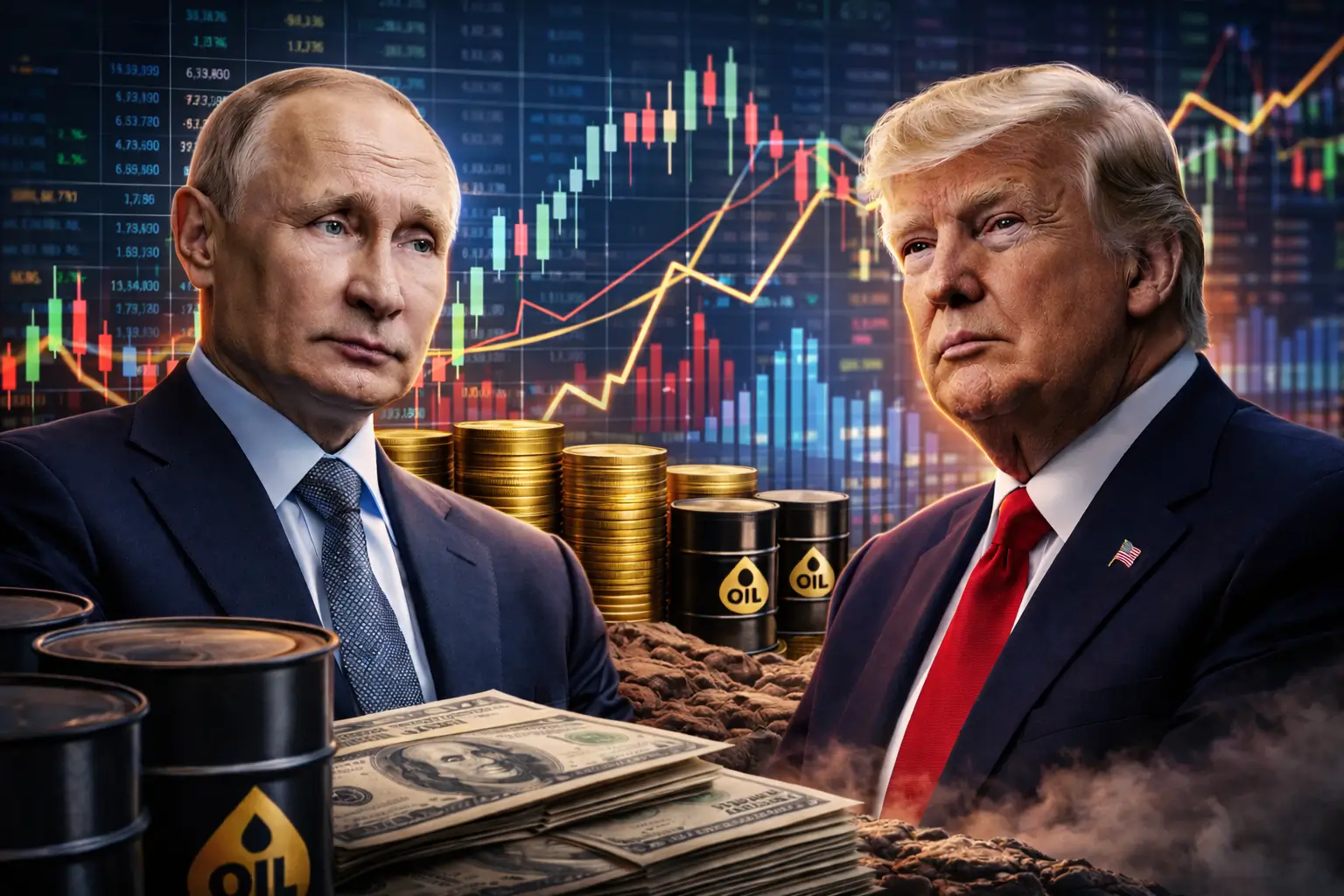
Global financial markets have grown increasingly sensitive to any diplomatic developments related to the Ukraine war.
Announcements of potential negotiations often lead to immediate reactions across several asset classes:
Energy prices may decline if markets expect reduced supply risks
Stock markets may rise as geopolitical tensions ease
Safe-haven assets such as gold and the U.S. dollar may weaken
Conversely, setbacks in negotiations can trigger renewed market volatility.
Institutional investors and central banks are therefore monitoring diplomatic signals closely as they assess future risks to global economic stability.
Despite renewed diplomatic efforts, analysts caution that the prospects for a comprehensive peace agreement remain uncertain.
Russian officials have signaled openness to continued negotiations, but fundamental disagreements persist regarding the future status of Ukrainian territories currently under Russian control.
Meanwhile, geopolitical tensions involving the United States and other global conflicts have complicated trust between negotiating parties. Some Russian commentators argue that international events could undermine confidence in Western diplomatic initiatives.
These dynamics suggest that even if negotiations resume, the path toward a durable settlement may remain long and complex.
While no immediate breakthrough is expected, the U.S. proposal for another round of talks represents an important signal that diplomatic channels remain active.
The outcome of these discussions could influence several global developments:
The future trajectory of the Russia–Ukraine war
Energy and commodity markets
Geopolitical risk levels in global financial markets
Long-term security arrangements in Europe
For the global economy, the stakes are high. After years of disruption caused by the war, even modest progress toward de-escalation could help stabilize markets and reduce geopolitical uncertainty.
However, until concrete agreements emerge, investors and policymakers will likely continue navigating an environment shaped by ongoing geopolitical tensions and strategic competition among major powers.