
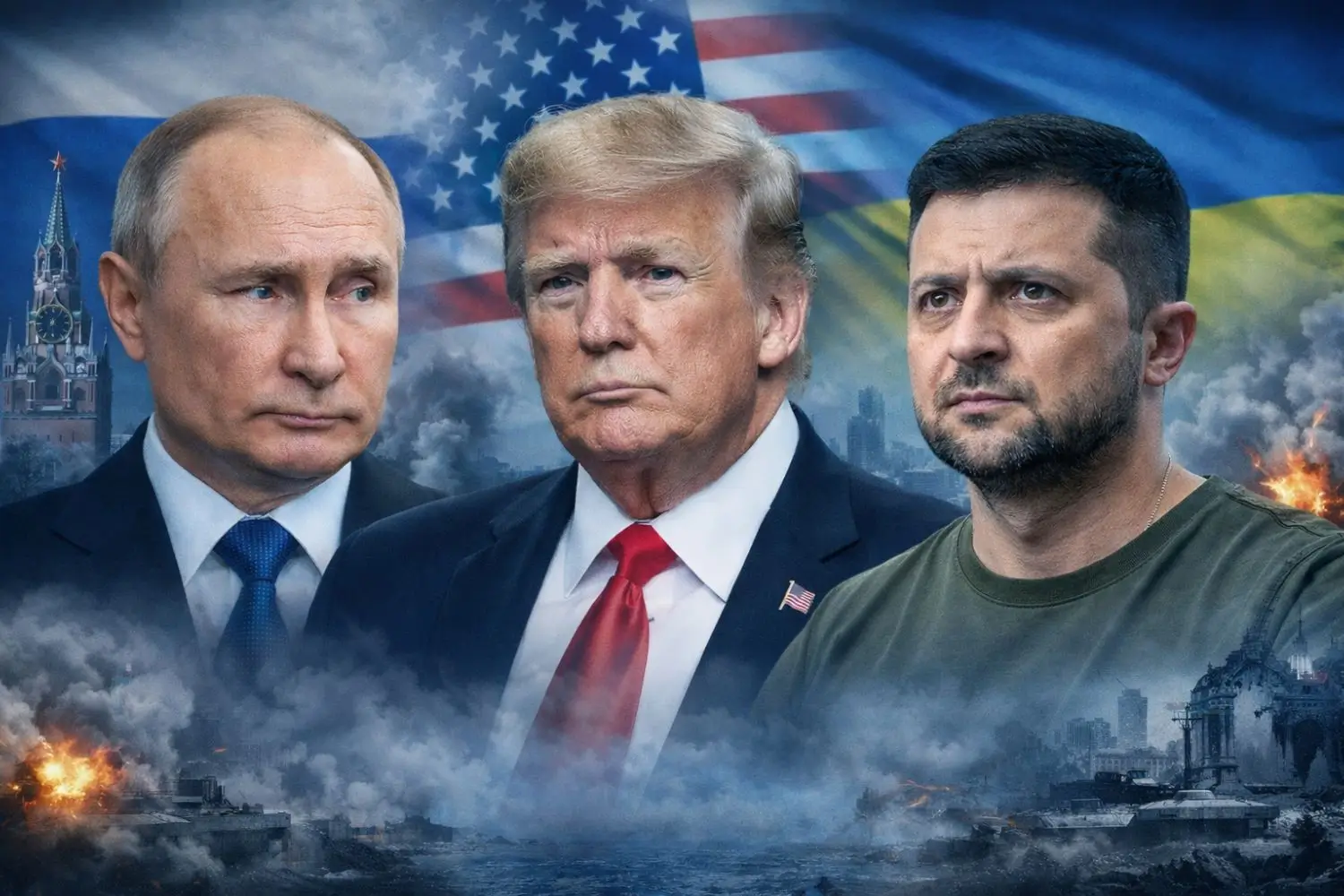
The first direct meeting between the United States, Russia and Ukraine since the outbreak of the conflict in early 2022 ended without producing a concrete agreement. Nevertheless, all parties signaled their willingness to continue dialogue, as the international community closely monitors any development that could pave the way toward a peace process.
The two-day talks, held in Abu Dhabi, United Arab Emirates, were widely seen as a rare and symbolically significant diplomatic step, marking the first time the key stakeholders sat at the same negotiating table since hostilities began.
Speaking after the conclusion of the talks on January 24, Ukrainian President Volodymyr Zelensky said the discussions were conducted in a “constructive” atmosphere, despite the absence of a formal agreement.
“The focus of the discussions was on realistic elements that could help end the fighting,” Zelensky wrote on social media platform X.
According to Zelensky, the U.S. delegation presented potential frameworks for formalizing elements of a future settlement, as well as conditions required to move toward ending the conflict.
However, fundamental differences—particularly regarding territorial issues and security guarantees—remain too wide to bridge at this stage.
A senior U.S. official, speaking on condition of anonymity, said Washington had outlined security guarantee mechanisms for Ukraine that were considered “very strong” compared with previous proposals.
The proposed frameworks were reviewed by Ukrainian officials, national security advisers from several European countries, and NATO representatives. NATO Secretary General Mark Rutte was quoted as saying he had not seen security arrangements of comparable strength before.
Details of the proposals were not disclosed, reflecting the highly sensitive nature of security commitments and their implications for Europe’s strategic balance.
Ahead of the talks, the Kremlin reiterated that Russia would only consider ending the conflict if Ukraine withdrew from territories still under Kyiv’s control in the Donbass region.
Kremlin spokesperson Dmitry Peskov reaffirmed this stance on January 23, describing it as a non-negotiable condition for any peace settlement.
Moscow has stated it prefers a diplomatic solution but will continue pursuing its military objectives as long as negotiations remain deadlocked.
On the other side, President Zelensky firmly rejected the possibility of ceding territory to Russia, emphasizing that Ukraine would not compromise its sovereignty.
Public opinion in Ukraine strongly supports this position. Recent polls show that only a small minority of Ukrainians are willing to give up territory in exchange for peace, viewing such concessions as an unacceptable red line.
This entrenched divide makes negotiations particularly complex, as both sides regard territorial control as a core national interest.
The UAE, which hosted the talks, said the discussions took place in a “positive and constructive” atmosphere. Negotiators focused on confidence-building measures and unresolved issues within the broader peace framework proposed by U.S. President Donald Trump.
Analysts note that the UAE’s role as a mediator highlights its growing diplomatic influence on the global stage, particularly in conflicts with far-reaching economic and security implications.
The U.S. official indicated that another round of discussions is expected on February 1, again in Abu Dhabi. Subsequent talks could potentially take place in Moscow or Kyiv, depending on progress and political willingness.
“There was genuine respect in the room because all sides truly want to find a solution,” the official said.
Although no breakthrough was achieved, maintaining direct communication channels is widely seen as a positive sign amid a prolonged conflict that continues to weigh heavily on the global economy, supply chains, and energy security.
The Russia–Ukraine conflict extends far beyond regional boundaries, affecting global energy markets, food supplies, and financial stability. Any sign of de-escalation is therefore closely watched by investors and governments alike.
While the Abu Dhabi talks did not deliver an agreement, the resumption of direct dialogue among the U.S., Russia, and Ukraine is viewed as a necessary step toward preventing further escalation and laying the groundwork for a future settlement.
Experts caution that the road to peace remains long and fraught with challenges. Deep disagreements over territory, security arrangements, and regional order make a comprehensive settlement unlikely in the near term.
Still, the fact that all parties agreed to continue negotiations suggests that diplomacy remains an open channel—an important signal at a time when global stability is under increasing strain.

.jpg)

.png)
 Tiếng Việt
 English