 USD May Strengthen in the Short Term After U.S.–Israel–Iran Escalation: Safe Haven or Temporary Bounce?
The U.S. dollar may find renewed short-term support as geopolitical tensions in the Middle East intensify following the latest military actions by the United States and Israel against Iran. However, currency strategists caution that the broader foreign exchange response could be uneven, and any rally in the greenback may ultimately prove fragile.
With oil prices climbing and risk aversion spreading across global markets, investors are once again testing the dollar’s traditional safe-haven appeal. Yet memories of 2025 — when similar tensions produced only fleeting dollar strength — remain fresh.
According to Themistoklis Fiotakis, Head of FX Research at Barclays, the weekend escalation in Iran could reinforce the dollar’s recent upward momentum.
“The escalation in Iran over the weekend adds to the dollar’s recent bullish momentum through higher energy prices — around 0.5–1% for every 10% rise in oil — and increased risk aversion,” Fiotakis noted.
Two key transmission channels are supporting the dollar:
1. Rising Oil Prices
A surge in crude oil, driven by fears of supply disruptions in the Middle East, raises global inflation risks. This could compel the Federal Reserve to maintain higher interest rates for longer, supporting the yield advantage of U.S. assets and, in turn, the dollar.
2. Risk-Off Flows
During periods of geopolitical instability, investors typically rotate out of risk-sensitive assets — including equities and emerging-market currencies — and move into safe-haven assets such as the U.S. dollar and U.S. Treasuries.
Washington and Tel Aviv reportedly launched a new wave of large-scale strikes exceeding previous operations. Senior Iranian leadership is believed to have suffered significant losses, including Supreme Leader Ali Khamenei.
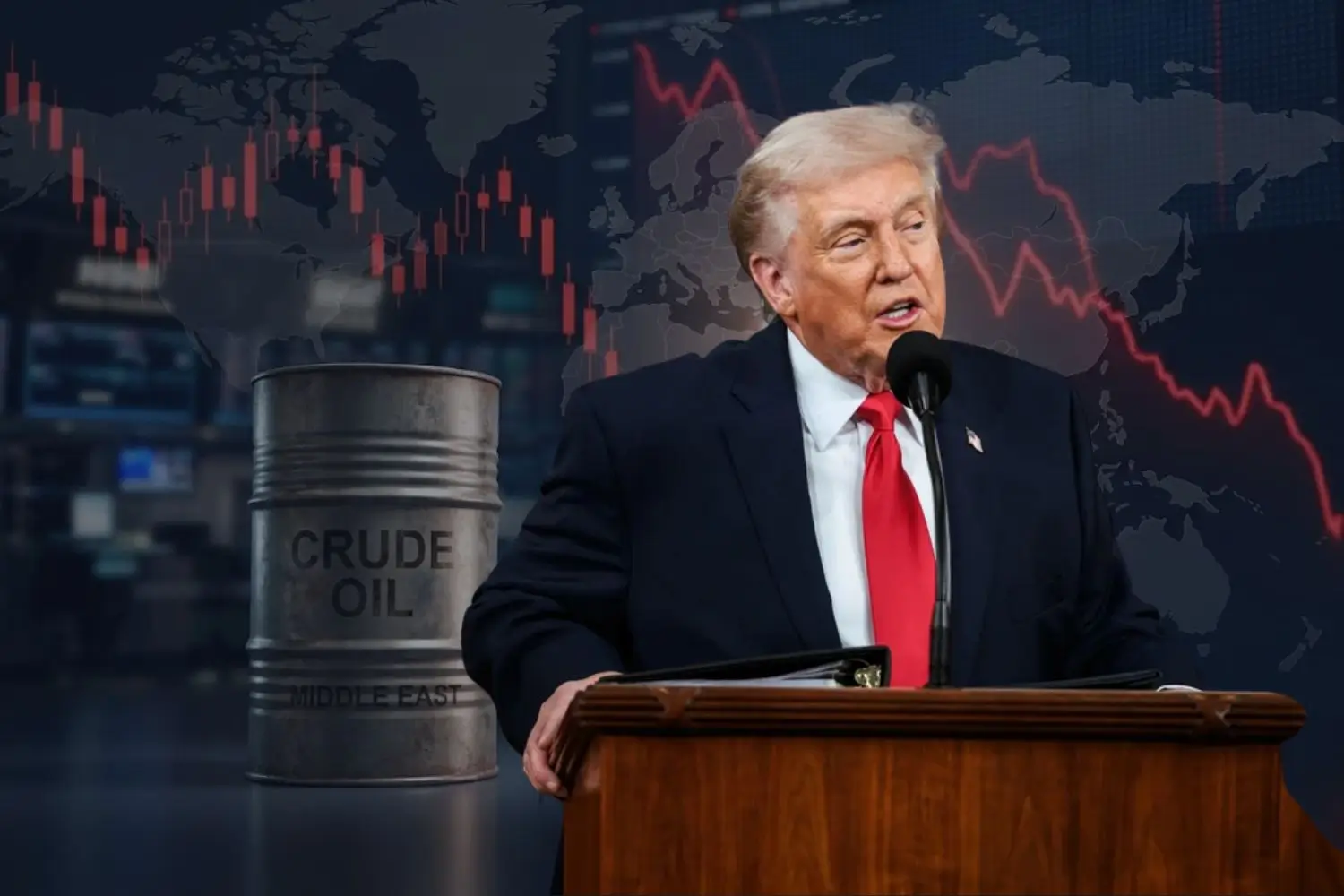
In a video message, President Donald Trump outlined broad war objectives, signaling that military operations could extend for days or even weeks.
Such developments increase the risk of a wider regional conflict in the Middle East — a region central to global energy supply chains. Should oil prices continue climbing, the inflationary spillover could further bolster the dollar in the near term.
David May, currency strategist at HSBC, said the greenback is likely to benefit initially from the geopolitical shock.
“The USD is likely to have the upper hand in the short term,” May stated.
However, he emphasized that the market reaction this time could differ from the Iran conflict in June 2025.
During that earlier episode, the dollar initially rallied on safe-haven demand but quickly lost momentum as domestic U.S. policy uncertainty overshadowed geopolitical concerns.
“The immediate reflexive strength of the USD at that time proved very short-lived, as U.S. policy uncertainty became the dominant factor weakening the currency,” May explained.
That episode sparked debate over whether the dollar was losing its traditional defensive appeal. However, HSBC does not view it as evidence of structural erosion.
According to HSBC, the 2025 experience did not signal a structural decline in the dollar’s role as a global safe haven.
“In our view, that was not the case,” May said.
Historically, during major geopolitical shocks — from financial crises to military conflicts — the U.S. dollar has benefited due to:
The depth and liquidity of U.S. financial markets
Its status as the world’s primary reserve currency
The scale and stability of U.S. Treasury markets
Nevertheless, in the current environment, domestic macroeconomic factors could complicate the picture.
HSBC cautions that the durability of any dollar rally will depend heavily on the wider macroeconomic landscape.
U.S. inflation trends
Federal Reserve policy guidance
Fiscal and trade policy stability
The scale and duration of the Middle East conflict
If higher oil prices reignite inflation pressures, the Federal Reserve may maintain a hawkish stance, lending support to the dollar. Conversely, renewed domestic policy uncertainty could undermine confidence in U.S. assets, limiting gains.
An important nuance is that geopolitical shocks do not always produce uniform currency reactions.
“Geopolitical events can send confusing signals to currencies, not just to the USD,” May concluded.
For example:
The Japanese yen and Swiss franc may also attract safe-haven flows
Commodity-linked currencies such as the Canadian dollar could strengthen if oil prices remain elevated
The euro’s trajectory may depend on how significantly Europe’s economy is affected
As a result, the dollar’s performance will reflect not only safe-haven demand but also relative growth prospects and interest rate differentials among major economies.
In the near term, the U.S. dollar appears poised to benefit from the combination of rising oil prices and intensifying risk aversion. However, the experience of 2025 suggests that geopolitical-driven rallies can fade quickly if domestic economic and policy concerns take center stage.
For foreign exchange markets, the coming weeks will likely hinge on:
The evolution of military developments in the Middle East
The trajectory of global energy prices
Signals from the Federal Reserve
The stability of U.S. domestic policy
In a high-volatility environment, the dollar may once again sit at the center of global capital flows — but the path forward is unlikely to be smooth.

.png)
 Tiếng Việt
 English