.png)
 Tiếng Việt
 English


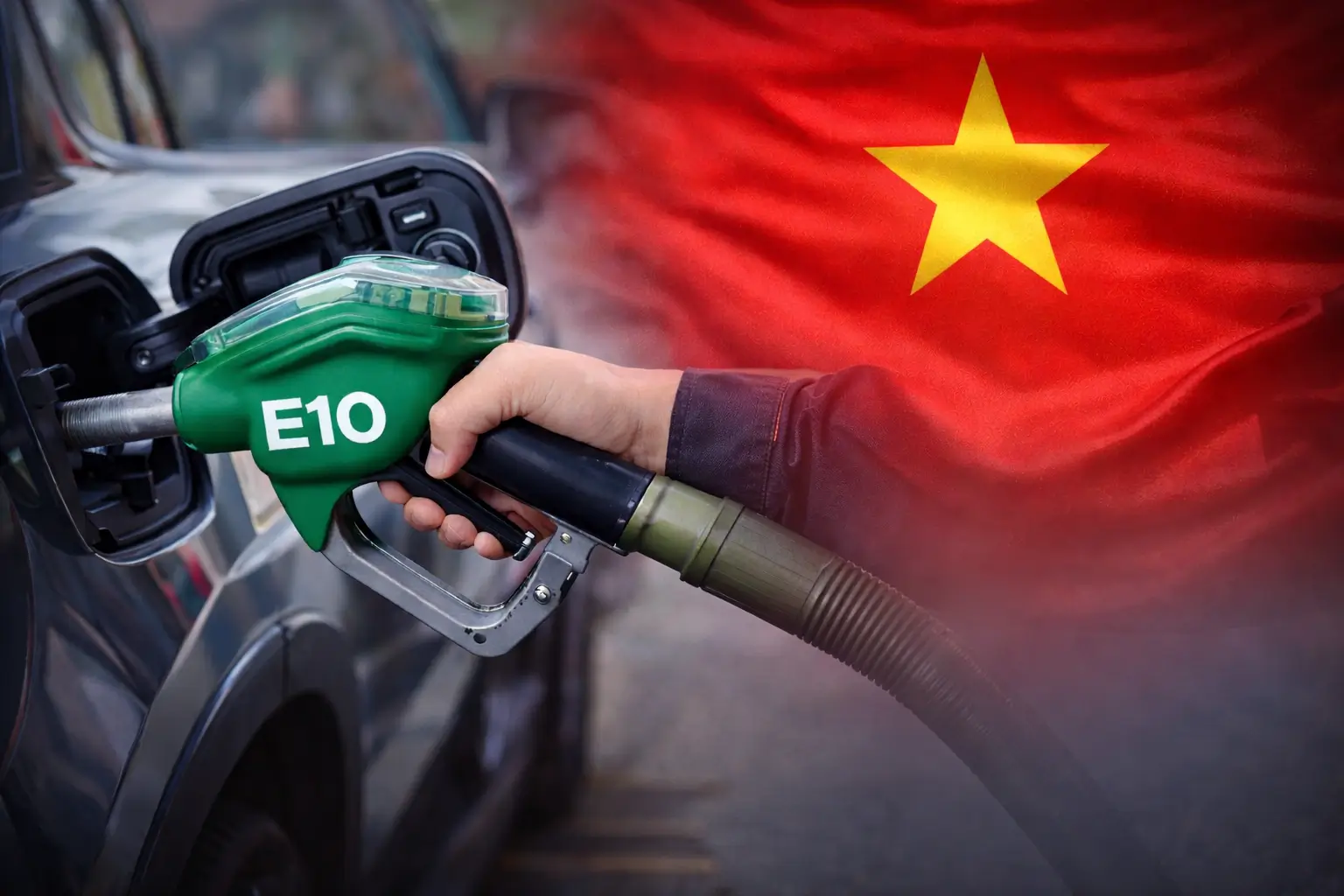 Amid rising volatility in global energy markets driven by geopolitical tensions and potential supply disruptions, Vietnam is accelerating the adoption of E10 biofuel gasoline as part of a broader strategy to reduce reliance on fossil fuels. Expanding the use of biofuels is expected to enhance energy security while helping stabilize the domestic fuel market.
At a meeting of the national energy security task force on March 10, Prime Minister Pham Minh Chinh emphasized that Vietnam had proactively assessed potential impacts on the energy market and macroeconomic management as soon as geopolitical tensions began to escalate worldwide.
According to the Prime Minister, geopolitical instability could push up production and logistics costs, putting pressure on commodity prices and the competitiveness of the Vietnamese economy. At the same time, risks such as fuel hoarding, speculation, and cross-border smuggling could emerge if global energy supplies become unstable.
In response, the government has set a clear priority: ensuring that Vietnam never faces an energy shortage under any circumstances. One of the key solutions highlighted is expanding the use of E10 biofuel gasoline, which can increase domestic supply flexibility and reduce dependence on conventional fossil gasoline.
According to the Ministry of Industry and Trade, Vietnam has already established a roadmap for the development and use of biofuels. However, recent volatility in global oil markets has prompted policymakers to consider accelerating the implementation timeline.
Deputy Minister of Industry and Trade Nguyen Sinh Nhat Tan noted that global fuel markets have experienced significant fluctuations in recent weeks, prompting authorities to move faster in deploying alternative energy solutions.
Globally, many countries have already widely adopted biofuel blends such as E10, E15, and E20. Major economies including the United States, Brazil, several European countries, China, and Thailand have incorporated biofuels as an important component of their national energy mix.
In Vietnam, E5 biofuel gasoline has been distributed nationwide since 2018 and has achieved relatively positive results. By August 2025, E10 gasoline began to be introduced on a pilot basis in selected markets.
Importantly, no scientific evidence has been found so far to suggest that biofuel blends negatively affect vehicle engine performance or durability.
To support the nationwide rollout of E10 gasoline, Vietnam’s fuel industry has been expanding blending and distribution infrastructure.
According to the Domestic Market Management and Development Agency under the Ministry of Industry and Trade, 12 out of 26 petroleum distributors have already built facilities capable of blending biofuel gasoline.
Among them, three companies have officially received licenses from the Ministry of Science and Technology to produce E10 gasoline.
The remaining nine distributors are currently completing administrative procedures to obtain similar permits.
In major cities such as Hanoi, Ho Chi Minh City, and Hai Phong, major fuel retailers including Petrolimex and PV Oil have already launched pilot sales of E10 gasoline at selected stations.
The expansion of distribution infrastructure is expected to pave the way for broader adoption of biofuel gasoline across the country.
Ethanol is the primary component used to blend with conventional gasoline to create biofuel products such as E5 and E10.
According to the Vietnam Biofuels Association, national gasoline consumption currently stands at roughly 1 million cubic meters per month, with RON95 accounting for around 85% and RON92 about 15%.
Based on this consumption structure, Vietnam’s monthly ethanol demand for biofuel blending is estimated at 92,000 to 100,000 cubic meters.
Vietnam currently has five ethanol plants, though most operate below full capacity. Their combined output can supply roughly 25,000 cubic meters per month, equivalent to nearly 30% of domestic demand.
The remaining supply gap can be filled through imports from major ethanol producers such as the United States and Brazil, which dominate global ethanol production.
In Asia, Thailand is also a potential supplier. The country produces approximately 2.6 million cubic meters of ethanol annually, while domestic demand stands at only 1.3 million cubic meters, leaving a substantial export surplus.
Experts estimate that Vietnam could import around 70,000 cubic meters of ethanol per month to meet E10 production needs in the near term.
Another factor making ethanol an attractive option is its relatively stable price compared with petroleum-based fuels.
While global crude oil and gasoline prices have surged by roughly 50% recently, ethanol prices have increased by only about 4%.
This price stability helps keep biofuel blending costs relatively competitive.
Moreover, ethanol supply chains are less exposed to geopolitical hotspots such as the Middle East, which frequently disrupt global oil markets.
As a result, ethanol can serve as an important supplementary energy source, helping reduce pressure on Vietnam’s domestic fuel supply.
In the long run, developing biofuels is not only about environmental protection but also about strengthening national energy independence.
Currently, Vietnam still relies significantly on imported fuel. Around 32% of refined petroleum products are imported, while 68% are produced domestically.
However, even domestic refineries rely heavily on imported crude oil.
For instance, the Nghi Son Refinery imports nearly 100% of its crude oil feedstock, while the Binh Son Refinery imports approximately 30–35%.
This means that the portion of Vietnam’s fuel supply that is truly domestically controlled remains just slightly above half of total demand.
As global energy markets become increasingly volatile due to geopolitical conflicts—particularly in the Middle East—ensuring stable fuel supplies has become a critical priority.
Expanding the biofuel sector is therefore seen as a necessary step toward reducing dependence on fossil fuels and improving the resilience of Vietnam’s energy system.
Beyond energy security, biofuel development can create stable demand for key agricultural products such as corn, cassava, and sugarcane, which are commonly used to produce ethanol.
Several Southeast Asian countries—including Thailand, Indonesia, and the Philippines—have already developed strong biofuel industries. In these markets, biofuels account for 20–40% of total energy consumption.
In countries like Brazil, the United States, and India, the share is even higher.
Experts believe that if supportive policies are implemented, Vietnam could establish additional biofuel plants within the next three to five years.
Such developments would help diversify energy sources, ease the burden on major refineries such as Nghi Son and Binh Son, and support Vietnam’s transition toward a greener and more sustainable economy.