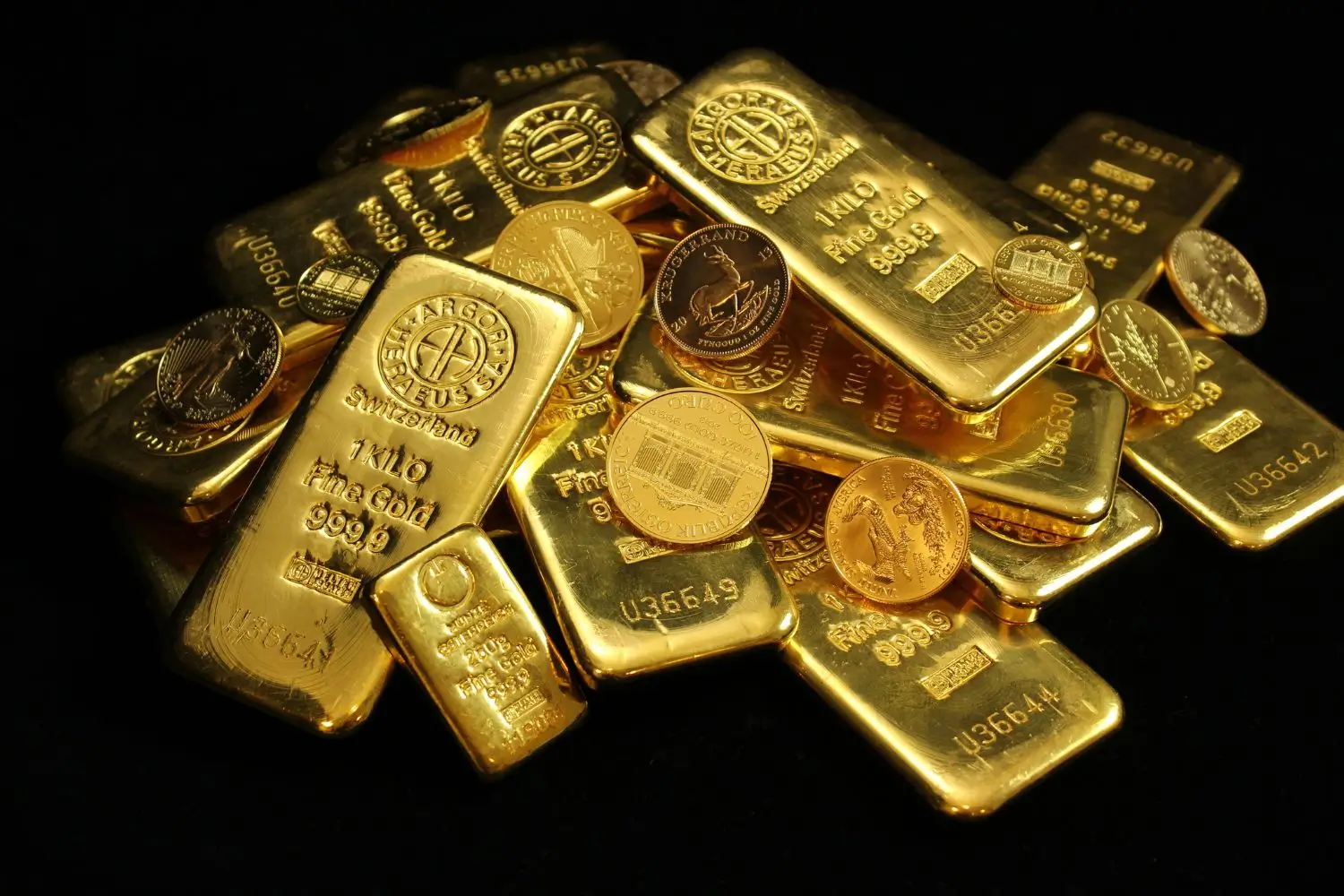
After a powerful rally that pushed gold to unprecedented highs, the precious metals market is experiencing a sharp correction. Gold and silver prices continued to fall on Monday, extending last week’s heavy losses as a stronger US dollar, wider trading ranges, and profit-taking weakened the momentum that had driven metals to new records.
This development raises a crucial question for investors: is this only a short-term adjustment or the beginning of a deeper bearish trend? Three major Wall Street institutions—Deutsche Bank, Barclays, and UBS—have offered important insights into the issue.
During early trading, spot gold dropped to a low of $4,402 per ounce before partially recovering to $4,687.52, still down 3.7% on the day. Last Friday alone, gold had collapsed by nearly 10%, pushing prices back below the psychological $5,000 level.
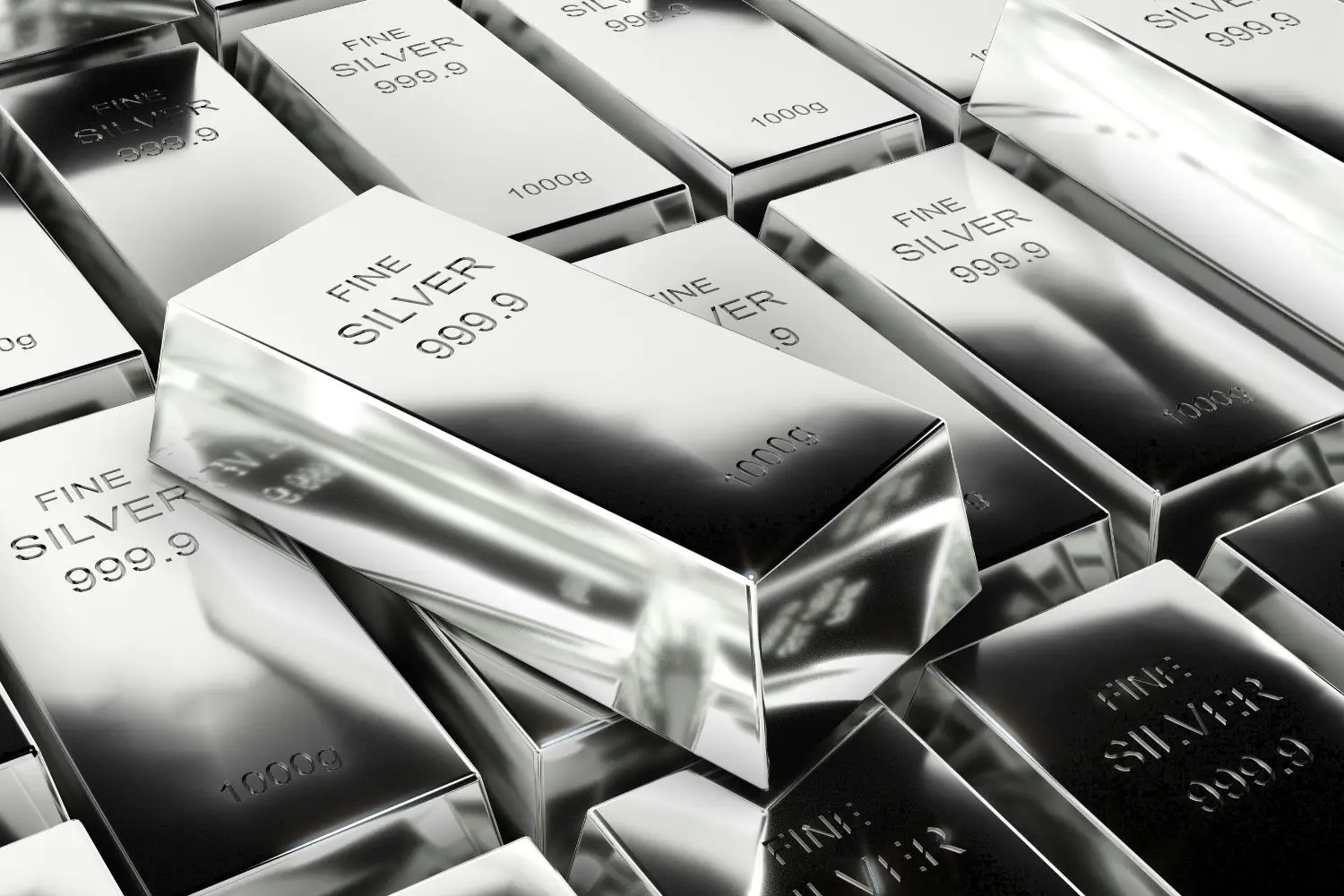
Silver faced even stronger pressure. The metal lost around 30% over the weekend, falling more than 12% at one point before stabilizing near $79.2 per ounce.
In response to extreme volatility, CME Group tightened trading conditions:
Margin for COMEX gold futures increased from 6% to 8%
Margin for silver futures rose from 11% to 15%
These measures aimed to curb risk but also accelerated the unwinding of speculative positions.
The downturn followed a sudden repricing of interest-rate expectations and a rebound in the US dollar after President Donald Trump nominated Kevin Warsh as the next Chair of the Federal Reserve. The move triggered a broad unwinding of crowded positions across markets.
A firmer dollar made precious metals more expensive for non-US investors, while expectations of tighter liquidity reduced the appeal of non-yielding assets such as gold and silver.
Nevertheless, several analysts argue that positioning pressure—rather than deteriorating fundamentals—was the main driver of the decline.
Michael Hsueh, analyst at Deutsche Bank, said the scale of the drop reflects market positioning more than any major change in fundamentals.
“The positioning adjustment and price volatility in precious metals have far exceeded the importance of the catalysts,” he noted.
Hsueh added that conditions “do not appear supportive of a prolonged reversal in gold prices,” emphasizing that the core reasons for holding gold have not deteriorated. He reaffirmed the bank’s target of $6,000 per ounce.
In a separate report, Barclays strategists led by Emmanuel Cau described the move as a healthy correction following an overheated rally.
The team stated that “a correction and positioning reset after such strong gains is reasonable,” noting that gold had become technically stretched with overcrowded positions. However, they stressed that they do not see gold as a bubble.
Instead, Barclays believes underlying demand will remain solid, supported by:
Central bank purchases
Inflation dynamics
Policy uncertainty
UBS expressed a similar view, describing the sell-off as “volatility within a continuing structural uptrend” rather than the end of the bull market.
Strategists led by Wayne Gordon argued that historic bull markets end only when central banks fully restore policy credibility—something they believe has not yet happened.
UBS expects gold to consolidate between $4,500 and $4,800 in the short term before resuming its rise toward a mid-year target of $6,200 per ounce.
Recent developments show that the gold market is entering a sensitive phase influenced by:
US dollar strength
Shifts in Fed expectations
Speculative positioning and profit-taking
Higher margin requirements
Analysts advise investors not to panic-sell, as long-term fundamentals remain intact. Instead, attention should focus on:
US employment and inflation data
Fed communication under Kevin Warsh
Central bank gold demand
Wall Street’s message is relatively consistent: there is no clear evidence of a long-term bearish turn. The recent drop bears the hallmarks of:
Post-rally correction
Deleveraging of crowded trades
Short-term sentiment shock
If global uncertainty and inflation concerns persist, gold is likely to retain its role as a key defensive asset.
The plunge in gold and silver has created one of the most dramatic episodes in recent years. Yet, according to Deutsche Bank, Barclays, and UBS, this is more likely a necessary adjustment than the end of the uptrend.
The precious metals market is testing its resilience. With structural demand still strong, the path toward $6,000–$6,200 remains open—though investors should expect higher volatility ahead.

.jpg)
.png)
 Tiếng Việt
 English