.png)
 Tiếng Việt
 English


As Iranian drones and missiles intensify attacks across parts of the Middle East, Ukrainian President Volodymyr Zelensky has unveiled a strategic diplomatic proposal: Kyiv is prepared to share its battlefield-hardened drone defense expertise in exchange for stronger regional pressure on Moscow to halt the war in Ukraine.
The offer reflects a new phase in Ukraine’s foreign policy — one that links its wartime technological experience with broader geopolitical bargaining, as global conflicts increasingly intersect.
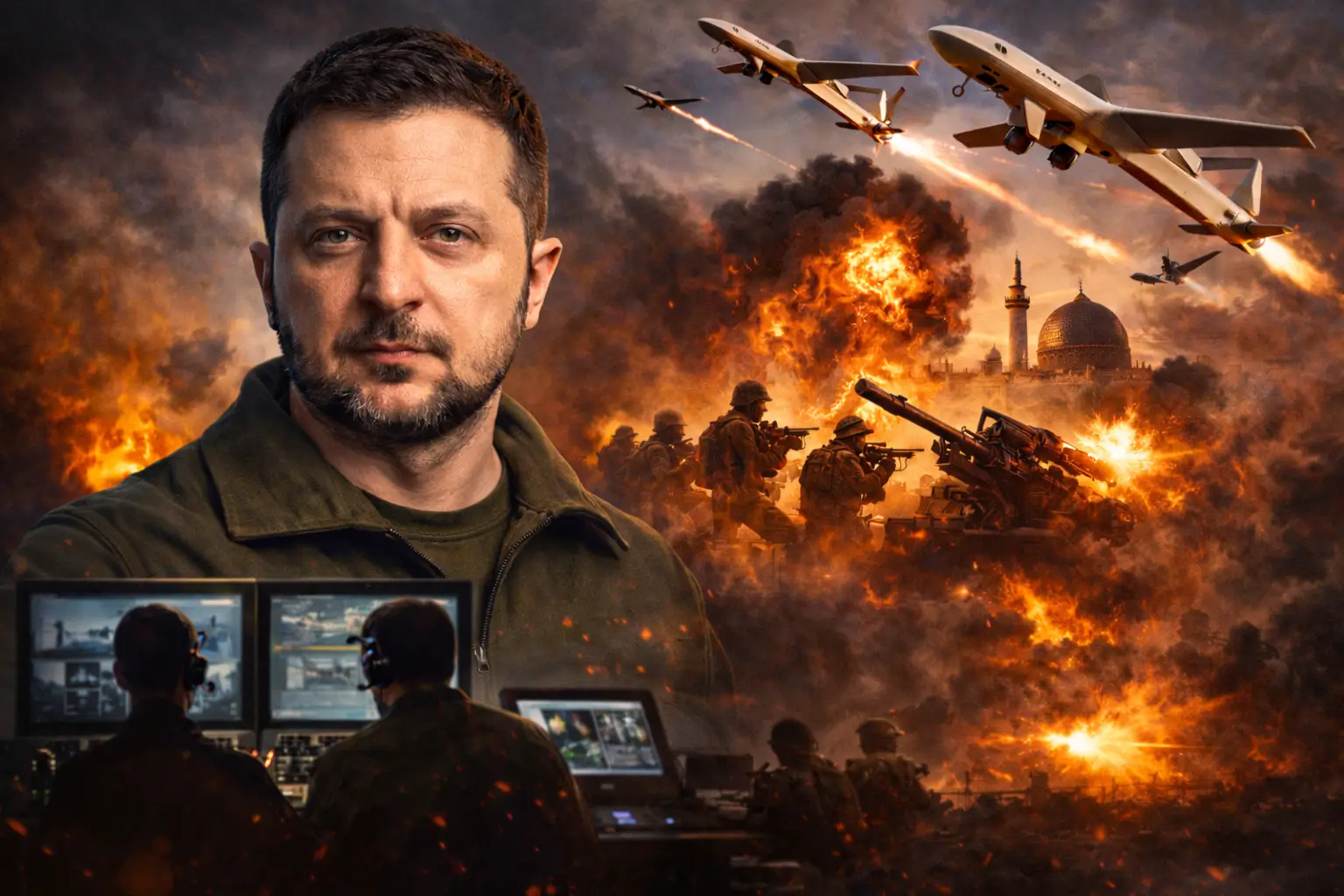 A Strategic Trade-Off: Expertise for Diplomatic Leverage
In an interview with Bloomberg on Monday, Zelensky suggested that Middle Eastern leaders, many of whom maintain working relationships with Moscow, could use their influence to push for a temporary ceasefire in Ukraine.
“I propose the following: Middle Eastern leaders have very good relations with Russia,” Zelensky said during a phone interview. “They could ask Russia to implement a one-month ceasefire.”
In return, Ukraine would deploy its most experienced drone interception specialists to assist Middle Eastern nations in defending against Iranian-designed unmanned aerial vehicles (UAVs).
The proposal comes at a time when Iranian drones have targeted multiple sites across the region, underscoring the growing threat posed by relatively low-cost but highly disruptive aerial systems.
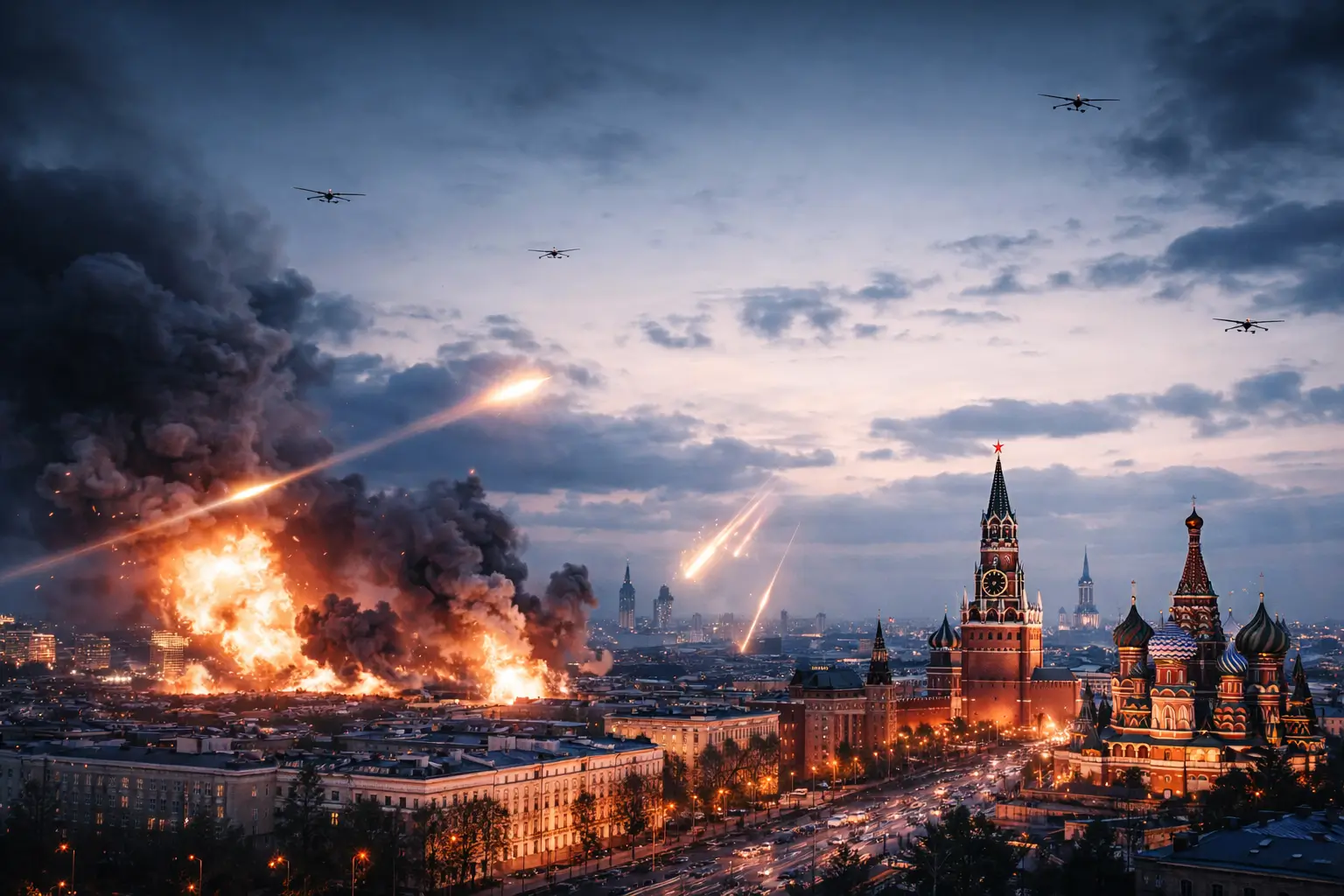
Over the past four years of conflict, Ukraine has faced sustained drone and missile attacks from Russian forces, many involving Iranian-designed Shahed drones.
On Saturday, Zelensky revealed that Russia has launched more than 57,000 Shahed-type drones during the war — a figure that highlights both the scale and persistence of aerial attacks.
These systems, originally developed in Iran and widely known as “loitering munitions,” have become a defining feature of modern asymmetric warfare.
Ukraine’s ability to adapt quickly — integrating radar systems, electronic warfare capabilities, and mobile air defense units — has significantly improved its interception success rate. This hard-earned expertise is now being positioned as a diplomatic asset.
The timing of Zelensky’s offer is notable. Iranian drones recently targeted a British military base in Cyprus, amplifying concerns about expanding regional instability.
Shortly before that incident, UK Prime Minister Keir Starmer announced that London would support Middle Eastern nations in countering drone threats by sending “experts from Ukraine.”
However, Zelensky clarified that Kyiv had not received any formal request for assistance at that time.
Still, the overlap between Iranian drone activity in the Middle East and the technology used by Russian forces in Ukraine creates a clear geopolitical bridge — one that Kyiv is now leveraging diplomatically.
Zelensky emphasized that even a short ceasefire — whether two months or two weeks — would provide critical breathing space for Ukraine.
Such a pause could:
Reduce civilian casualties
Stabilize frontline positions
Enable humanitarian corridors
Create diplomatic momentum for longer-term negotiations
From Kyiv’s perspective, mobilizing international actors with influence over Moscow could prove more effective than relying solely on Western diplomatic channels.
Middle Eastern countries with established ties to Russia may be uniquely positioned to facilitate dialogue.
The proposal underscores how regional conflicts are increasingly interconnected.
Iran’s expanding drone footprint in the Middle East mirrors its technological role in supporting Russia’s war effort. Meanwhile, Ukraine’s battlefield innovations are transforming into diplomatic tools.
For Middle Eastern governments facing Iranian UAV threats, cooperation with Ukraine offers a practical benefit: access to real-world defensive expertise from one of the most heavily targeted nations in modern drone warfare.
For Ukraine, the arrangement could help internationalize diplomatic pressure on Moscow beyond traditional Western alliances.
In recent years, military technology has become an instrument of influence. Nations that demonstrate operational competence often translate that expertise into strategic partnerships.
Ukraine’s rapid evolution in drone defense — integrating Western air defense systems with domestic innovations — has drawn increasing global attention.
By offering to share its operational knowledge, Kyiv is effectively converting battlefield resilience into geopolitical currency.
This approach also signals Ukraine’s intent to play a proactive global role rather than remain solely a recipient of military assistance.
From a financial and geopolitical risk perspective, the convergence of Middle East tensions and the Russia–Ukraine war raises several concerns:
Increased volatility in energy markets
Higher defense spending across regions
Elevated insurance and shipping costs
Potential disruptions to trade corridors
If Middle Eastern states intensify diplomatic engagement with Moscow, it could shift negotiation dynamics around the Ukraine conflict.
Conversely, deeper military cooperation between Ukraine and regional actors may provoke strategic recalibrations from both Russia and Iran.
Zelensky’s proposal is ultimately a calculated diplomatic gamble.
By tying regional security assistance to progress toward a ceasefire, Ukraine is broadening its negotiation framework.
The question remains whether Middle Eastern leaders are willing — or able — to exert meaningful pressure on Moscow. Russia’s strategic partnerships in the region are complex, involving energy cooperation, arms sales, and geopolitical coordination.
Still, even incremental diplomatic movement could alter the trajectory of the war.
As Iranian drones reshape the security landscape of the Middle East and continue to define aerial warfare in Ukraine, Zelensky’s proposal reflects a new reality: modern conflicts are no longer geographically isolated.
By offering drone defense expertise in exchange for diplomatic leverage, Kyiv is attempting to turn its wartime hardship into strategic advantage.
Whether this initiative leads to a temporary ceasefire — or reshapes broader geopolitical alignments — will depend on how regional powers respond in the coming weeks.
One thing is clear: in an era of drone warfare and interconnected crises, technology and diplomacy are becoming inseparable instruments of statecraft.